







Fertilizer for Banana Plants: Nutrient Needs, Rates and Growth-Stage Guide
The right fertilizer for banana plants is the one that matches what the crop removes, what your soil already holds and the stage the plant is in. Banana takes up far more potassium than any other nutrient, followed by nitrogen and calcium, so K supply and timing decide much of the result. This guide covers […]

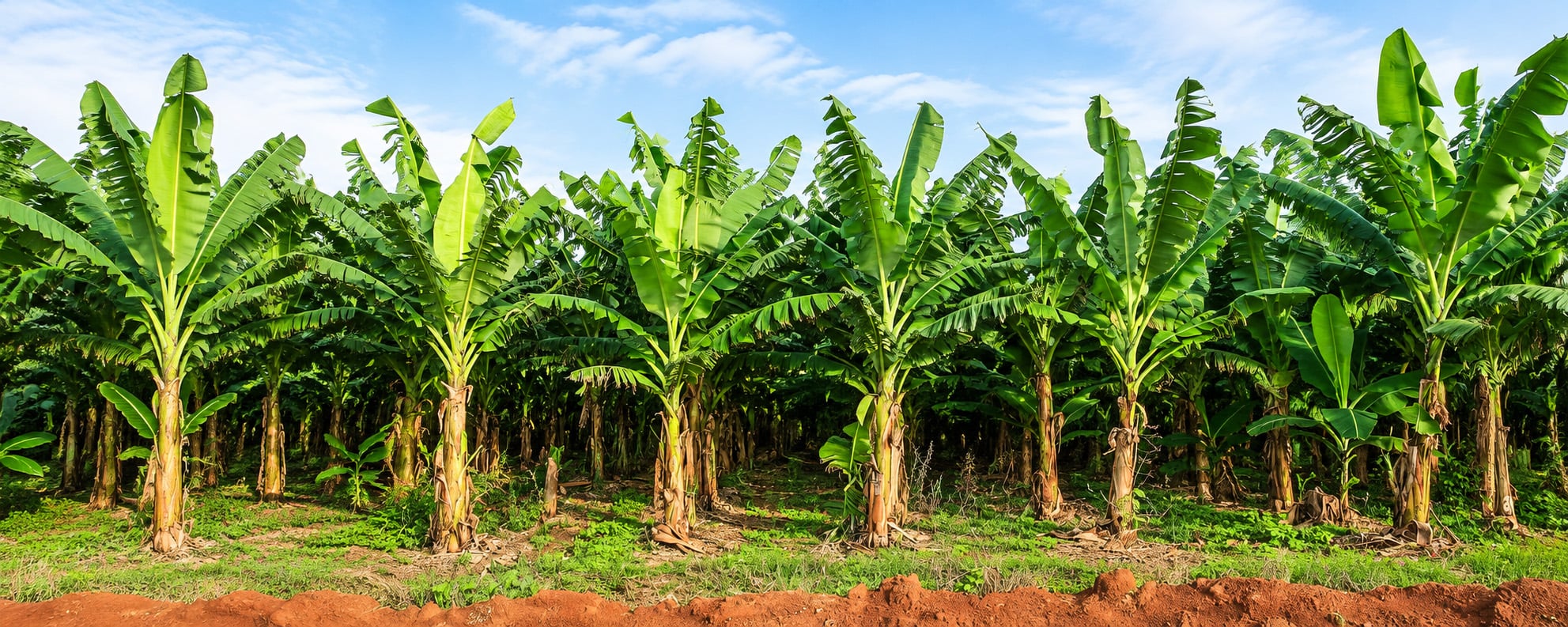

The right fertilizer for banana plants is the one that matches what the crop removes, what your soil already holds and the stage the plant is in. Banana takes up far more potassium than any other nutrient, followed by nitrogen and calcium, so K supply and timing decide much of the result. This guide covers nutrient demand, needs by growth stage, published reference rates, soil pH, secondary and micronutrients, and how to check your program with leaf analysis. Country sections cover local soils, cultivars and rules, starting with the Philippines.
Why nutrition sets the yield ceiling
The yield ceiling is set early. Balanced nutrition in the early vegetative stage decides bunch development later, because the developing bunch takes much of its potassium from reserves the plant built up before shooting (Robinson & Galán Saúco, 2010). A program that starts late or runs short of K cannot be fully rescued at bunch filling.
How much fertilizer does a banana plant need?
Potassium (K) is the most important element in banana nutrition: a fully grown bearing plant contains more K than all other minerals combined (Robinson & Galán Saúco, 2010). For a plant crop of 2,400 plants/ha yielding about 50 t/ha, Lahav and Turner (1983) estimated that the crop holds about 1,438 kg K, 388 kg N, 227 kg Ca, 125 kg Mg and 52 kg P per hectare. About 778 kg of that K, 189 kg of N and 101 kg of Ca leave the field in the harvested fruit (Robinson & Galán Saúco, 2010).
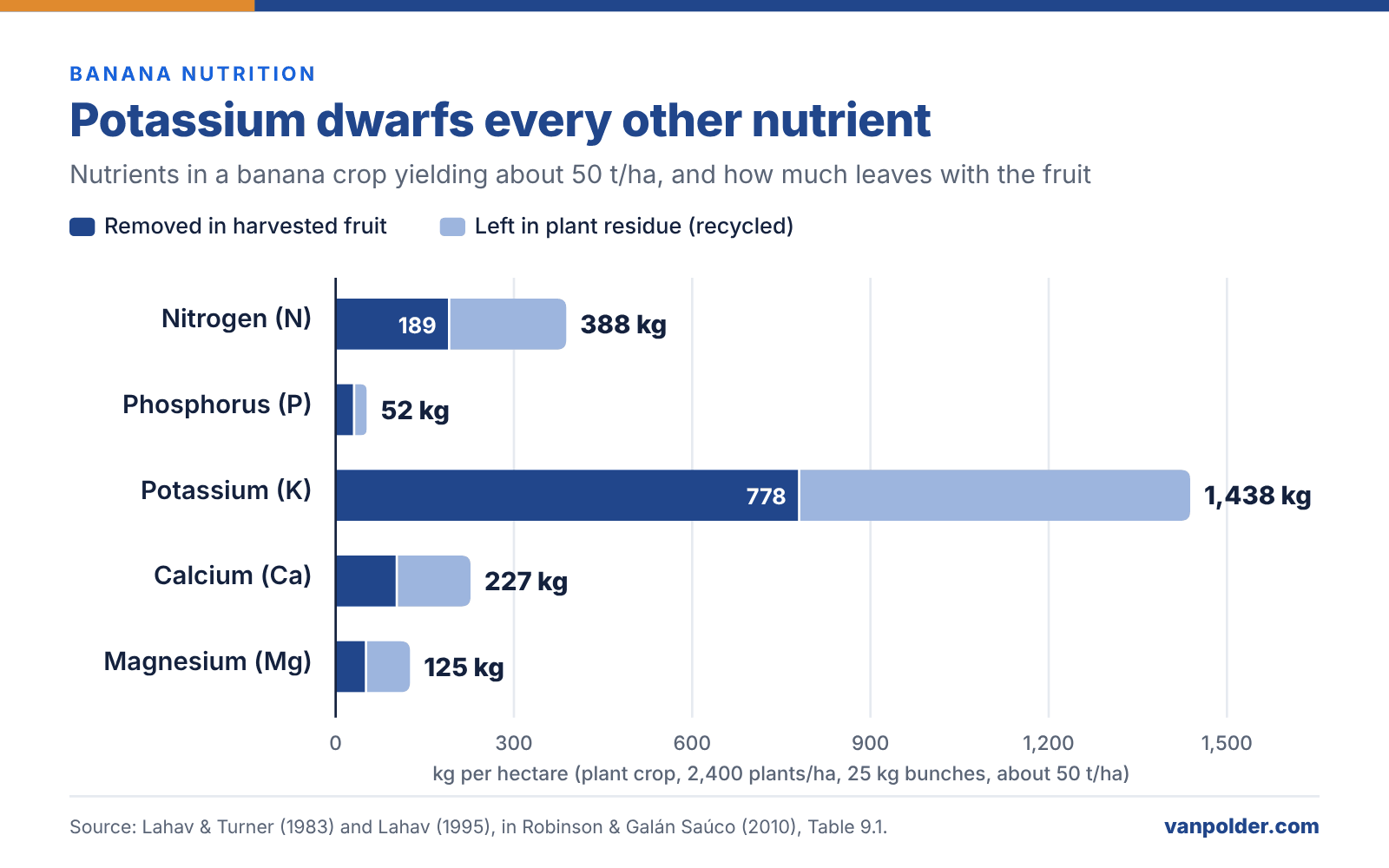
Per tonne of fruit, that works out to about 15.6 kg K, 3.8 kg N, 2 kg Ca, 1 kg Mg and 0.6 kg P removed (Weinert & Simpson, 2016). These figures come from one data set and vary with site, cultivar and yield, so use them to understand proportions, not as a recipe. Two practical points follow:
- Replace what the fruit removes. An irrigated plantation yielding 50 t/ha needs about twice as much fertilizer to replace fruit removal as a rainfed one producing 25 t/ha (Robinson & Galán Saúco, 2010).
- Count what is recycled. Nutrients left in the pseudostem and trash return to the soil and to the follower sucker. The parent plant can supply up to 40% of the nutrients a sucker needs in its first 10 weeks after harvest (Robinson & Galán Saúco, 2010, cited in Weinert & Simpson, 2016).
Because the bunch depends so heavily on K, the signs of a shortage and how to correct it have their own guide: potassium deficiency in banana. For potassium sources in general, see our guide to potassium fertilizers.
Fertilizer for banana plants by growth stage
Nutrient uptake is not even across the cycle. Most phosphorus is taken up between 3 and 9 months after planting, and P uptake falls by about 80% in the reproductive phase; K uptake is greater in the first half of the vegetative phase than during bunch development (Robinson & Galán Saúco, 2010). Nitrogen is not stored, so it has to be supplied regularly throughout growth.
| Stage | What the plant is doing | Nutrient focus | How to apply |
| Before planting | Roots will occupy the soil you prepare now; lime and P are hard to place after planting | Correct pH with lime; P | Work lime and P deep into the soil before planting |
| Establishment (tissue-culture plantlets and suckers) | Young plants grow fast; tissue-culture plants have no mother plant to draw on | N in small, frequent doses; K; Zn | Wide band or fertigation, little and often |
| Vegetative growth to shooting | Builds leaf area and reserves; most P is taken up 3–9 months after planting; K uptake is highest early | N, K, Ca, Mg, B | Frequent splits; fertigation where available |
| Shooting to harvest (bunch filling) | The bunch draws K from reserves built earlier; P uptake falls by about 80% | Keep N and K supply steady; Ca for fruit quality | Continue soil or fertigation program; foliar as a supplement |
| Ratoon cycles | The parent supplies up to 40% of the sucker’s needs in its first 10 weeks; the first ratoon is a larger plant | Adjust N and K to yield and leaf analysis | Increase in good growing conditions, reduce in poor ones |
Sources: Robinson & Galán Saúco (2010); Weinert & Simpson (2016).
In ratoon plantations, plants on the same mat are at different stages, so fertilizing strictly by stage is impossible. Increase applications when growing conditions favor growth and reduce them when they don’t (Robinson & Galán Saúco, 2010). For a full stage-by-stage program with fertigation, see the banana fertilizer schedule.
Banana fertilizer recommendation: reference rates and how to set yours
Published annual rates vary widely because soils, rainfall and yields differ. The figures below show the range; they are not a prescription for your farm.
| Situation | Nitrogen | Phosphorus | Potassium | Source |
| Heavy soil, low leaching (South Africa) | About 150 kg N/ha per year | – | – | Robinson & Galán Saúco, 2010 |
| High yields, heavy rain, leached soils (Costa Rica) | 300–450 kg N/ha per year | – | – | Robinson & Galán Saúco, 2010 |
| Subtropics, about 50 t/ha (South Africa, New South Wales) | – | About 50 kg P/ha, usually before planting | 600–800 kg K/ha per year | Robinson & Galán Saúco, 2010 |
| K-poor soils (coastal Israel) | – | – | Up to 1,200 kg K/ha per year | Robinson & Galán Saúco, 2010 |
| Saba smallholders, Philippines (government guide) | Mix of 14-14-14, urea and muriate of potash, applied every 4 months; double the rate from year 2 | BPI, n.d. | ||
| Saba field trial, acid soil, Misamis Oriental | Four NPK levels up to 270-180-540 g per mat (as reported); highest yield at the top level | Ohagan et al., 2023 |
Rates are annual unless stated. International sources report elemental P and K; multiply K by 1.2 for K2O and P by 2.29 for P2O5.
Most fertilizer labels show K2O: 600–800 kg K/ha equals about 720–965 kg K2O/ha.
Set your own rates from soil and leaf analysis. In practice:
- Test the soil before planting and correct pH and phosphorus first.
- Set N and K from your target yield and soil test, then split them: N little and often, K in fewer but larger doses (Robinson & Galán Saúco, 2010).
- Apply in a wide band, not a ring around the pseudostem, because roots spread quickly away from the plant; fertigation is the most efficient placement (Robinson & Galán Saúco, 2010).
- Check the result with leaf analysis every year and adjust.
Muriate of potash is the cheapest and most common K source. Chloride can build up over time, so on soils or irrigation water that already carry high chloride, sulfate or nitrate forms of K are worth considering (Robinson & Galán Saúco, 2010). MOP, SOP and potassium nitrate are compared in potash for banana plants.
Soil pH: keep the root zone in range
For optimum productivity, soil pH measured in water should be 5.8 to 6.5 (Robinson & Galán Saúco, 2010). Regular nitrogen application and irrigation push pH down over the years; intensive banana monocropping with heavy N inputs has been shown to reduce the soil’s acid buffering capacity (Fan et al., 2024). Low pH matters because it raises exchangeable aluminum and manganese and causes Ca and Mg shortages (Robinson & Galán Saúco, 2010). On commercial Cavendish farms in Costa Rica, poorly performing sectors had lower soil pH than good sectors (5.4 vs 5.7 in the fertilization band) (Segura et al., 2015). Lime is best applied and worked in before planting; up to 6 t/ha is common on acid land, and the effect on pH can take 2 to 3 years to show (Robinson & Galán Saúco, 2010).
Calcium, magnesium and micronutrients
- Calcium strengthens cell walls; in Ca-deficient plants fruit quality is inferior and the peel splits easily when ripe (Robinson & Galán Saúco, 2010).
- Magnesium deficiency is the most common after N and K, usually in old plantations without Mg or where large amounts of K or Ca were applied (Robinson & Galán Saúco, 2010).
- Zinc is the most important micronutrient for banana. Deficiency is especially common in young tissue-culture plants, which grow fast without a mother plant to draw on, and on high-pH or heavily limed soils (Robinson & Galán Saúco, 2010).
- Boron deficiency occurs mainly on acid soils (Robinson & Galán Saúco, 2010).
- Manganese is more often a problem in excess than in shortage on acid soils: high soil Mn can cut Ca uptake by nearly 30% and Mg uptake by up to 40% (Robinson & Galán Saúco, 2010). Liming prevents it.
For an overview of trace elements, see micronutrients for banana plants.
Check your program with leaf analysis
Leaf analysis shows whether the fertilizer you apply reaches the plant. Sample the third youngest leaf at the same stage each time and compare results with published standards for Cavendish (Robinson & Galán Saúco, 2010).
| Nutrient | Critical level (below this, a response is likely) | Normal range (ARC-ITSC, South Africa) |
| Nitrogen (N) | 2.6% | 2.5–3.0% |
| Phosphorus (P) | 0.2% | 0.1–0.2% |
| Potassium (K) | 3.0% | 3.0–4.0% |
| Calcium (Ca) | 0.5% | 0.80–1.25% |
| Magnesium (Mg) | 0.3% | 0.25–1.0% |
| Zinc (Zn) | 18 ppm | 25–50 ppm |
| Boron (B) | 11 ppm | 15–60 ppm |
Third youngest leaf, AAA Cavendish, % of dry matter. Critical levels from Lahav & Turner (1983); both columns as summarized in Robinson & Galán Saúco (2010), Table 9.2.
Read the elements together, not one by one: high soil K reduces uptake of Ca and Mg, and high Mn reduces uptake of Ca, Mg and Zn (Turner & Barkus, 1983, cited in Robinson & Galán Saúco, 2010).
Nutrition in Fusarium wilt (TR4) areas
No fertilizer controls Fusarium wilt. A review of the disease reports that nitrate-based nitrogen is generally associated with lower wilt severity than ammonium-based nitrogen, which acidifies the soil, and that calcium applications seem to reduce severity in banana (Dita et al., 2018). Treat these as soil-health measures alongside quarantine and sanitation, not as protection.
Where biostimulants fit
Biostimulants such as amino acids, seaweed extracts and fulvic acids are not fertilizers and do not replace NPK. They are used alongside a balanced program to support root development and stress tolerance, for example during transplanting, drought or after typhoons. See amino acid fertilizer benefits.
Banana farming in the Philippines: Mindanao soils, Saba and local rules
Banana is one of the country’s most valuable crops. Cavendish accounts for about half of national banana output and Davao Region for over a third (PSA, n.d.), and the Philippines remained the world’s fourth-largest banana exporter in 2024 (Inquirer, 2025). Most export volume comes from intensive plantations in Mindanao; Lakatan and Saba are grown widely by smallholders for the domestic market.
The Philippine Code of Good Agricultural Practice for banana calls for fertilizers to be applied based on soil and/or leaf analysis (PNS/BAFS 129:2013), so the testing steps above are also the local standard.
Cavendish, Lakatan and Saba: do they need different fertilizer?
| Cavendish | Lakatan | Saba | |
| Use | Export dessert banana | Domestic dessert banana | Cooking banana |
| Genome group | AAA | AAA | ABB (cooking type) |
| Typical grower | Commercial plantations, often fertigated | Smallholders and mid-size farms | Smallholders |
| Leaf standards | Published Cavendish standards (Table 4) | No Lakatan-specific standards found; use Cavendish values as a guide | Cultivars with more Musa balbisiana have lower leaf standards than Cavendish |
| Local fertilizer evidence | Davao plantation study on K:Mg balance (Salibay & Salomez, 2009) | No Lakatan-specific trial found | NPK trial on acid soil (Ohagan et al., 2023); BPI production guide |
Sources: Valmayor et al. (1990); Weinert & Simpson (2016); Salibay & Salomez (2009); Ohagan et al. (2023); BPI (n.d.).
What a Mindanao trial shows for Saba
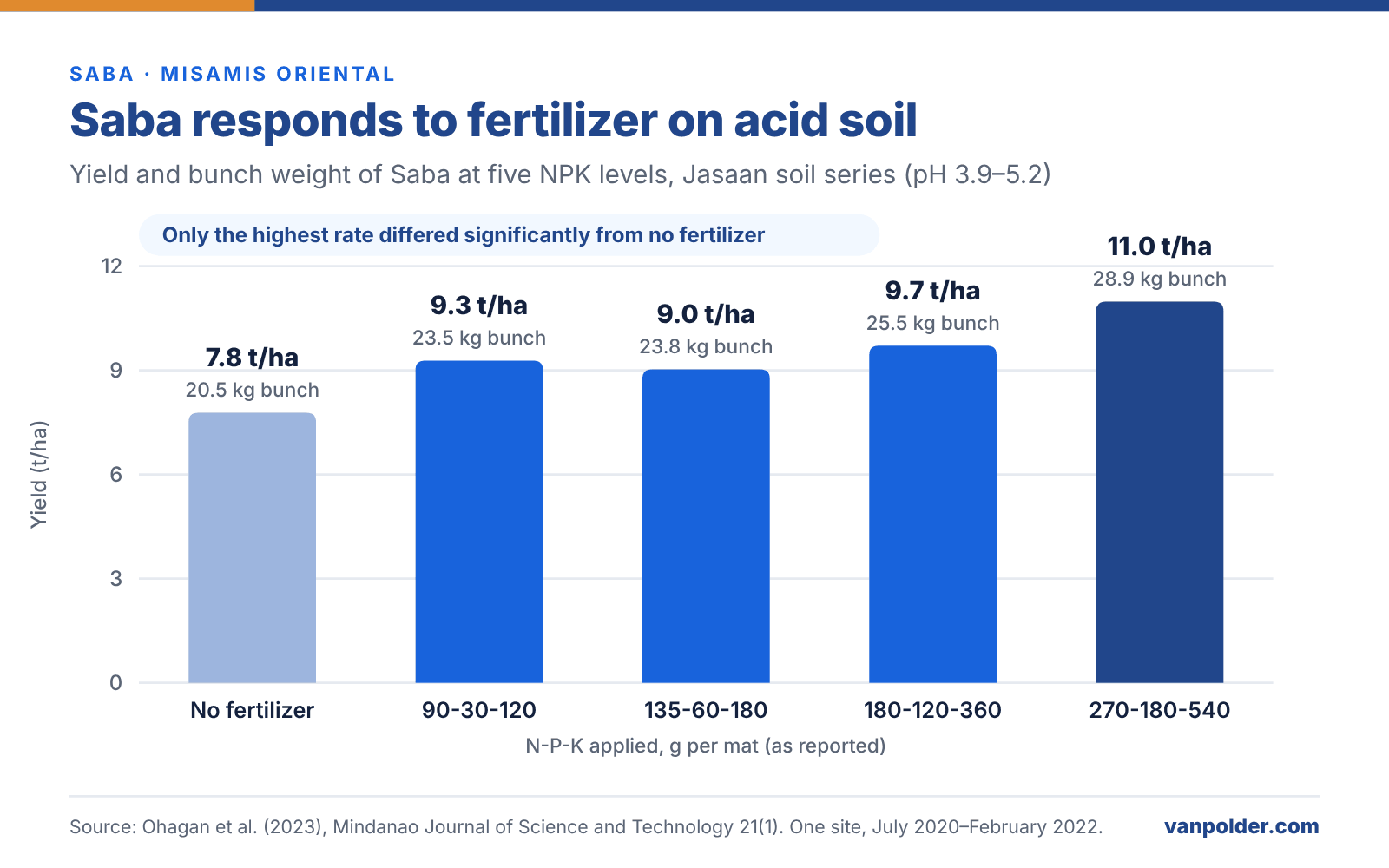
On acid Jasaan soil (pH 3.9–5.2) in Claveria, Misamis Oriental, Saba was grown with no fertilizer or four NPK levels applied as ammonium sulfate, superphosphate and muriate of potash. Yield rose from 7.8 t/ha without fertilizer to 11.0 t/ha, and bunch weight from 20.5 kg to 28.9 kg, at the highest rate (Ohagan et al., 2023). Only the highest rate differed significantly from the unfertilized control, and return on investment fell as the rate rose. Because N, P and K were increased together at a single site, the trial shows that Saba responds to fertilizer on these soils but not which nutrient drove the response.
Magnesium-rich soils in Davao
A five-year study of a Cavendish plantation in Davao del Norte found soils naturally high in K, Ca and Mg, with magnesium dominating the exchange complex; leaf Mg was linked to lower bunch weight in most years, and a higher soil K/Mg ratio went with heavier bunches (Salibay & Salomez, 2009). On such soils, more Mg is rarely the answer; the K:Ca:Mg balance shown by soil and leaf tests is.
Acid soils in Mindanao
Acid soils are common in parts of Mindanao: the Jasaan soil series used in the Saba trial above had a pH of 3.9 to 5.2, with high aluminum saturation and low available P and K (Ohagan et al., 2023). On such land, liming before planting comes first.
Ano ang magandang abono sa saging?
(What is a good fertilizer for bananas?) Choose a fertilizer that is high in potassium, supply nitrogen in frequent small doses, and add phosphorus at planting. Base the amounts on a soil test, as the Philippine banana GAP code requires (PNS/BAFS 129:2013), and correct acidic soil with lime before planting.
Paano mag-abono ng saging na Saba?
(How do I fertilize Saba?) The Bureau of Plant Industry’s Saba guide recommends a mix of 14-14-14, urea and muriate of potash applied every 4 months in the first year, doubled in later years (BPI, n.d.). In a Mindanao field trial, Saba yield rose from 7.8 to 11.0 t/ha at the highest NPK level tested (Ohagan et al., 2023). Adjust the mix to your soil test.
Banana nutrition guides by topic
| Topic | Guide |
| Stage-by-stage program and fertigation | Banana fertilizer and fertigation schedule by growth stage |
| Tissue-culture plantlets | Tissue-culture plantlet establishment and rooting nutrition |
| Vegetative stage | Vegetative stage nutrition: planting to shooting |
| Bunch weight | How to increase banana bunch weight |
| Potassium | Potassium deficiency in banana |
| Calcium | Calcium for banana |
| Magnesium | Magnesium for banana |
| Boron | Boron for banana |
| Zinc | Zinc for banana |
| Silicon | Silicon for banana |
| Micronutrients | Micronutrients for banana plants |
| Biostimulants | Biostimulants for banana |
| Deficiency symptoms | Banana nutrient deficiency symptoms: visual guide |
| Fusarium wilt (TR4) areas | Nutrition and soil health in Fusarium wilt areas |
| Drought and flooding | Feeding bananas through drought and flooding |
| Soil and leaf analysis | Soil and leaf analysis for banana |
| Foliar feeding | Foliar feeding bananas |
| Potassium sources | Potassium nitrate vs SOP vs MOP for bananas |
| Water-soluble fertilizers | Choosing water-soluble fertilizers for banana fertigation |
| Soil pH and liming | Soil pH and liming for banana soils in Mindanao |
| Irrigation water quality | Irrigation water quality for banana fertigation |
Van Polder products for banana nutrition
- WSF NPK 15-5-40+TE: a high-K water-soluble NPK with trace elements, for fertigation from late vegetative growth through bunch filling.
- Potassium nitrate enriched with micronutrients (13-0-45+ME): supplies K with nitrate nitrogen, for fertigation and foliar programs. In some countries potassium nitrate is a regulated product, so check availability with your distributor.
- LS CalciBo Liquid (16% CaO, 8.2% nitrate N, 0.2% B): a foliar calcium and boron source for developing fruit.
- SM Zn EDTA 15%: chelated zinc for correcting Zn deficiency, including in young tissue-culture plants. See chelated micronutrients uses.
- HYD AA 60: a liquid amino acid biostimulant (60% total amino acids) produced through the PEPTIONICS™ hydrolysis process, used alongside your fertilizer program, not instead of it.
Follow the product label for application rates, and set nutrient rates from soil and leaf analysis.
Frequently asked questions
What is the best fertilizer for banana plants?
There is no single best product. Banana needs large amounts of K and N, P mainly at planting, and Ca, Mg, Zn and B in balance (Robinson & Galán Saúco, 2010). The best program supplies these in proportion to your yield and soil test, split through the season.
What is the best fertilizer for Cavendish banana?
A banana crop removes about 15.6 kg K per tonne of fruit (Weinert & Simpson, 2016), so high-K grades dominate commercial programs, with N applied often and Ca, Mg and micronutrients balanced by leaf analysis. On soils naturally rich in magnesium, keeping the K:Mg ratio up matters more than adding Mg (Salibay & Salomez, 2009).
How often should I fertilize banana plants?
Little and often. In the humid tropics, N may need eight or more applications a year to offset leaching, while K can be applied less often in larger doses and P usually once before planting (Robinson & Galán Saúco, 2010). Fertigation allows weekly or even daily N.
Next step
Start with a soil test before you plant or change your program, and a leaf analysis of the third youngest leaf once plants are established. Then set rates for your yield target and soil, and follow the stage guides linked above. For help choosing water-soluble, calcium and micronutrient products, contact a Van Polder distributor.
Sources
- Robinson, J.C. & Galán Saúco, V. (2010). Bananas and Plantains, 2nd edition. Crop Production Science in Horticulture 19. CABI, Wallingford. ISBN 978-1-84593-658-7.
- Weinert, M. & Simpson, M. (2016). Subtropical banana nutrition: matching nutrition requirements to growth demands. NSW Department of Primary Industries. ISBN 978-1-74256-984-0. horticulture.com.au
- Salibay, M.A.L. & Salomez, J.A. (2009). Banana fertilization at the FPO plantation: evaluation of soil and leaf analysis results. Southeastern Philippines Journal of Research and Development 18(2). https://ejournals.ph/article.php?id=9061
- Ohagan, J.M., Harnaiz, L.L.A., Nagal, C.J.C., Taylaran, R.D. & Gonzaga, A.B. Jr. (2023). Productivity of ‘Saba’ banana (Musa acuminata x balbisiana) as influenced by different levels of NPK fertilizer under Jasaan soil series. Mindanao Journal of Science and Technology 21(1): 186–201. https://mjst.ustp.edu.ph/index.php/mjst/article/view/1516
- Bureau of Agriculture and Fisheries Standards (2013). PNS/BAFS 129:2013 Code of Good Agricultural Practices for Banana Production. Department of Agriculture, Philippines. ppssd.buplant.da.gov.ph
- Bureau of Plant Industry (n.d.). Saba Banana Production Guide. Department of Agriculture Regional Field Office 10. cagayandeoro.da.gov.ph
- Segura, R.A., Serrano, E., Pocasangre, L., Acuña, O., Bertsch, F., Stoorvogel, J.J. & Sandoval, J.A. (2015). Chemical and microbiological interactions between soils and roots in commercial banana plantations (Musa AAA, cv. Cavendish). Scientia Horticulturae 197: 66–71. https://doi.org/10.1016/j.scienta.2015.10.028
- Fan et al. (2024). Intensive monocropping of bananas decreases the soil acid buffering capacity via ammonia-oxidizing bacteria. Chemical and Biological Technologies in Agriculture 11: 179. https://doi.org/10.1186/s40538-024-00704-8
- Dita, M. et al. (2018). Fusarium wilt of banana: current knowledge on epidemiology and research needs toward sustainable disease management. Frontiers in Plant Science 9: 1468. https://doi.org/10.3389/fpls.2018.01468
- Turner, D.W. & Barkus, B. (1983). Long-term nutrient absorption rates and competition between ions in banana in relation to supply of K, Mg and Mn. Fertilizer Research 4: 127–134. https://doi.org/10.1007/BF01053249
- Philippine Statistics Authority (n.d.). Major fruit crops: banana. https://psa.gov.ph/major-fruit-crops/banana
- Philippine Daily Inquirer (2025). PH slips to No. 4 in banana export ranking. business.inquirer.net


Retailers in the United States report that growers are trimming micronutrient spending this season, while tissue tests keep finding zinc, boron and manganese shortages. At Van Polder, we believe this is the wrong place to save, and the lesson applies to every market our partners serve. When nitrogen, phosphate and potash bills rise, micronutrient fertilizer […]
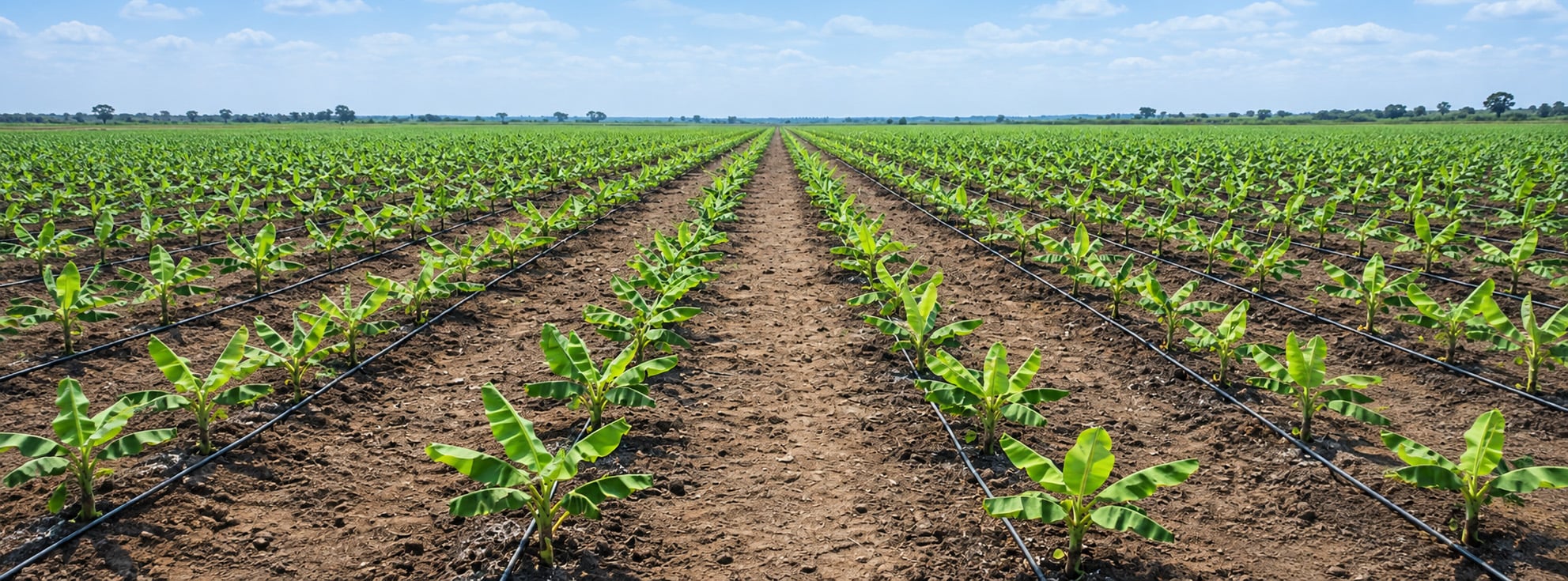
Water-soluble fertilizer for banana lets you feed the crop through drip in small doses that follow each growth stage, and in trials this gave more fruit from less fertilizer and water than soil-applied fertilizer. The best water-soluble fertilizer for banana is the one that dissolves cleanly in your water, matches the growth stage and costs […]
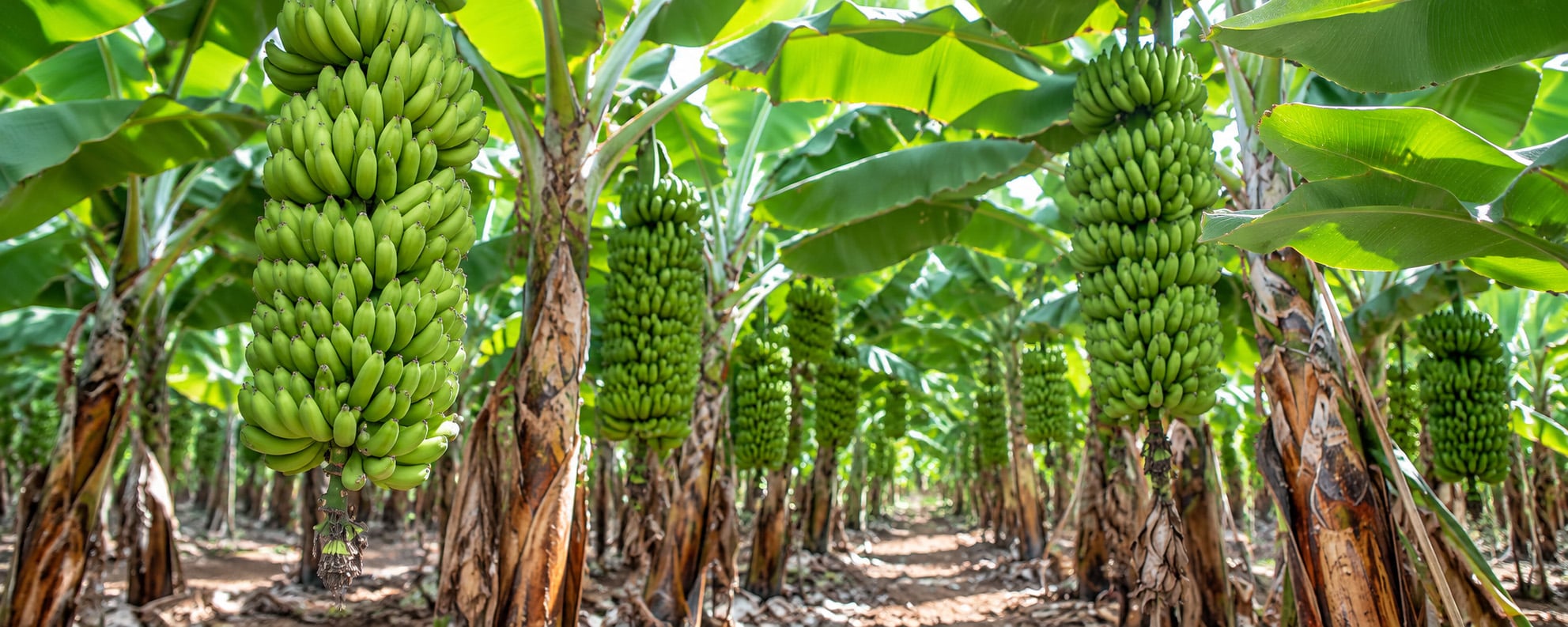
To increase banana bunch weight, build a large, healthy leaf canopy and good potassium reserves before the bunch emerges, keep water supply steady, and protect the leaves until harvest. Most of the bunch’s potential is set before shooting: the number of fruits depends on the leaf area the plant has when it initiates its flower […]
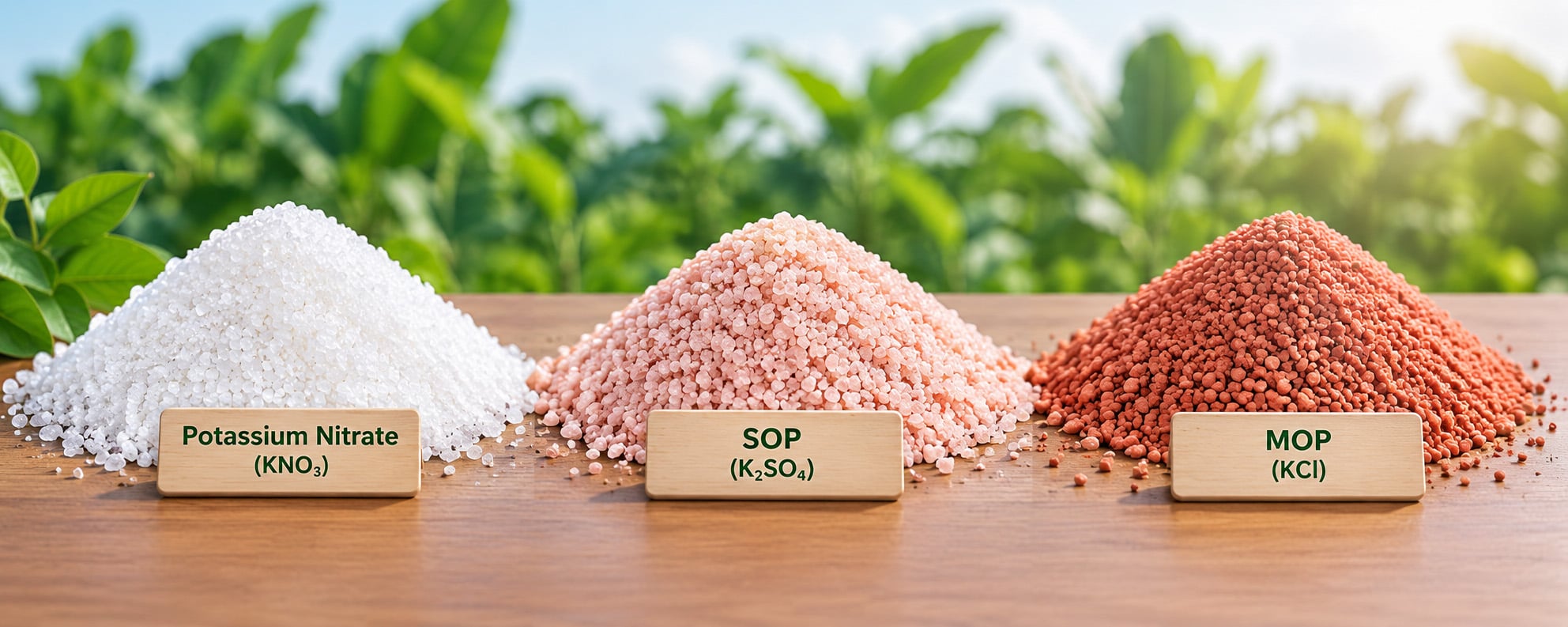
Potassium fertilizer replaces the potassium (K) your crop takes from the soil faster than the soil can release it. After nitrogen, potassium is the nutrient plants need in the largest amounts (Zörb et al., 2014), mainly to move water and sugars and to keep their cells working under stress. The common sources (muriate of potash, […]
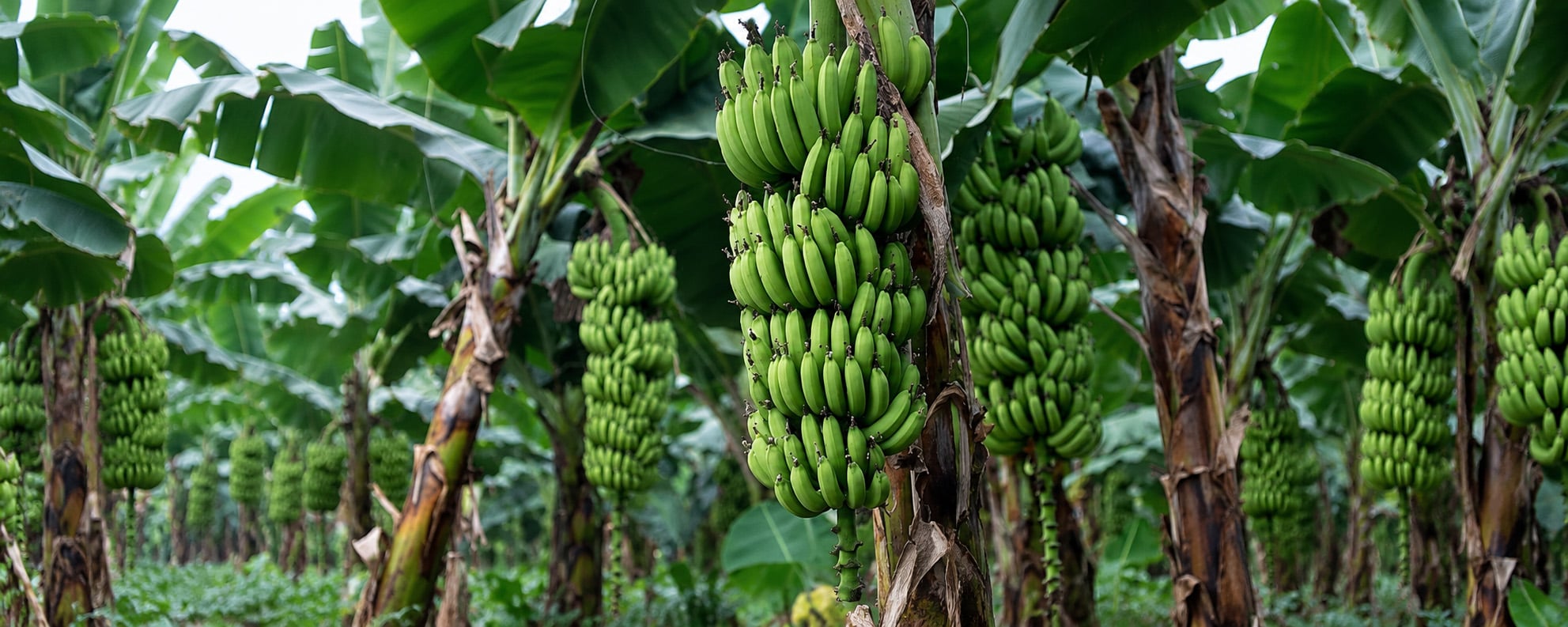
Muriate of potash (MOP), sulfate of potash (SOP) and potassium nitrate all supply the potassium a banana crop needs, so the best potash for banana plants depends on your water, soil, application method and budget, not on the potassium itself. MOP is the cheapest and most widely used source; SOP adds the least salt and […]
A good banana fertilizer schedule front-loads nitrogen and phosphorus in the first months after planting, then keeps potassium high from flower initiation through bunch filling. This guide shows how to split N, P and K across the growth stages of a plant crop, how a ratoon program differs, and how to run the same schedule […]