







Micronutrient budgets are shrinking. Deficiencies are not.
Retailers in the United States report that growers are trimming micronutrient spending this season, while tissue tests keep finding zinc, boron and manganese shortages. At Van Polder, we believe this is the wrong place to save, and the lesson applies to every market our partners serve. When nitrogen, phosphate and potash bills rise, micronutrient fertilizer […]

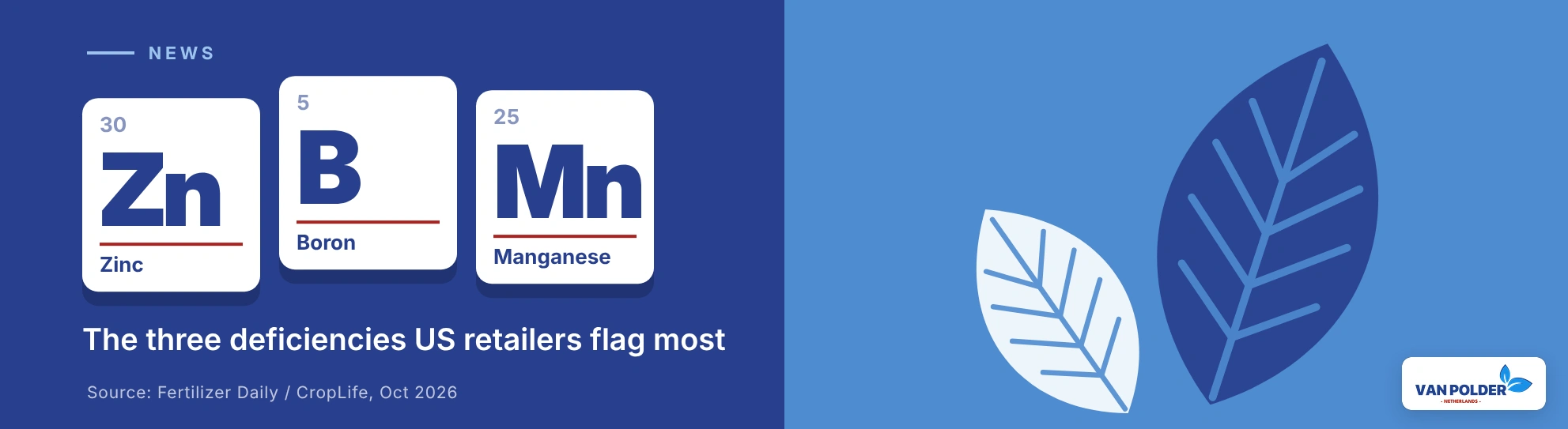

Retailers in the United States report that growers are trimming micronutrient spending this season, while tissue tests keep finding zinc, boron and manganese shortages. At Van Polder, we believe this is the wrong place to save, and the lesson applies to every market our partners serve.
When nitrogen, phosphate and potash bills rise, micronutrient fertilizer is often the first line cut from the plan. A feature in the US trade magazine CropLife, summarized by Fertilizer Daily on 12 October, shows this is happening again in 2026. We think it is worth a closer look.
What retailers are seeing
Fertilizer Daily reports that retail prices for all eight major US fertilizers are above year-ago levels, and the main nutrients are taking most of the budget. Keith Martus of Star of the West Milling in Michigan said micronutrient use was similar to other years, but that product use fell for every nutrient except nitrogen. A large US input supplier told CropLife that some growers are holding back or rethinking their programs, while many still invest when agronomic data supports it.
The deficiencies, however, have not gone away. Zinc, boron and manganese were the micronutrients retailers mentioned most often, because tissue sampling keeps documenting widespread shortages of all three. Ben Hushon of The Mill in Maryland put it plainly: “As soon as you stop bringing micronutrients up, the farmer stops ordering them.”
Why we advise against cutting blindly
Micronutrients are small in volume but large in consequence. Zinc is needed for enzyme activity and for producing auxin, a growth hormone. Boron supports cell walls, flowering, pollination and fruit set. Manganese plays a direct role in photosynthesis and activates many enzymes. When one of them is short, the crop cannot make full use of the nitrogen, phosphate and potash the grower has already paid for.
That is also why we never recommend applying micronutrients just in case. They pay back where a crop is actually short of them. Where they are not needed, they add cost without adding value. The answer is not to spend more, but to spend where the data points.
Our advice for distributors and growers
Whether you distribute in Southeast Asia, Africa or Latin America, the same budget pressure is there this year. Our agronomists recommend four steps:
- Test before you cut. Tissue analysis and soil testing for micronutrients show which ones are short in a given field and crop.
- Target the gap. Apply what the test shows is missing, timed to the crop stages when demand is highest, such as flowering for boron.
- Correct in season. Foliar sprays can help correct a confirmed deficiency during the season, often faster than soil application.
- Keep micronutrients in the conversation. Growers order what their advisors keep recommending, so regular agronomic advice matters as much as the product.
How Van Polder can help
Our trace elements and foliar fertilizers comply with the EU Fertilising Products Regulation (EU) 2019/1009 and are available under the Van Polder brand or as our partners’ own private labels. For our private-label partners, we also provide technical support to build micronutrient programs around local soil and tissue data. Used where a test confirms a shortage, foliar trace elements can help growers correct deficiencies quickly and protect the return on their main fertilizer investment.
If you are planning your micronutrient range for the coming season, we are happy to look at the numbers with you. Contact the Van Polder team, and our agronomists will help you build recommendations based on soil and tissue data from your market.

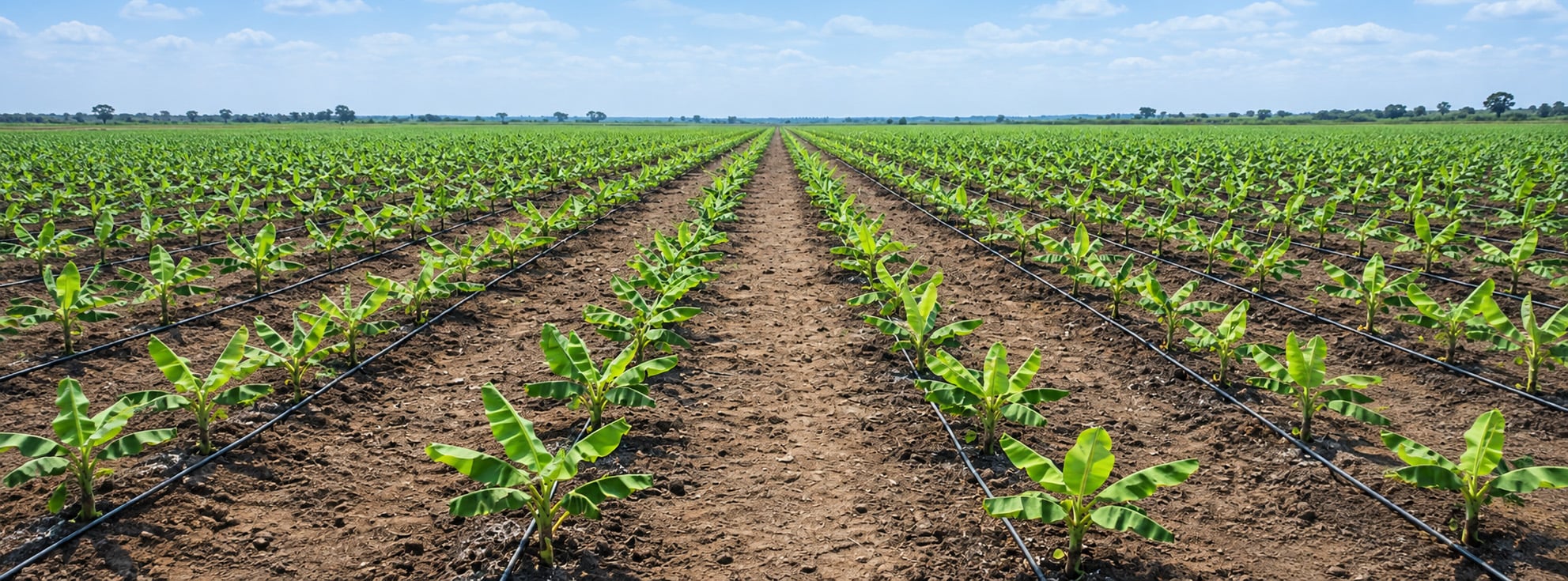
Water-soluble fertilizer for banana lets you feed the crop through drip in small doses that follow each growth stage, and in trials this gave more fruit from less fertilizer and water than soil-applied fertilizer. The best water-soluble fertilizer for banana is the one that dissolves cleanly in your water, matches the growth stage and costs […]
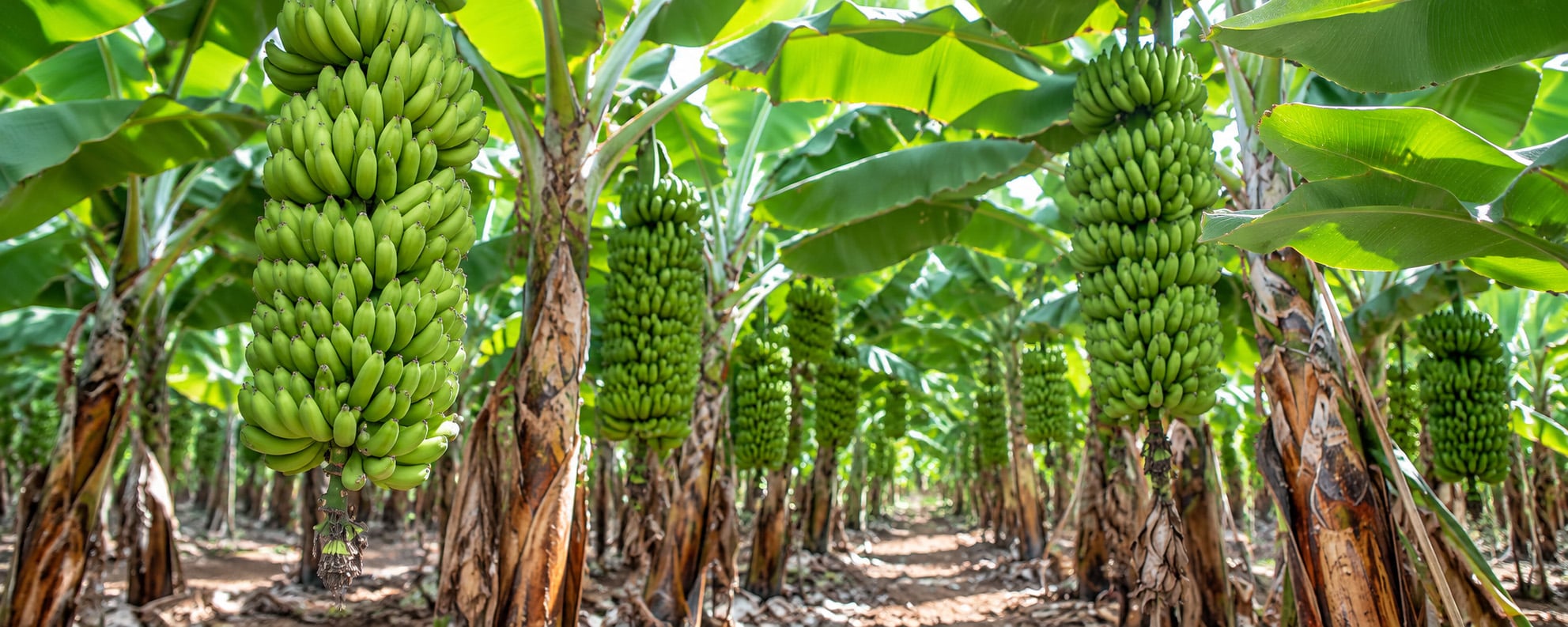
To increase banana bunch weight, build a large, healthy leaf canopy and good potassium reserves before the bunch emerges, keep water supply steady, and protect the leaves until harvest. Most of the bunch’s potential is set before shooting: the number of fruits depends on the leaf area the plant has when it initiates its flower […]

The right fertilizer for banana plants is the one that matches what the crop removes, what your soil already holds and the stage the plant is in. Banana takes up far more potassium than any other nutrient, followed by nitrogen and calcium, so K supply and timing decide much of the result. This guide covers […]
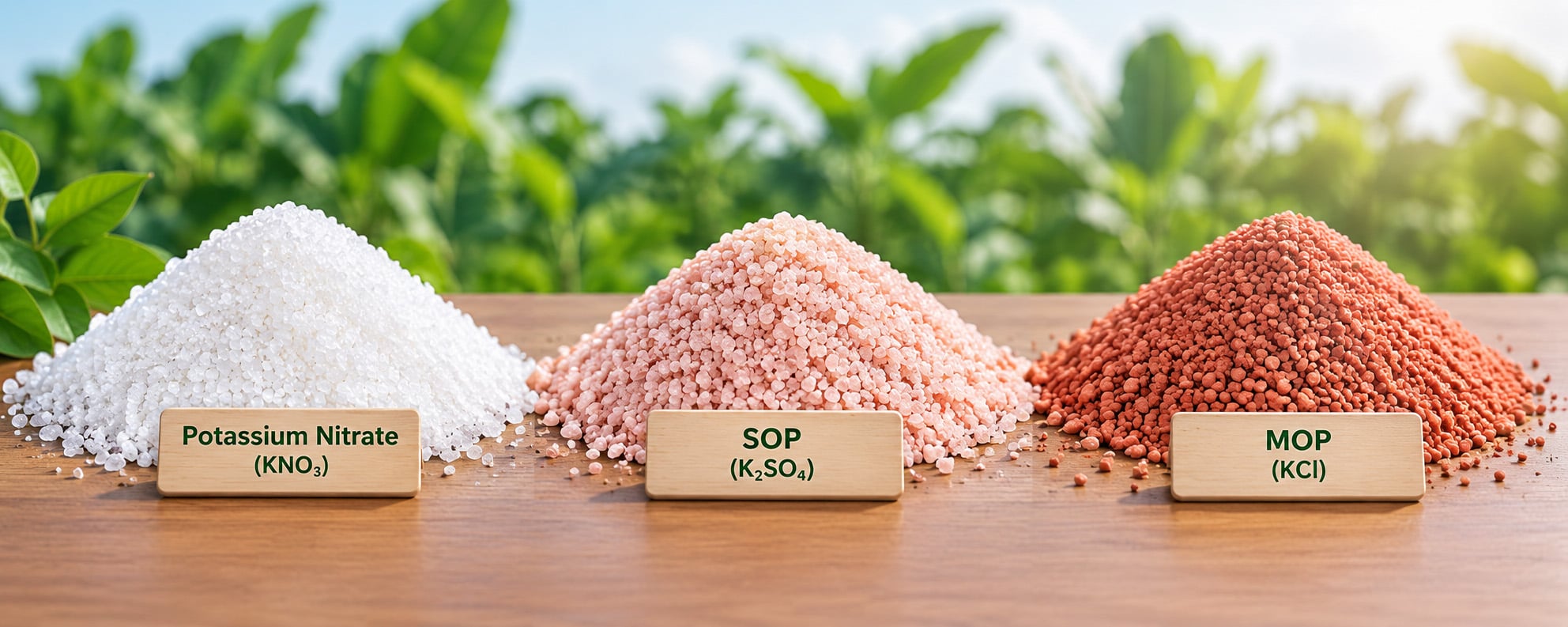
Potassium fertilizer replaces the potassium (K) your crop takes from the soil faster than the soil can release it. After nitrogen, potassium is the nutrient plants need in the largest amounts (Zörb et al., 2014), mainly to move water and sugars and to keep their cells working under stress. The common sources (muriate of potash, […]
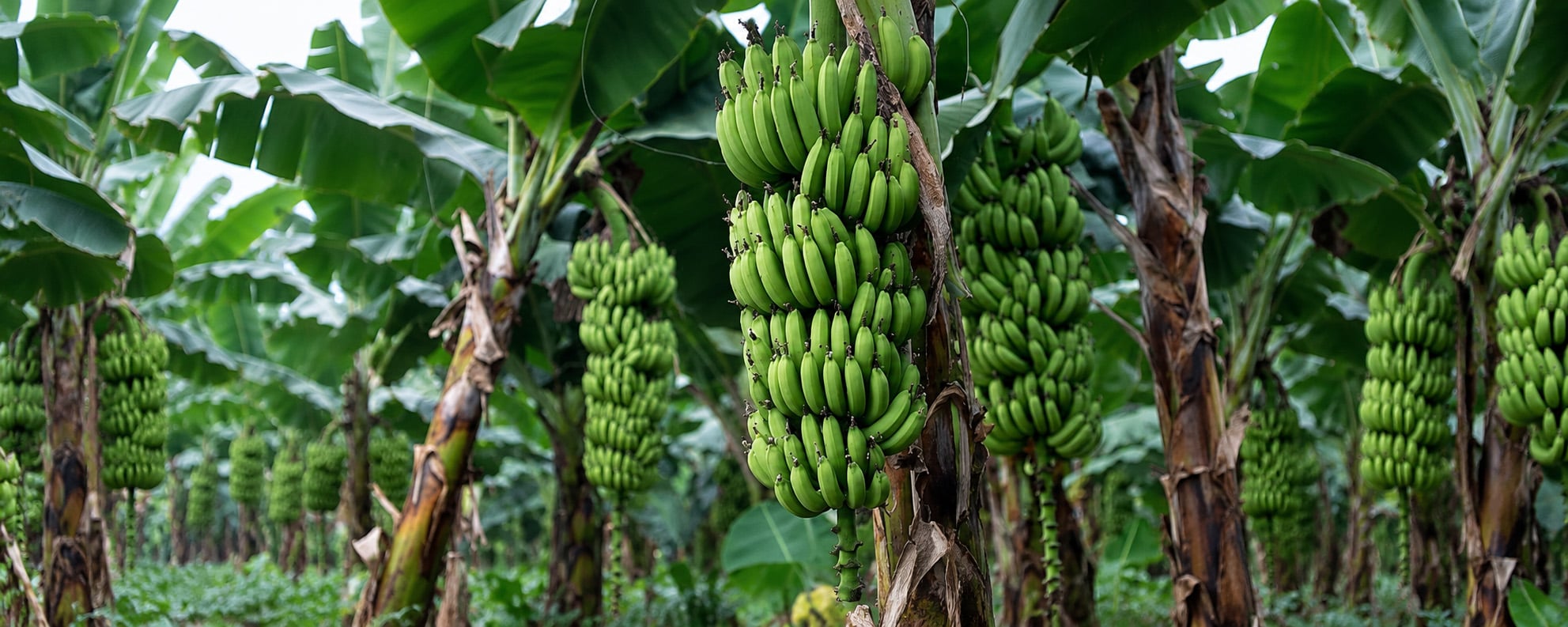
Muriate of potash (MOP), sulfate of potash (SOP) and potassium nitrate all supply the potassium a banana crop needs, so the best potash for banana plants depends on your water, soil, application method and budget, not on the potassium itself. MOP is the cheapest and most widely used source; SOP adds the least salt and […]
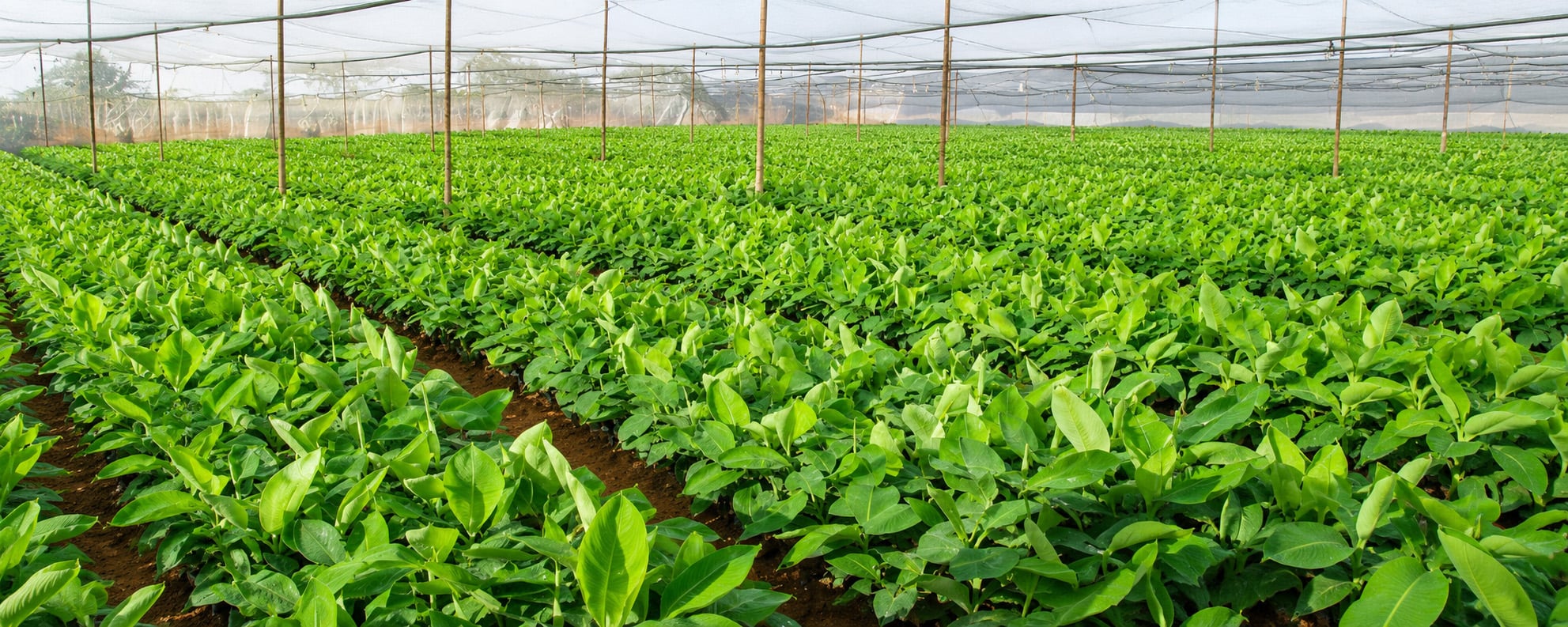
A good banana fertilizer schedule front-loads nitrogen and phosphorus in the first months after planting, then keeps potassium high from flower initiation through bunch filling. This guide shows how to split N, P and K across the growth stages of a plant crop, how a ratoon program differs, and how to run the same schedule […]