







Top 5 Amino Acid Fertilizer Benefits That Improve Yield and Crop Quality
Amino acid fertilizers provide significant benefits by increasing crop yields and quality while supporting sustainable agriculture. When applied correctly, they stimulate root growth, optimize nutrient absorption, and improve resistance to extreme weather. Therefore, you should review the following information about amino acid fertilizer benefits and notes to ensure proper use of these fertilizers. 1. 4 […]


Amino acid fertilizers provide significant benefits by increasing crop yields and quality while supporting sustainable agriculture. When applied correctly, they stimulate root growth, optimize nutrient absorption, and improve resistance to extreme weather. Therefore, you should review the following information about amino acid fertilizer benefits and notes to ensure proper use of these fertilizers.
1. 4 Amino Acid Fertilizer Benefits for Plant
Review the following detailed information to understand the core benefits and ensure the proper use of these fertilizers:
1.1. Enhanced Environmental Stress Tolerance and Recovery
Crops frequently face extreme weather conditions – such as severe drought, frost, and high salinity – that damage plant cells and significantly reduce productivity. To combat these challenges, amino acid fertilizers provide a direct supply of “building blocks” for protein synthesis, thereby reducing the metabolic energy required for the nascent amino acid synthesis.
Specifically, amino acids can act as osmoprotectants, which stabilize membranes, enzymes, and proteins against denaturing, and promote plant antioxidant performance by improving the non-enzymatic and enzymatic antioxidant defense machinery of the cell.
For instance, under saline and drought conditions, proline acts as a powerful osmoprotectant that stabilizes cellular structures and maintains turgor pressure.
Meanwhile, during freezing weather, proline and glycine betaine are involved in freezing tolerance and improving plant abiotic stress resistance. By protecting cells from internal damage and keeping them hydrated, these amino acids enable crops to sustain active photosynthesis during harsh conditions and recover significantly faster once the stress event has passed.

| Tip for rapid recovery: Apply a foliar spray of amino acid fertilizers containing anti-stress compounds (such as proline or glutamic acid) exactly at the time of or immediately after a severe weather event occurs. This allowing the plant to absorb them instantly to repair damaged cells without expending extra metabolic energy. |
1.2. Stimulated Root Development and Plant Vigor
A weak root system severely limits a crop’s ability to absorb essential moisture and nutrients. Amino acid fertilizers address this issue by delivering the fundamental building blocks of proteins directly to the plant. Instead of forcing artificial growth, specific amino acids like tryptophan act as natural precursors for signaling molecules.
This involvement leads to enhanced crop root growth, and treatments could increase dry and fresh weight, shoot length, root length, leaf area, and final yield. Ultimately, this enhanced underground architecture significantly improves water and nutrient uptake, leading to greater biomass and higher final yields.

| Tip for robust root establishment: To maximize root development, apply commercial amino acid mixtures directly to the rhizosphere via soil drenching or use them as a seed soaking treatment right before planting. |
Note: While these fertilizers enhance biological root growth, they cannot overcome severe physical barriers; stunted roots caused by heavily compacted soil still require mechanical tillage.
1.3. Optimized Nutrient Uptake and Fertilizer Efficiency
A major challenge in crop nutrition is that essential trace minerals – such as iron, zinc, and copper – often become immobilized in the soil, making them completely unavailable to the plant’s root system.
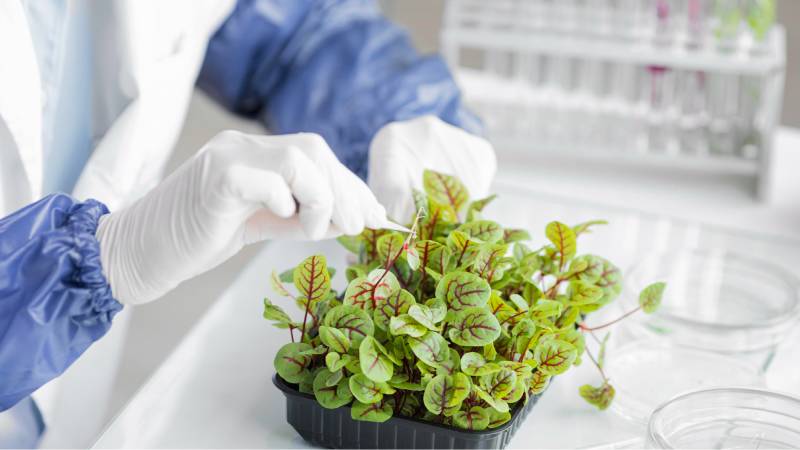
Amino acids (such as cysteine, glutamine, glycine, histidine, and lysine) effectively resolve this limitation by acting as natural chelating agents. Notably, cysteine occurs at particularly high concentration in keratin, which is why amino acids derived from hair for fertilizer are gaining attention as a natural cysteine source. Mechanistically, they bind to these trace minerals to form electrically neutral molecules. This specific biological interaction prevents the micronutrients from precipitating or becoming fixed in the soil, allowing the complexed molecules to seamlessly penetrate plant cell membranes.
Because of this enhanced transport mechanism, the application of amino acid-chelated fertilizers (e. g., zinc-amino acid complexes) significantly improves nutrient use efficiency. Field trials demonstrate that such targeted biological stimulation not only increases overall biomass and grain nutritional quality but also optimizes the crop’s physiological performance.
Consequently, integrating these environmentally friendly biostimulants allows growers to enhance crop yield while systematically reducing their reliance on heavy synthetic inorganic applications.
1.4. Improved Flowering, Fruit Setting and Early Harvest
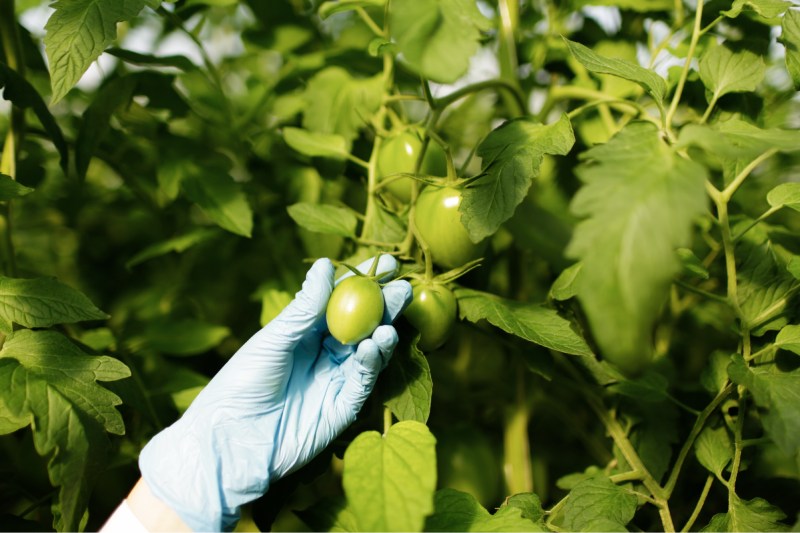
While vegetative growth relies on general energy conservation, the reproductive stage demands highly specialized metabolic triggers. Amino acid fertilizers directly influence this phase by supplying specific amino acids like Proline and Hydroxyproline, which contribute to improving the fertility of plant pollen. Since eggs are a rich natural source of proline, many growers first look into how to use egg amino acid for plants before this reproductive stage.
Furthermore, leveraging the chelation mechanism, specific amino acids (such as cysteine, glutamine, glycine, histidine, and lysine) efficiently transport essential micronutrients – such as Iron, Zinc, and Copper – into plant tissues, which subsequently supports vigorous floral organ formation and boosts flower blooms. This efficient delivery system enables plants to quickly obtain essential nutrients during critical growth periods such as flowering and fruiting.
Consequently, these biological benefits translate into concrete agronomic outcomes. For instance, the use of amino acid derivatives can increase fruit yield, filling, and set. Furthermore, specific treatments can even decrease time to flowering, leading to earlier harvests.
2. Amino Acid Fertilizer Benefits for Soil Health
Beyond their direct effect on the crop, amino acid fertilizers act on the soil through a different route: they feed the rhizosphere microbial community. Amino acids are a key intermediary in the soil nitrogen cycle. Once applied, they are taken up by soil microbes rapidly – in productive grassland soils, up to 96% of added substrate can be depleted within a minute, followed by gradual mineralization.
By feeding this microbial activity, amino acid fertilizers also support the mineralization of organic nitrogen into plant-available forms, particularly under reduced mineral inputs. For soil-level effects, apply through fertigation or root-zone delivery; follow the product label for rates.

One limit worth noting: Amino acid fertilizers stimulate the biological side of the soil but do not restore bulk structure. Physical compaction is addressed through mechanical means such as subsoiling, deep tillage, or bulk organic matter at agronomic rates – not liquid biostimulants.
3. Important Notes When Using Amino Acid Fertilizer for Best Results
To get the expected benefits from amino acid fertilizers and avoid common application errors, keep the following four points in mind.
1) Adhere to dilution ratios and avoid overdosing
Always follow the manufacturer’s label dilution, as the right rate depends on the active-ingredient concentration of each product. This is especially true for homemade solutions, so it helps to first understand how to make amino acid fertilizer correctly. Applying amino acids at high concentrations can inhibit plant growth and damage the photosynthetic apparatus – a 2021 tomato study found that foliar application of alanine at 15 mM produced phytotoxicity and altered metabolic pathways such as proline synthesis. When trialing a product for the first time, test on a small area and observe plant response before scaling up.
2) Apply at the correct time and under appropriate weather conditions
Apply foliar sprays in the early morning or late afternoon, when temperatures are lower and stomata are open for absorption. Avoid midday applications under heat: research in Quercus species showed that minimum leaf conductance declined and stomatal closure was greater at 45 °C than at 25 °C, reducing the window for leaf uptake. Avoid spraying when rain is imminent to prevent runoff.
3) Select the application method that matches the goal
The right method depends on what you want the amino acids to do:
- Foliar spray– for rapid metabolic response (stress recovery, flowering, fruit set). Apply a light, even mist; avoid oversaturation.
- Root drench / fertigation– for root development and rhizosphere microbial activity.
- Seed treatment– for uniform germination and seedling vigor.
4) Exercise caution when mixing, and reduce mineral fertilizer when co-applying
Before tank-mixing amino acids with micronutrients or pesticides, run a jar test to confirm physical compatibility. However, University of Florida/IFAS Extension notes that a jar test only checks for physical incompatibility, not chemical or legal incompatibility — so always read product labels and consult an expert too.
Because foliar amino acid application can improve nitrogen uptake and use efficiency (a wheat field trial reported significant improvements in nitrogen-use efficiency at 3 mL/L), reduce mineral fertilizer rates when co-applying to avoid nutrient excess and runoff.
Acting as a sustainable complement rather than a standalone fix, amino acid fertilizers enhance plant stress tolerance, root growth, nutrient absorption, and fruit set while boosting the soil microbiome and nitrogen cycling. To unlock these benefits without substituting essential bulk organic matter, you need to follow product dilution labels, apply during early mornings or late afternoons, and reduce co-applied mineral fertilizers to prevent nutrient overload.


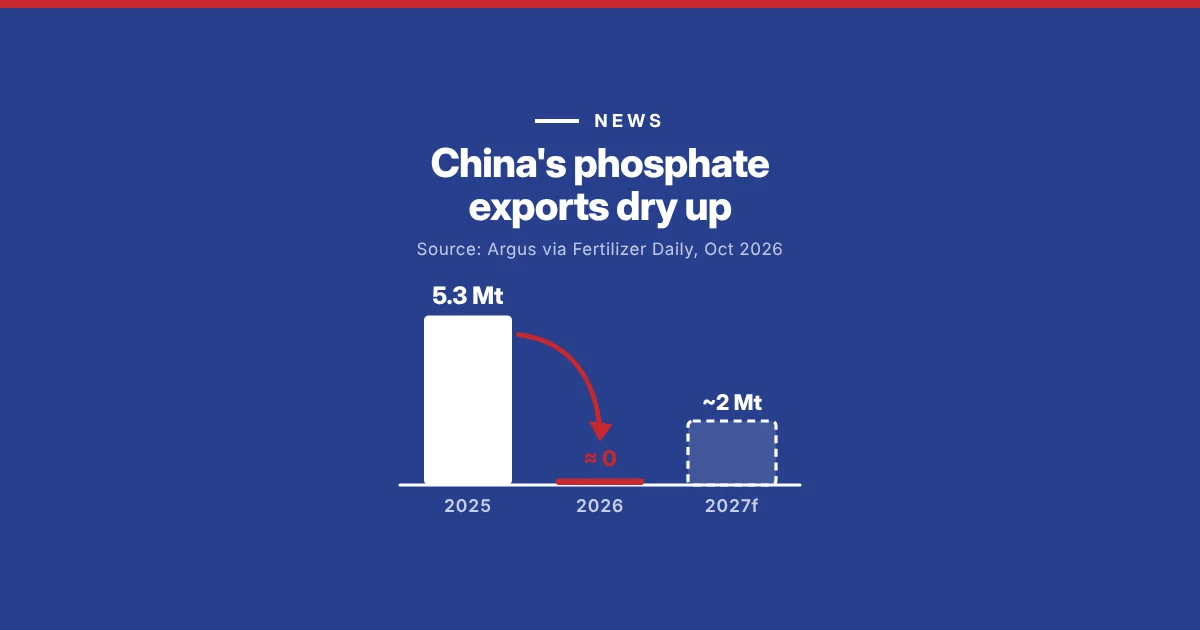
China, which exported about 5.3 million tonnes of phosphate fertilizer in 2025, has shipped almost none in 2026. With sulfur scarce and phosphate prices high, import-dependent markets face a tight season, and every kilo of phosphorus needs to work harder. At Van Polder, we believe a tight phosphate market is a reason to look again […]

If you are starting a banana farm, Panama disease (Fusarium wilt of banana) is the risk to plan for. How to prevent Panama disease in bananas comes down to keeping the fungus out, because no fertilizer prevents or cures it and once it is in the soil it stays for decades (Pegg et al., 2019; […]

A government project in Bangladesh’s Rajshahi Division has brought solar-powered pumps, including solar drip systems for orchards, to drought-prone land where groundwater has been falling for decades. The Prime Minister wants all diesel irrigation pumps converted to solar within five years. For growers who move to drip, the next step is to feed the crop […]

Calcium deficiency in banana shows first on the youngest leaves, as thickened veins and a saw-tooth pattern of yellow and dead tissue along the leaf margin, and in severe cases as “spike leaf”, new leaves with little or no blade, and poor-quality fruit (Turner, 1987; Martin-Prével, 1980). On most plantation soils it is not a […]
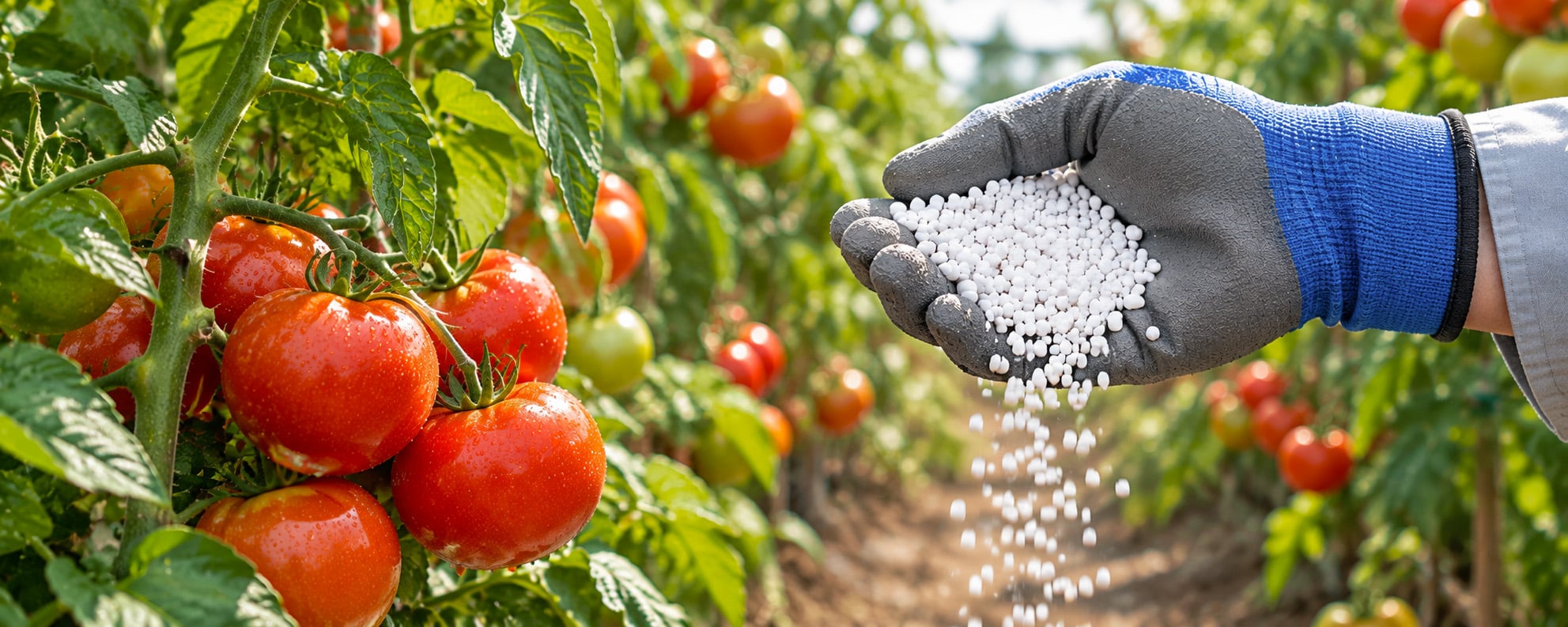
A calcium fertilizer supplies the calcium that holds plant cell walls and membranes together, but whether it reaches the fruit depends as much on water flow as on the fertilizer you choose. Calcium travels with water to the leaves and barely moves out of them again, so fruit and young leaves can run short even […]

An unusually wet winter brought coffee flowering in Minas Gerais forward by about a month, in several separate waves. With October forecast to be hotter than normal and rain patchy, the question for 2027 is now how many of those flowers turn into fruit. At Van Polder, we believe a strong flowering is only the […]