



Calcium Deficiency in Banana: Symptoms, Causes and How to Supply Calcium
Calcium deficiency in banana shows first on the youngest leaves, as thickened veins and a saw-tooth pattern of yellow and dead tissue along the leaf margin, and in severe cases as “spike leaf”, new leaves with little or no blade, and poor-quality fruit (Turner, 1987; Martin-Prével, 1980). On most plantation soils it is not a […]

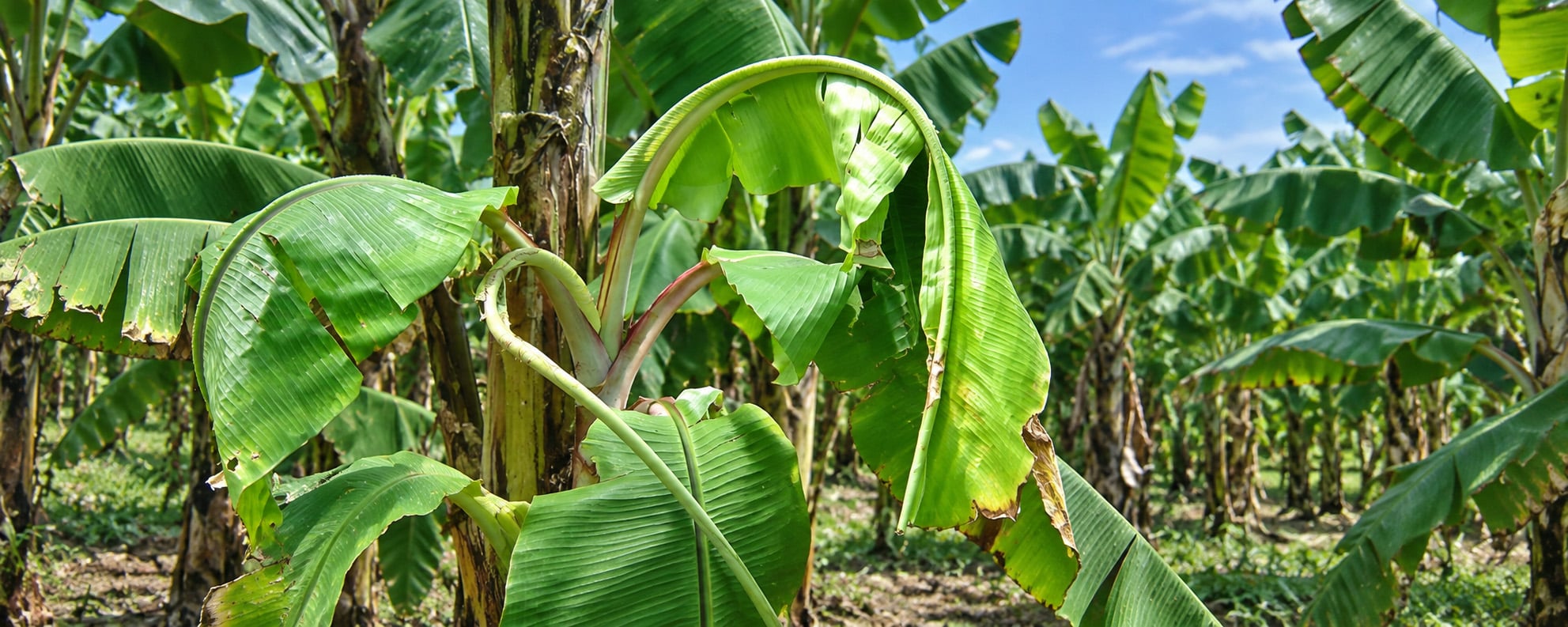

Calcium deficiency in banana shows first on the youngest leaves, as thickened veins and a saw-tooth pattern of yellow and dead tissue along the leaf margin, and in severe cases as “spike leaf”, new leaves with little or no blade, and poor-quality fruit (Turner, 1987; Martin-Prével, 1980). On most plantation soils it is not a shortage of calcium in the soil but a problem of uptake: too much potassium or magnesium, dry soil or a sudden growth flush. This guide covers how much calcium a banana crop needs, how to recognize and confirm a deficiency, what calcium can and cannot do about peel splitting and finger drop, and how to supply it.
How much calcium banana plants need
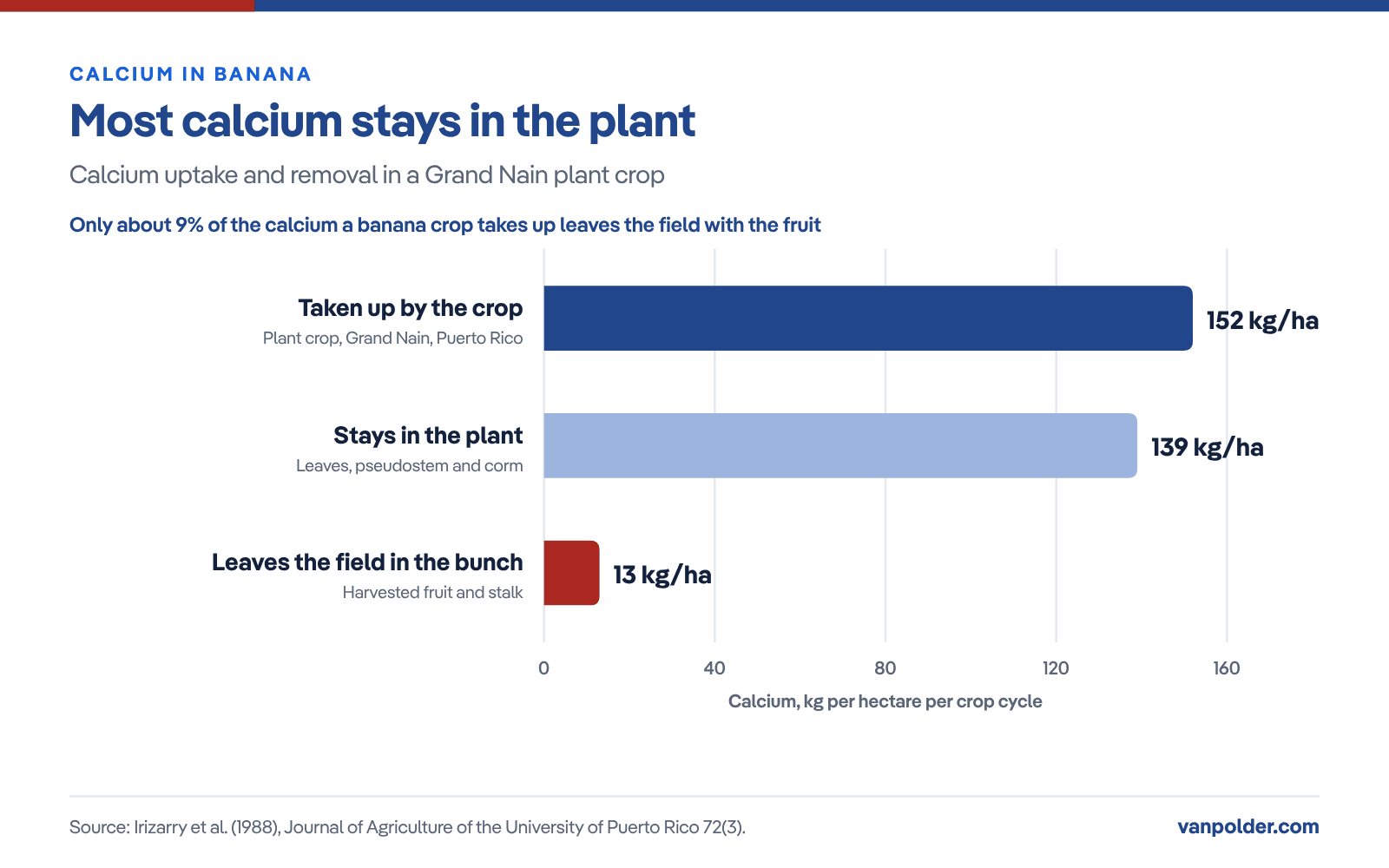
When you plan calcium for banana plants, start from demand: a banana crop takes up a lot of calcium but exports little of it. A Grand Nain plant crop in Puerto Rico took up 152 kg calcium per hectare: 139 kg stayed in the plant and only 13 kg left the field in the bunch (Irizarry et al., 1988). In São Paulo, a 40 t/ha crop removed about 6 kg calcium per hectare in the bunches, against 182 kg potassium (Teixeira et al., 2008), and Grande Naine bunches in the same state exported 12 to 23 kg calcium per hectare at 62 to 67 t/ha (Oliveira et al., 2022). Some guides give a much higher figure, about 2 kg calcium per tonne of fruit (Lahav & Turner, 1983, cited in Robinson & Galán Saúco, 2010, and in Weinert & Simpson, 2016), but studies that measured the harvested fruit in the Caribbean and Brazil found about 0.12 to 0.37 kg per tonne (Twyford & Walmsley, 1974; Salomão et al., 2004; Deus et al., 2020; Oliveira et al., 2022). Real differences come from season, harvest stage and whether the bunch stalk is counted: a later harvest grade raised bunch calcium by 15%, and the stalk held about a quarter of the bunch’s calcium (Twyford & Walmsley, 1974). Martin-Prével (1980) gives about 150 kg calcium per hectare for a typical stand. Much of the rest returns to the field: in a sand-culture study, 29% to 44% of the calcium accumulated in the trash of dead leaves (Turner & Barkus, 1983a), and about 55% of the calcium in the mother plant is recycled to the follower (Lahav & Turner, 1989, cited in Weinert & Simpson, 2016).
Uptake runs through the whole cycle. In the Puerto Rico study, calcium uptake rose steadily as the plant matured (Irizarry et al., 1988). Young root tips take up calcium passively with water, so the soil must be moist (Weinert & Simpson, 2016). Once in the plant, calcium moves with the transpiration stream to the leaves and barely moves out again through the phloem (Hawkesford et al., 2023). That is why deficiency shows on new leaves and fruit, not on old leaves. For the general physiology and the calcium sources, see our Calcium fertilizer guide; for the full nutrient program, see fertilizer for banana plants.
Calcium deficiency symptoms in banana
Look at the youngest leaves first. The earliest sign is thickened lateral veins near the midrib, followed by saw-tooth yellowing from the margin; in severe cases, or after a sudden growth flush, new leaves come out as “spike leaf” with little or no blade (Turner, 1987; Weinert & Simpson, 2016).
In more detail: the first sign is a thickening of the lateral veins, especially near the midrib. Later, yellow patches appear between the veins near the margin and leaf tip; as they die and spread toward the midrib, the blade takes on a saw-tooth look (Turner, 1987). The damage is irreversible on affected leaves (Martin-Prével, 1980). In severe cases leaves are deformed, with serrated edges or little or no blade (Weinert & Simpson, 2016).
Other calcium deficiency symptoms in banana include short, thick, rotted roots that are easily mistaken for nematode damage, deformed fruit, poor fruit quality and skin splitting (Weinert & Simpson, 2016). Calcium-deficient plants give fruit of poor quality that tends to split well before maturity (Martin-Prével, 1980).
Is spike leaf a sign of calcium deficiency?
Spike leaf, also called “dog-ear” or “November leaf”, is the symptom most often shown: a new leaf that emerges deformed, with a serrated edge or little or no blade. It is linked to calcium, since affected leaves held about half the calcium of healthy leaves nearby (Turner, 1987). But it is a poor sign to judge a plantation by:
- It is temporary. It follows a sudden flush of growth, often in spring, or heavy potassium applications, and may affect one leaf or seven or more (Turner, 1987). Regular liming prevents chronic calcium deficiency but not this short-term shortage (Turner, 1987).
- It is the severe end. Milder deficiency shows first as thickened veins and saw-tooth margins on young leaves (Turner, 1987; Weinert & Simpson, 2016).
- Its cause is not fully proven. Turner (1987) calls the evidence for calcium “circumstantial”.
When you see spike leaf, look back four to six weeks, which is when the affected leaf began to form (Turner, 1987), for a heavy fertilizer dose or a sudden burst of growth. Then sample normal young leaves to check the plant’s overall calcium. Avoid one heavy dose at the start of the season; a 1% calcium nitrate spray (10 g/L) can reduce spike leaf (Turner, 1987).
Look-alikes: what else causes these symptoms
Do not diagnose from leaves alone. Early reports of “calcium deficiency” in banana were later shown to be sodium toxicity (Martin-Prével, 1980), and marginal scorch on older leaves points to excess sodium or manganese rather than calcium (Turner, 1987). Boron deficiency also deforms fruit (Weinert & Simpson, 2016). Potassium deficiency starts on the older leaves; see potassium deficiency in banana.
| What you see | Where on the plant | Likely cause | How to tell |
| Thickened lateral veins, then saw-tooth yellowing and dead patches from the margin toward the midrib | Youngest leaves | Calcium deficiency | Leaf calcium below the standard; often with high leaf K or Mg |
| Deformed leaf with serrated edges or little or no blade (spike leaf, flag leaf) | Young leaves after a growth flush | Temporary calcium shortage | Appears after a growth flush or heavy K; temporary |
| Marginal scorch | Older leaves | Sodium or manganese excess, not calcium | Leaf Na or Mn analysis; check irrigation water and soil pH |
| Yellowing and curling at the leaf tip | Older leaves first | Potassium deficiency | Leaf K analysis |
| Deformed fingers, poor fill | Bunch | Calcium or boron deficiency | Leaf Ca and B analysis |
| Short, thick, rotted roots | Roots | Calcium deficiency or nematodes | Nematode count in a root sample |
Sources: Turner (1987); Weinert & Simpson (2016); Martin-Prével (1980).
Confirm with leaf and soil analysis
Leaf analysis is the check. For Cavendish, the leaf calcium standard is 0.74% to 1.25%, with soil exchangeable calcium of 4.0 to 10.0 cmol(+)/kg and soil pH (1:5 water) of 5.0 to 6.5 (Weinert & Simpson, 2016). Cultivar matters: across varieties grown side by side, leaf III calcium ranged from 0.46% to 1.20%, and Lakatan had lower calcium than Cavendish (Turner & Barkus, 1981). Read leaf calcium together with potassium and magnesium, because low leaf calcium often reflects an excess of those two (Weinert & Simpson, 2016). See [LINK: BAN-PH-019 – Soil and leaf analysis for banana] for sampling.
Causes of calcium deficiency in banana
- Potassium and magnesium competition. Potassium, magnesium and sodium outcompete calcium for uptake (Weinert & Simpson, 2016). In sand culture, raising the potassium supply reduced calcium uptake by banana (Turner & Barkus, 1983b). Calcium uptake is greatest when the soil ratio Ca : (K + Ca + Mg) is about 0.7, with 0.6 to 0.8 satisfactory, all in meq/100 g (Turner, 1987).
- High manganese on acid soils. A high manganese supply reduced the uptake of calcium, magnesium and zinc (Turner & Barkus, 1983b). Above pH 5.5, manganese is unlikely to be a problem (Turner, 1987).
- Fast growth. Problems tend to appear in high-yielding plantations where nitrogen and potassium are well supplied and calcium is neglected (Turner, 1987).
- Dry soil. Without soil moisture, roots cannot take up calcium (Weinert & Simpson, 2016).
- Acid soils. Martin-Prével (1980) gives a pH of about 6.5 as optimal for banana and notes that acid soils are limed.
Philippines: calcium in Davao plantation soils
At a Davao del Norte plantation, soils were naturally high in potassium, calcium and magnesium, but magnesium dominated the exchange complex. The target Ca:Mg:K balance of 6:3:1 was not met, and calcium saturation sat well below the 65% optimum (Salibay & Salomez, 2009). Leaf calcium was positively related to bunch weight, while the lime and potassium rates recommended from soil tests correlated negatively with bunch weight, so the authors advise caution with both (Salibay & Salomez, 2009). On these soils, the issue is the balance of cations, not the total calcium. The Ca:Mg:K balance is covered in Magnesium for banana.
Peel splitting, finger drop and shelf life: what calcium can and cannot do
Calcium is often recommended as the fix for banana peel splitting and finger drop. The research gives a more mixed picture, and most of these problems are driven by ripening conditions and cultivar.
Banana peel splitting. Two kinds exist. Splitting in the field before maturity is linked to calcium deficiency (Martin-Prével, 1980), and fruit left to ripen on the plant tends to split (Hassan & Pantastico, 1990). Splitting after harvest is different: it appeared 3 to 6 days after ripening started in a susceptible cultivar stored at saturating humidity, while Grande Naine did not split. Water moved from the peel into the sugar-rich pulp, and the susceptible cultivar had a thinner wax layer (Brat et al., 2016). Humidity, not calcium, is the lever: for ‘Pisang Mas’, ripening-room humidity should drop from about 90% to about 80% once fruit reaches the turning stage (Hassan & Pantastico, 1990).
Banana finger drop. Finger drop is the softening of the pedicel during ripening, driven by cell-wall genes and strongly cultivar-dependent (Mbéguié-A-Mbéguié et al., 2009). High humidity raises it (Hassan & Pantastico, 1990). In the Philippines, a 4% calcium chloride spray on the pedicels of ‘Latundan’ hands one week before harvest delayed finger drop by 2 to 4 days after full yellow and gave the lowest incidence, without affecting ripening (Esguerra et al., 2009). In a follow-up with 8% calcium chloride, fingers still dropped at full yellow, though calcium chloride again gave the lowest incidence (Esguerra et al., 2009). In Brazil, bunch sprays of 2% to 6% calcium chloride on the hybrid FHIA-18 did the opposite: drop resistance fell and fruit ripened faster as the concentration rose, and peel and pulp calcium did not change, so the author advised against pre-harvest calcium for finger drop (Pereira, 2002). Treat calcium as one small trial, not a fix.
Maturity bronzing and shelf life. In Colombia, maturity bronzing of the fruit is linked to low calcium uptake in dry periods and low transpiration around the bunch. Calcium nitrate injected into the pseudostem of harvested mother plants, at doses equal to 200 to 400 kg/ha, reduced bronzing and fruit losses without changing bunch weight (Díaz et al., 2006, cited in Díaz et al., 2007). In Costa Rica, a single calcium spray on the bunch two weeks after emergence did not significantly change maturity spot, bunch weight or peel calcium (Abarca Durán, 2017). Bronzing is not only about calcium: on two Colombian farms, bronzed bunches came more often from plants with a thin pseudostem and low leaf boron and zinc, which the authors treat as preliminary associations (Martínez et al., 2025). Calcium did not extend green-life either: in Guadeloupe, calcium added to the fertilizer, sprayed on bunches or applied after harvest did not change green-life, peel hardness or peel and pulp calcium (Tixier et al., 2010).
| Problem | When it happens | Main causes | Role of calcium | What helps |
| Fruit splitting in the field | Before harvest, on the plant | Calcium deficiency; fruit left to ripen on the plant | Yes, where the plant is deficient | Correct soil calcium and pH; harvest on time |
| Peel splitting after harvest | 3–6 days after ripening starts | Ripening at very high humidity; susceptible cultivars | No link found | Lower ripening-room humidity at the turning stage |
| Finger drop | At full yellow, during ripening | Pedicel softening during ripening; cultivar (Latundan is very prone); high humidity | Small: one pedicel-spray trial | Ripening conditions; 4% CaCl2 pedicel spray in one Latundan trial |
| Maturity bronzing | On the bunch, near harvest | Low calcium uptake in dry periods; low transpiration around the bunch; weak plants with low leaf B and Zn | Linked in Colombian work | Keep calcium supply and soil moisture steady |
| Short green-life | After harvest | Harvest stage, storage conditions | No effect of calcium found | Harvest maturity and cold chain |
Sources: Martin-Prével (1980); Hassan & Pantastico (1990); Brat et al. (2016); Mbéguié-A-Mbéguié et al. (2009); Esguerra et al. (2009); Díaz et al. (2007); Martínez et al. (2025); Tixier et al. (2010).
How to supply calcium to banana
Start with soil pH and the cation balance. On acid soils, lime or dolomite raises pH and supplies calcium; a common practice in New South Wales is 2 to 3 t/ha every two years, but the rate depends on the pH change you need and the soil’s buffering capacity (Turner, 1987). Lime and dolomite act only in the top 20 cm of soil (Weinert & Simpson, 2016). Use dolomite where magnesium is also low; where magnesium already dominates, as in parts of Davao, calcitic lime fits better (Salibay & Salomez, 2009). Gypsum supplies calcium and sulfur without changing pH (Weinert & Simpson, 2016). Base every rate on a soil test: Costa Rican recommendations, for example, run from no calcium where soil calcium is above 6 cmol(+)/kg to 560 kg CaO/ha a year at 3 to 6 cmol(+)/kg and 1,160 kg CaO/ha a year below 3 cmol(+)/kg (López & Espinosa, 2000, cited in Stoorvogel & Segura, 2018).
Time it with moisture. Apply most calcium toward the end of the wettest period, with smaller amounts in fertilizer blends through the year (Weinert & Simpson, 2016). Under drip, calcium goes in with the water; see the banana fertilizer schedule.
Calcium nitrate for banana plants. Calcium nitrate is the usual calcium source in fertigation because it dissolves readily. Keep it in a separate tank from phosphates and sulfates (UC Agriculture and Natural Resources, n.d.). Do not expect a yield gain on its own: in a Grande Naine fertigation trial, replacing urea with calcium nitrate did not change yield and lowered the gross margin (Alves et al., 2008). Use it where leaf or soil analysis shows calcium is short.
Foliar calcium has limits. Because calcium barely moves in the phloem, a spray feeds only the tissue it wets (Hawkesford et al., 2023). It can help young leaves after a growth flush (Turner, 1987), but bunch sprays did not raise peel calcium (Tixier et al., 2010). Soil supply and moisture do most of the work. For tank-mixing, see [LINK: BAN-PH-020 – Foliar feeding bananas].
Balance potassium. Bananas need large amounts of potassium, but heavy potassium without calcium invites spike leaf and low leaf calcium (Turner, 1987). Keep the soil Ca : (K + Ca + Mg) ratio near 0.7.
Calcium and Fusarium wilt
In pot trials with Cavendish plantlets, calcium compounds reduced the germination of Fusarium chlamydospores and the severity of wilt (Peng et al., 1999). This is a mechanism seen in pots, not a disease control, and no field effect has been shown. For nutrition in TR4 areas, see [LINK: BAN-PH-017 – Nutrition and soil health in Fusarium wilt (TR4) areas].
Van Polder products for calcium in banana
- LS CalciBo Liquid: liquid calcium with nitrate nitrogen and boron (16% CaO, 8.2% N-NO3, 0.2% B), for foliar feeding of young tissue where both calcium and boron are short.
- WSF CamagN: water-soluble calcium and magnesium nitrate (13.5-0-0 + 16% CaO + 6% MgO) for fertigation where both cations are low. Avoid it where magnesium already dominates the soil.
- LS Calcimag Liquid: liquid calcium and magnesium (12.5% CaO, 2.5% MgO, 8% N) for foliar or fertigation use.
- LS Calcio Max 40: concentrated liquid calcium (40% CaO).
- PRIME AA CAL: a biostimulant containing amino acids from the PEPTIONICS™ process, with 7.4% CaO. It supports the plant under stress; it does not replace calcium fertilization.
Follow the label for rates and check compatibility before tank-mixing.
FAQ
What causes calcium deficiency in banana plants?
Usually not a lack of calcium in the soil but poor uptake: excess potassium, magnesium or sodium, acid soil with high manganese, dry soil, or a sudden growth flush (Turner, 1987; Weinert & Simpson, 2016). Confirm with leaf analysis before you act.
Does calcium stop banana peel splitting?
Only splitting caused by calcium deficiency in the field. Splitting after harvest comes from ripening at very high humidity in susceptible cultivars (Brat et al., 2016), so lower the ripening-room humidity at the turning stage (Hassan & Pantastico, 1990).
Can calcium prevent banana finger drop?
Not reliably. One Philippine trial on Latundan cut finger drop with a 4% calcium chloride pedicel spray before harvest (Esguerra et al., 2009), but in a Brazilian trial on FHIA-18, calcium chloride sprays made finger drop worse (Pereira, 2002). Ripening conditions and cultivar matter more.
Is calcium nitrate good for banana plants?
Calcium nitrate is a practical calcium and nitrate source for fertigation. Use it where calcium is short; in one Grande Naine trial it gave no yield gain over urea (Alves et al., 2008).
Does calcium make bananas last longer after harvest?
No effect was found. Pre- and post-harvest calcium did not change green-life or peel calcium in Guadeloupe (Tixier et al., 2010).
Next step
Take leaf samples and a soil test, and read calcium together with potassium, magnesium and pH before you add calcium. For the full banana program, start with fertilizer for banana plants. For help choosing calcium products for your plantation, contact your Van Polder distributor.
Sources
- Abarca Durán, J. (2017). Efecto de la fertilización con calcio en la fruta de banano (Musa AAA cv. Gal) para el control de la mancha de madurez. Universidad de Costa Rica. kerwa.ucr.ac.cr
- Alves, M. da S., Coelho, E.F., Cardoso, C.E.L. et al. (2008). Application of different combination of calcium nitrate and urea through irrigation water to banana crop. CIGR International Conference of Agricultural Engineering, Foz do Iguaçu. alice.cnptia.embrapa.br
- Brat, P., Lechaudel, M., Segret, L. et al. (2016). Post-harvest banana peel splitting as a function of relative humidity storage conditions. Acta Physiologiae Plantarum 38: 234. https://doi.org/10.1007/s11738-016-2253-0
- Deus, J.A.L. de, Neves, J.C.L., Lima Neto, A.J. de, Natale, W., Alvarez V., V.H. & Albuquerque, F.M.R. de (2020). Partitioning of macronutrients and nutritional efficiency in fertigated Prata banana. Revista Brasileira de Fruticultura 42(4): e-611. https://doi.org/10.1590/0100-29452020611
- Díaz, A., Cayón, G. & Mira, J.J. (2007). Metabolismo del calcio y su relación con la “mancha de madurez” del fruto de banano. Una revisión. Agronomía Colombiana 25(2): 280–287. revistas.unal.edu.co
- Esguerra, E.B., Hilario, D.C.R. & Absulio, W.L. (2009). Control of finger drop in ‘Latundan’ banana (Musa acuminata AA group) with preharvest calcium spray. Acta Horticulturae 837: 167–170. https://doi.org/10.17660/ActaHortic.2009.837.20
- Hassan, A. & Pantastico, E.B. (eds.) (1990). Banana: Fruit Development, Postharvest Physiology, Handling and Marketing in ASEAN. ASEAN Food Handling Bureau, Kuala Lumpur.
- Hawkesford, M.J., Cakmak, I., Coskun, D., De Kok, L.J., Lambers, H., Schjoerring, J.K. & White, P.J. (2023). Functions of macronutrients. In: Rengel, Z., Cakmak, I. & White, P.J. (eds.), Marschner’s Mineral Nutrition of Plants, 4th edition. Academic Press, London. ISBN 978-0-12-819773-8.
- Irizarry, H., Rivera, E. & Rodríguez, J.A. (1988). Nutrient uptake and dry matter composition in the plant crop and first ratoon of the Grand Nain banana grown on an Ultisol. Journal of Agriculture of the University of Puerto Rico 72(3). revistas.upr.edu
- Martin-Prével, P. (1980). La nutrition minérale du bananier dans le monde (1re partie). Fruits 35(9): 503–518. agritrop.cirad.fr
- Martínez, A.M., Darghan, A.E., González, N., Fandiño, M. & Balaguera López, H.E. (2025). Relationship between the morphometric and nutritional variables of bananas (Musa AAA, Cavendish cv. Williams subgroup) and the formation of maturity bronzing. Agronomy 15(10): 2316. https://doi.org/10.3390/agronomy15102316
- Mbéguié-A-Mbéguié, D., Hubert, O., Baurens, F.C. et al. (2009). Expression patterns of cell wall-modifying genes from banana during fruit ripening and in relationship with finger drop. Journal of Experimental Botany 60(7): 2021–2034. https://doi.org/10.1093/jxb/erp079
- Oliveira, C.T., Rozane, D.E., Pavarin, L.G.F., Akamine, H.S., Silva, S.H.M.G. & Lima, J.D. (2022). Nutritional demand of ‘Grande Naine’ and ‘Prata Comum’ banana bunches in two growing seasons. Revista Brasileira de Fruticultura 44(5): e-430. https://doi.org/10.1590/0100-29452022430
- Peng, H.X., Sivasithamparam, K. & Turner, D.W. (1999). Chlamydospore germination and Fusarium wilt of banana plantlets in suppressive and conducive soils are affected by physical and chemical factors. Soil Biology & Biochemistry 31(10): 1363–1374. https://doi.org/10.1016/S0038-0717(99)00045-0
- Pereira, M.C.T. (2002). Caracterização, anatomia do pedicelo, fisiologia e redução do despencamento natural de bananas após a colheita. DSc thesis, Universidade Federal de Viçosa. locus.ufv.br
- Robinson, J.C. & Galán Saúco, V. (2010). Bananas and Plantains, 2nd edition. Crop Production Science in Horticulture 19. CABI, Wallingford. ISBN 978-1-84593-658-7.
- Salibay, M.A.L. & Salomez, J.A. (2009). Banana fertilization at the plantation: evaluation of soil and leaf analysis results. Southeastern Philippines Journal of Research and Development 18(2). ejournals.ph
- Salomão, L.C.C., Puschmann, R., Siqueira, D.L. de & Nolasco, C. de A. (2004). Acúmulo e distribuição de nutrientes em banana ‘Mysore’ em desenvolvimento. Revista Brasileira de Fruticultura 26(2): 290–294. https://www.scielo.br/j/rbf/a/7WXqxvmWTWn7Xcq99cWqXhy/
- Stoorvogel, J. & Segura, R.A. (2018). Nutrition and soil management in banana cultivation. In: Kema, G.H.J. & Drenth, A. (eds.), Achieving Sustainable Cultivation of Bananas, Vol. 1. Burleigh Dodds Science Publishing, Cambridge. https://doi.org/10.19103/AS.2017.0020.16
- Teixeira, L.A.J., van Raij, B. & Bettiol Neto, J.E. (2008). Estimativa das necessidades nutricionais de bananeiras do subgrupo Cavendish cultivadas no Estado de São Paulo. Revista Brasileira de Fruticultura 30(2): 540–545. doaj.org
- Tixier, P., Bugaud, C., Duguet, R. & Salmon, F. (2010). Effect of preharvest and postharvest application of calcium on banana green-life. Fruits 65(4): 201–208. https://doi.org/10.1051/fruits/2010016
- Turner, D.W. (1987). Fertilising bananas: calcium, magnesium and trace elements. Banana Bulletin, January 1987 (from NSW Agfact H6.3.6, 1985).
- Turner, D.W. & Barkus, B. (1981). Nutrient concentrations in the leaves of a range of banana varieties grown in the subtropics. Fruits 36(4): 217–222. revues.cirad.fr
- Turner, D.W. & Barkus, B. (1983a). The uptake and distribution of mineral nutrients in the banana in response to supply of K, Mg and Mn. Fertilizer Research 4: 89–99. https://doi.org/10.1007/BF01049669
- Turner, D.W. & Barkus, B. (1983b). Long-term nutrient absorption rates and competition between ions in banana in relation to supply of K, Mg and Mn. Fertilizer Research 4: 127–134. https://doi.org/10.1007/BF01053249
- Twyford, I.T. & Walmsley, D. (1974). The mineral composition of the Robusta banana plant. IV. The application of fertilizers for high yields. Plant and Soil 41: 493–508. https://doi.org/10.1007/BF02185811
- UC Agriculture and Natural Resources (n.d.). Interactions which can cause precipitation. Maintenance of microirrigation systems. ucanr.edu
- Weinert, M. & Simpson, M. (2016). Subtropical banana nutrition: matching nutrition requirements to growth demands. NSW Department of Primary Industries and Hort Innovation. horticulture.com.au


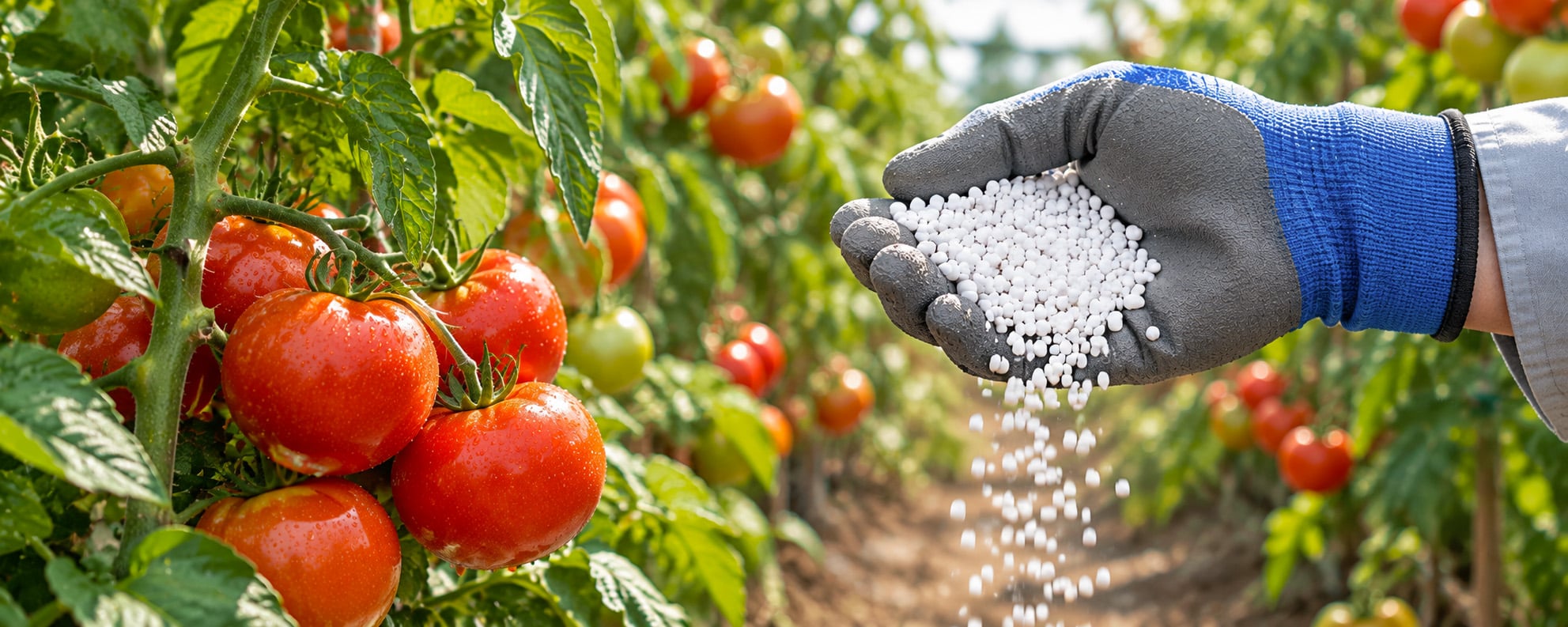
A calcium fertilizer supplies the calcium that holds plant cell walls and membranes together, but whether it reaches the fruit depends as much on water flow as on the fertilizer you choose. Calcium travels with water to the leaves and barely moves out of them again, so fruit and young leaves can run short even […]
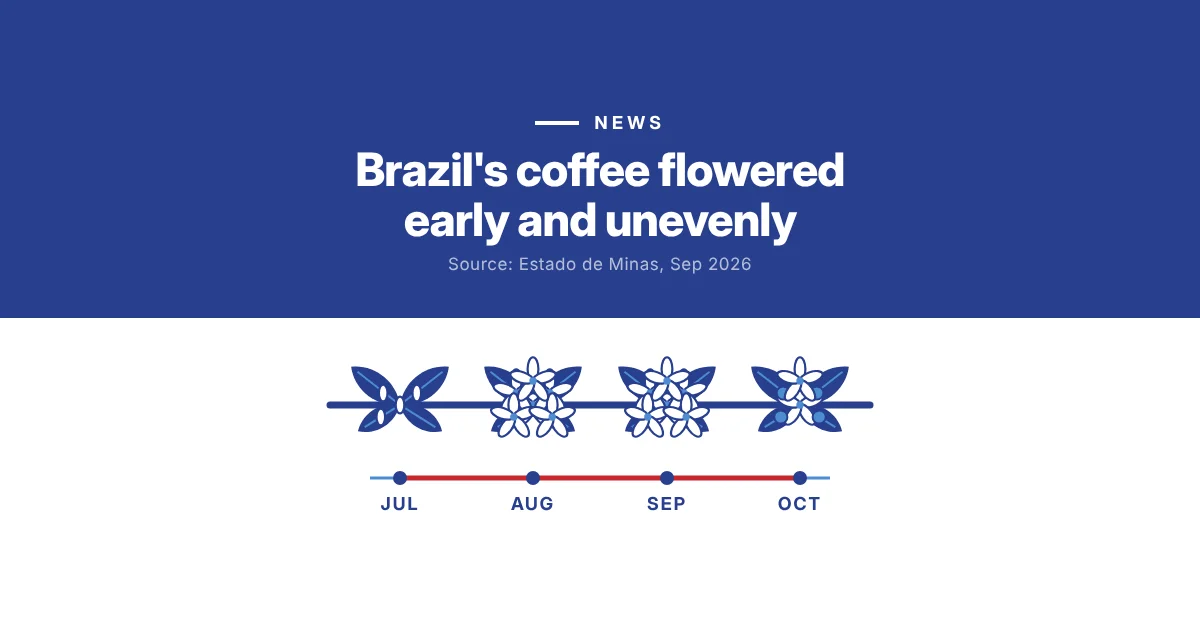
An unusually wet winter brought coffee flowering in Minas Gerais forward by about a month, in several separate waves. With October forecast to be hotter than normal and rain patchy, the question for 2027 is now how many of those flowers turn into fruit. At Van Polder, we believe a strong flowering is only the […]
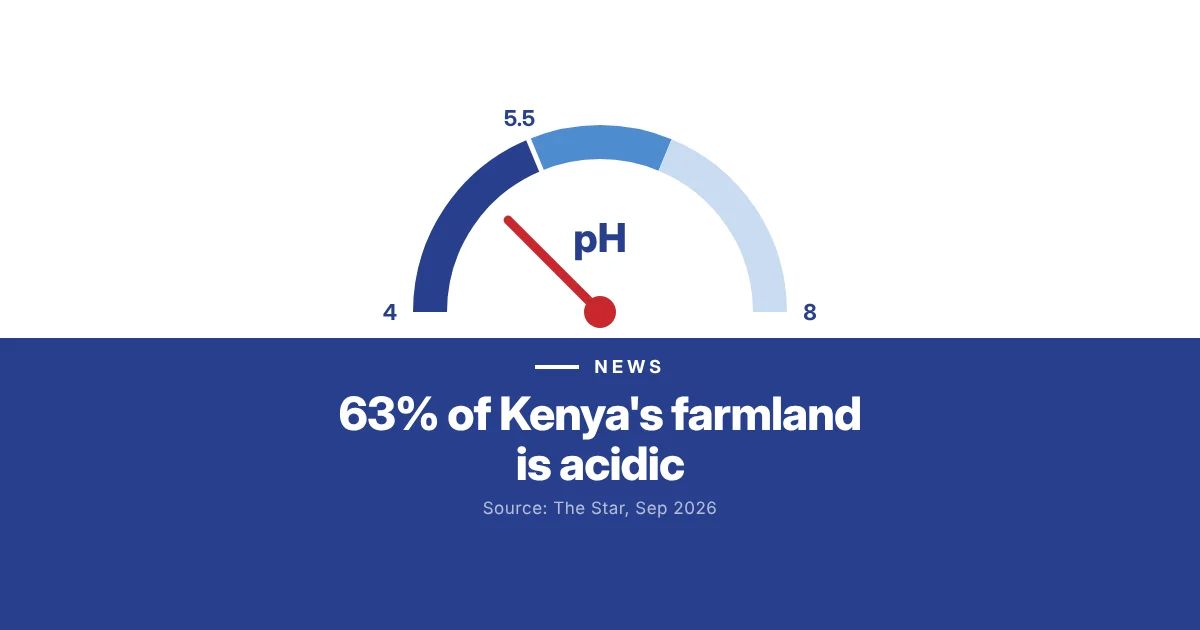
Kenya’s Ministry of Agriculture has launched a national soil health drive to move growers away from one-size-fits-all fertilizer recommendations. About 63% of the country’s arable land is acidic, and the government now wants fertilizer choices to start with a soil test. At Van Polder, we believe good crop nutrition starts with knowing what is already […]
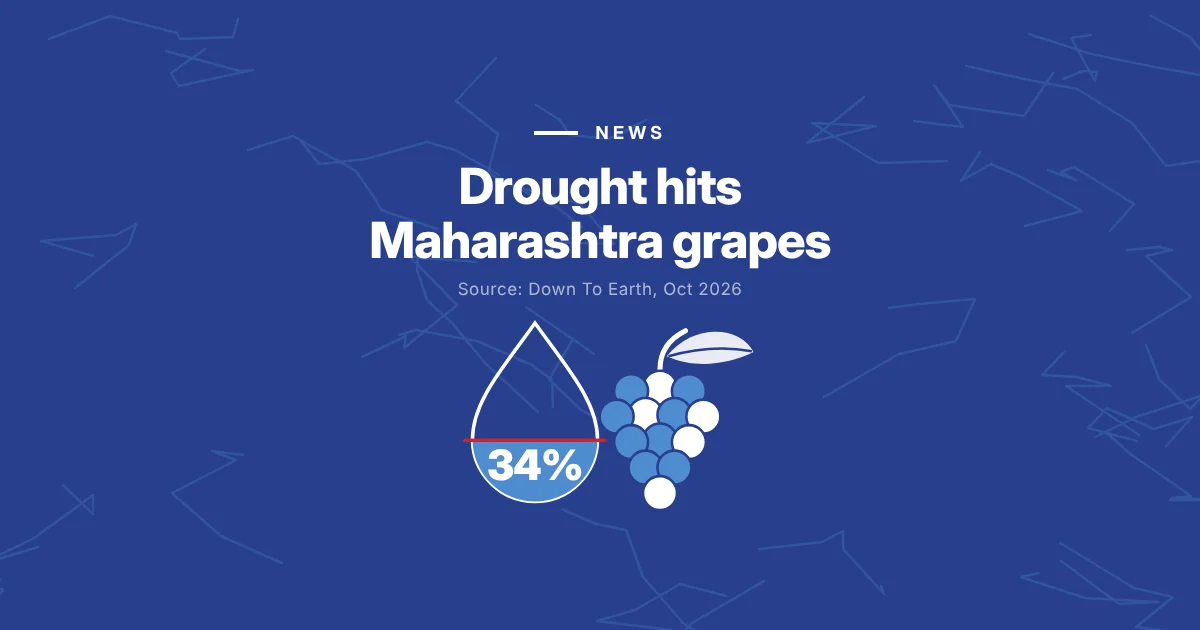
Maharashtra has declared drought in 265 talukas after a weak monsoon, and grape growers in Nashik fear losing at least 40% of this season’s harvest. For anyone supplying fruit growers in India, the next few months are about keeping crops and vines alive and productive with very little water. At Van Polder, we believe drought […]

Denmark’s new nitrogen regulation starts on 1 January 2027, but vegetable growers and several fruit, berry and nursery crops will stay on today’s nitrogen norms for one more year. For anyone supplying high-value horticulture, this is a short pause, not a change of direction. At Van Polder, we believe nitrogen efficiency will matter more every […]
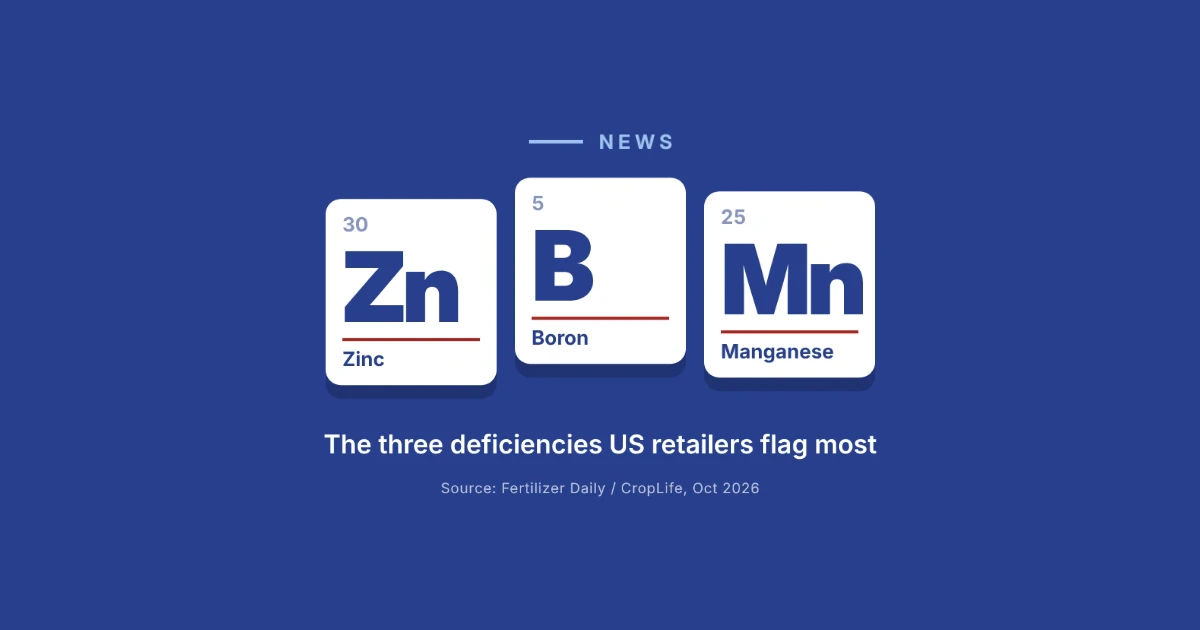
Retailers in the United States report that growers are trimming micronutrient spending this season, while tissue tests keep finding zinc, boron and manganese shortages. At Van Polder, we believe blanket cuts are the wrong place to save, and the same trade-off comes up wherever main-nutrient prices are high. When nitrogen, phosphate and potash bills rise, […]