



Calcium Fertilizer: Roles, Sources and How to Prevent Deficiency
A calcium fertilizer supplies the calcium that holds plant cell walls and membranes together, but whether it reaches the fruit depends as much on water flow as on the fertilizer you choose. Calcium travels with water to the leaves and barely moves out of them again, so fruit and young leaves can run short even […]

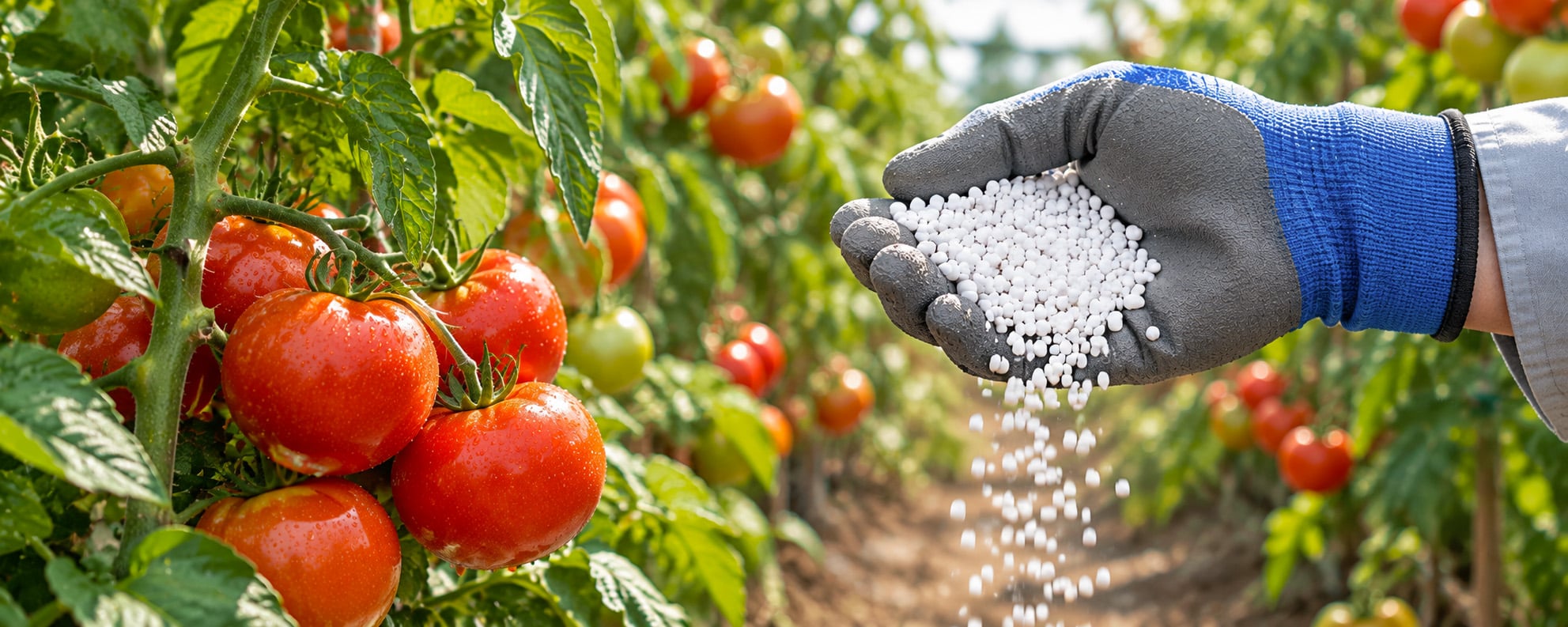

A calcium fertilizer supplies the calcium that holds plant cell walls and membranes together, but whether it reaches the fruit depends as much on water flow as on the fertilizer you choose. Calcium travels with water to the leaves and barely moves out of them again, so fruit and young leaves can run short even on calcium-rich soil (Hawkesford et al., 2023). This guide explains what calcium does, why deficiency disorders happen, which calcium fertilizer fits which goal, and when soil, fertigation or foliar calcium makes sense.
What calcium does in plants
Most calcium in plant tissue sits in the cell walls, bound to pectins in the middle lamella. When calcium supply is low, 70% to 99% of the calcium in the leaves of broadleaf crops can be in the cell walls (Hawkesford et al., 2023). Calcium pectate strengthens the walls and blocks the enzyme that breaks pectins down, so a typical sign of shortage is the collapse of tissue in petioles, stem tips and fruit (Hawkesford et al., 2023). In citrus, calcium applied during early fruit growth increased the calcium bound to pectin in the peel, kept the peel firmer and reduced fruit cracking by 71% (Dong et al., 2025).
Calcium also stabilizes cell membranes, which limits leakage of sugars and other solutes under stress such as chilling or waterlogging, and it acts as a signal inside the cell that triggers responses to drought, salinity, cold and pathogen attack (Hawkesford et al., 2023). Plants can hold a lot of it: plant calcium ranges from about 1 to 50 mg per gram of dry matter, and mature leaves can exceed 10% calcium without harm (Hawkesford et al., 2023).
Needs differ by crop. In nutrient-solution trials, tomato needed 12.9 mg calcium per gram of dry matter for full growth, against 0.7 mg for perennial ryegrass, because broadleaf crops have more calcium-binding sites in their cell walls than grasses (Hawkesford et al., 2023).
Why crops run short of calcium on calcium-rich soil
Calcium moves from the roots in the xylem, the water-conducting tissue, so it goes where the water goes: to the leaves that transpire most. Its mobility in the phloem, which feeds fruit, tubers and enclosed young leaves, is extremely low (Hawkesford et al., 2023). Leaves draw most of the xylem sap and usually hold far more calcium than fruit (de Freitas & Mitcham, 2012). Adding more calcium to the soil raises calcium in transpiring leaves, but not necessarily in low-transpiring organs such as fleshy fruit, tubers and enclosed leaves (Hawkesford et al., 2023).
That is why deficiency disorders are usually local, in one organ, rather than a shortage across the whole plant. Four conditions make them more likely (Kutman, 2023):
- Competing cations: high ammonium, potassium or magnesium.
- Fast growth: strong light and high nitrogen dilute calcium in the growing tissue.
- Low transpiration: cool temperatures, high humidity and still air, common in greenhouses.
- Stress: drought and salinity.
Fruit total calcium is a poor guide on its own. Fruit with symptoms can hold as much calcium as sound fruit, no threshold concentration has been set, and ratios such as K:Ca, Mg:Ca and N:Ca predict risk better (de Freitas & Mitcham, 2012). Read leaf and fruit analyses together with potassium and magnesium; for potassium’s role see our guide to potassium fertilizers.
Calcium deficiency disorders by crop
| Crop | Disorder | Tissue affected |
| Tomato, pepper, eggplant | Blossom-end rot | Blossom end of the fruit: sunken, water-soaked, then brown to black |
| Watermelon, cucumber, squash | Blossom-end rot | Blossom end of the fruit |
| Apple | Bitter pit | Fruit flesh under the skin |
| Pear | Cork spot | Fruit flesh |
| Pomegranate | Fruit cracking | Fruit skin |
| Lettuce, cabbage | Tipburn | Young inner leaves, from tips and margins |
| Celery | Blackheart | Young heart leaves |
| Banana | Inferior fruit quality; peel splits easily when ripe | Fruit and peel |
Sources: Kutman (2023) and Hawkesford et al. (2023), in Marschner’s Mineral Nutrition of Plants; Robinson & Galán Saúco (2010) for banana.
Signs of calcium deficiency show first on young, fast-growing tissue and on fruit, not on old leaves, because calcium is not moved out of older leaves (Hawkesford et al., 2023). Look for tipburn on expanding leaves, as in lettuce, collapsed tissue at stem tips and leaf stalks, and sunken or dark patches on fruit, such as blossom-end rot in tomato and bitter pit in apple (Hawkesford et al., 2023; Kutman, 2023).
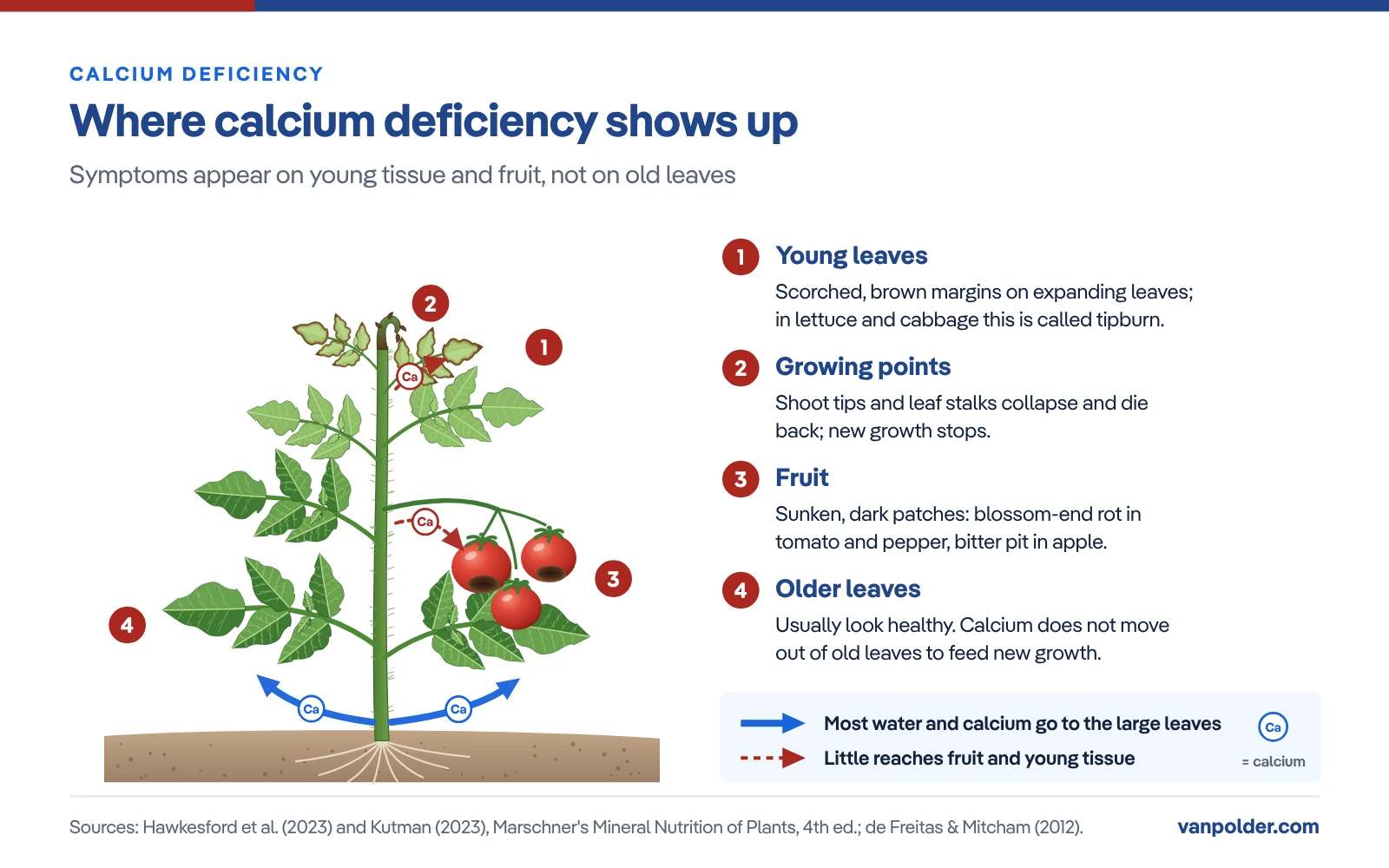
Blossom-end rot is the most common fruit disorder linked to local calcium deficiency (Kutman, 2023). For banana, see Calcium deficiency in banana.
Types of calcium fertilizer
The right calcium fertilizer depends on the job: correcting soil acidity, adding calcium without changing pH, feeding calcium in season through drip, or reaching fruit directly with a spray.
| Source | Calcium content | In water | Effect on soil pH | Best use |
| Calcitic lime (CaCO3) | 31.7% Ca | Does not dissolve | Raises pH | Correct acid soil before planting |
| Dolomitic lime (CaCO3 + MgCO3) | 21.5% Ca, plus Mg | Does not dissolve | Raises pH | Acid soil that is also low in Mg |
| Ground eggshell or seashell (mainly CaCO3) | About 38–40% Ca | Does not dissolve | Raises pH, like lime | Slow soil amendment before planting; not for feeding in season |
| Gypsum (CaSO4·2H2O) | 22.5% Ca, plus S | Dissolves slowly | No rise in pH | Add Ca and S where pH is already right |
| Calcium nitrate | 19.4% Ca, plus nitrate N | Highly soluble (102 kg per 100 L at 20 °C) | Alkaline reaction; suits acid soils | Fertigation and soil feeding in season |
| Calcium chloride | See label | Highly soluble | Not used for pH | Foliar and fruit sprays |
| Liquid calcium and calcium-boron products | See label (CaO) | Ready to use or dilute | Not used for pH | Foliar feeding of fruit and young tissue |
Sources: University of Maryland Extension, Table B-6 (Ca content); Mittenthal et al. (lime and gypsum); Robinson & Galán Saúco (2010), Table 9.3 (solubility); Agriculture Victoria (2023) (calcium nitrate on acid soils); Fernández et al. (2013) (foliar carriers); Waheed et al. (2019), Seesanong et al. (2023) and Thongkam et al. (2021) (shell composition, 94–99% CaCO3; Ca = CaCO3 × 0.40, our calculation); Sebonela et al. (2024) and Vu et al. (2022) (eggshell as liming material). Product labels give calcium as CaO: CaO × 0.715 = Ca.
Lime and gypsum
Lime and gypsum both add calcium, but only lime changes soil pH. In lime it is the carbonate, not the calcium, that neutralizes acidity and raises pH; gypsum has no carbonate, so it adds calcium and sulfur without raising pH (Mittenthal et al., n.d.). Use lime where the soil is acid, and gypsum where you need calcium but the pH is already where you want it.
Calcium nitrate fertilizer
Calcium nitrate is the main soluble calcium fertilizer for fertigation. It carries 19.4% calcium (University of Maryland Extension, n.d.) and dissolves at about 102 kg per 100 L of water at 20 °C (Robinson & Galán Saúco, 2010). Its nitrate nitrogen has an alkaline reaction, so on acid soils calcium nitrate can make up a significant part of the nitrogen supply (Agriculture Victoria, 2023). Calcium nitrate is incompatible with phosphate and sulfate solutions (UC Agriculture and Natural Resources, n.d.), so it goes in its own stock tank.
Liquid calcium fertilizer and calcium-boron products
Liquid calcium fertilizers are used mainly for foliar and fruit sprays. Common carriers include calcium chloride and calcium acetate; calcium chloride also acts as a humectant that keeps the spray film wet for longer, which can help uptake in dry climates (Fernández et al., 2013). In bagged apple, sprays of calcium chloride, calcium nitrate and calcium formate all reduced bitter pit; two early sprays (5 and 40 days after full bloom) cut it by 68% to 73%, against 43% to 54% for two later sprays (Yu et al., 2018). Calcium-boron products combine two nutrients that work together in the cell wall, covered below.
Soil, fertigation or foliar calcium?
Match the route to the problem:
- Soil: lime or gypsum before planting builds the soil’s calcium supply and, with lime, corrects pH. This is the base of any program.
- Fertigation: calcium nitrate or calcium magnesium nitrate through drip keeps calcium in the root zone during the season, alongside water.
- Foliar: a calcium foliar spray only helps the tissue it wets, because calcium does not move from leaves to fruit in the phloem (Hawkesford et al., 2023).
A calcium foliar spray works best when it reaches the fruit directly and is repeated. Preharvest calcium sprays reduced bitter pit and improved firmness and storage life in apple, and reduced storage problems in peach, pear and grape (Yamane, 2014). Spraying several times with calcium salts during fruit development raises fruit firmness and delays ripening (Hawkesford et al., 2023). In apple, the fruit surface takes up calcium most readily early in fruit development, while stomata and fine hairs are still present (Fernández et al., 2013), so start early. In a four-season apple trial, calcium chloride sprays reduced bitter pit more than calcium applied to the soil, and adding soil calcium to the sprays gave no extra benefit (Torres et al., 2017). In pomegranate, two calcium sprays reduced fruit cracking and raised marketable yield, though total yield did not change (Davarpanah et al., 2018). In blueberry, high nitrogen rates made green fruit drop worse, and frequent calcium sprays from mid-bloom reduced it, often to negligible levels (Gerbrandt et al., 2019).
Results differ by crop. For blossom-end rot in tomato, extension specialists rate calcium sprays as ineffective and put even soil moisture first, for example with drip irrigation and mulch (Ballew, 2020). Managing humidity, temperature and drought or salinity stress is part of preventing calcium disorders alongside fertilization (Kutman, 2023).
Calcium with biostimulants
Biostimulants are not calcium sources, and trials so far do not show them raising calcium uptake, but some can add to what calcium does. In a pot trial with tomato irrigated with saline water, gypsum in the substrate cut blossom-end rot in the first truss from 31% to 15%, and adding a protein hydrolysate through the drip cut it to 0%. Yet the hydrolysate did not significantly raise calcium in the fruit or leaves; the authors linked the extra effect to amino acids such as proline in the fruit (Franco et al., 1994). In pepper, calcium nitrate sprays cut blossom-end rot from 12% to 4%; adding a seaweed extract raised yield further, from 39 to 45 t/ha, but did not reduce the rot further (Constantin et al., 2024). In sweet cherry, calcium alone made fruit firmer and slowed ripening, while seaweed alone increased fruit size and color (Santos et al., 2025). Use the calcium fertilizer for calcium, and treat a biostimulant as a separate input for growth and stress tolerance. For how biostimulants work, see Biostimulants for crops.
Calcium boron fertilizer: why the two go together
Boron stabilizes the pectin network of the cell wall, and the borate complex it forms in the wall is far more stable when calcium is present (Brown et al., 2002). Like calcium, boron is required for cell wall integrity and is immobile in the phloem of most plants (Kutman, 2023). That makes a calcium boron foliar fertilizer a logical choice for flowering and early fruit development, when new cell walls are forming. Boron is also toxic in excess (Brown et al., 2002), so follow the label rate.
Calcium and plant health
The share of calcium pectate in cell walls affects how easily tissues are broken down by fungi and bacteria (Hawkesford et al., 2023). In a pot trial with Cavendish banana plantlets, adding calcium carbonate, calcium hydroxide or calcium sulfate to the soil reduced germination of Fusarium wilt spores and disease severity by one-third to one-half, at rates too small to change soil pH (Peng et al., 1999). The authors note that the effect still has to be shown in the field. Calcium is part of balanced nutrition that supports healthy tissue; it is not a disease control.
Van Polder calcium products
- LS CalciBo Liquid (16% CaO, 8.2% nitrate N, 0.2% B): a calcium boron foliar fertilizer for flowering and fruit development.
- WSF CamagN (13.5-0-0 + 16% CaO + 6% MgO): water-soluble calcium magnesium nitrate for fertigation; keep it in its own tank, away from phosphates and sulfates.
- LS Calcio Max 40 (40% CaO): a concentrated liquid calcium suspension for foliar use.
- LS Calcimag Liquid (12.5% CaO, 2.5% MgO, 8% nitrate N): liquid calcium with magnesium for foliar programs.
- SM Ca EDTA 14% (14% CaO as EDTA chelate): chelated calcium; use as directed on the label.
All are produced to Van Polder specifications. Follow the product label for rates, and base calcium programs on soil and leaf analysis.
FAQ
What is the best calcium fertilizer for plants?
It depends on the goal. Lime corrects acid soil and adds calcium; gypsum adds calcium without raising pH; calcium nitrate is the usual soluble source for fertigation; and liquid calcium or calcium-boron sprays target fruit and young tissue directly (Mittenthal et al., n.d.; Fernández et al., 2013).
Does liquid calcium fertilizer work?
Yes, on the tissue it reaches. Repeated preharvest sprays reduced bitter pit and improved storage in apple (Yamane, 2014), but calcium sprayed on leaves does not move to the fruit (Hawkesford et al., 2023), so aim sprays at the fruit and start early.
Why do my fruits show calcium deficiency when the soil has plenty?
Calcium moves with water to the leaves, not to the fruit, and fast growth, high potassium or ammonium, high humidity and drought all reduce the share that reaches fruit (Kutman, 2023). Even watering and balanced nutrition matter as much as the calcium source.
Is calcium nitrate a good calcium fertilizer?
For fertigation, yes: it is highly soluble and supplies nitrate nitrogen with the calcium (Robinson & Galán Saúco, 2010). Keep it in a separate tank from phosphates and sulfates (UC Agriculture and Natural Resources, n.d.).
What are the downsides of calcium nitrate?
It supplies nitrogen as well as calcium, so count it in the crop’s nitrogen plan: high nitrogen speeds growth and dilutes calcium in young tissue, which can make calcium disorders worse (Kutman, 2023; Gerbrandt et al., 2019). It also cannot share a stock tank with phosphate or sulfate fertilizers (UC Agriculture and Natural Resources, n.d.).
Which fertilizer has the highest calcium content?
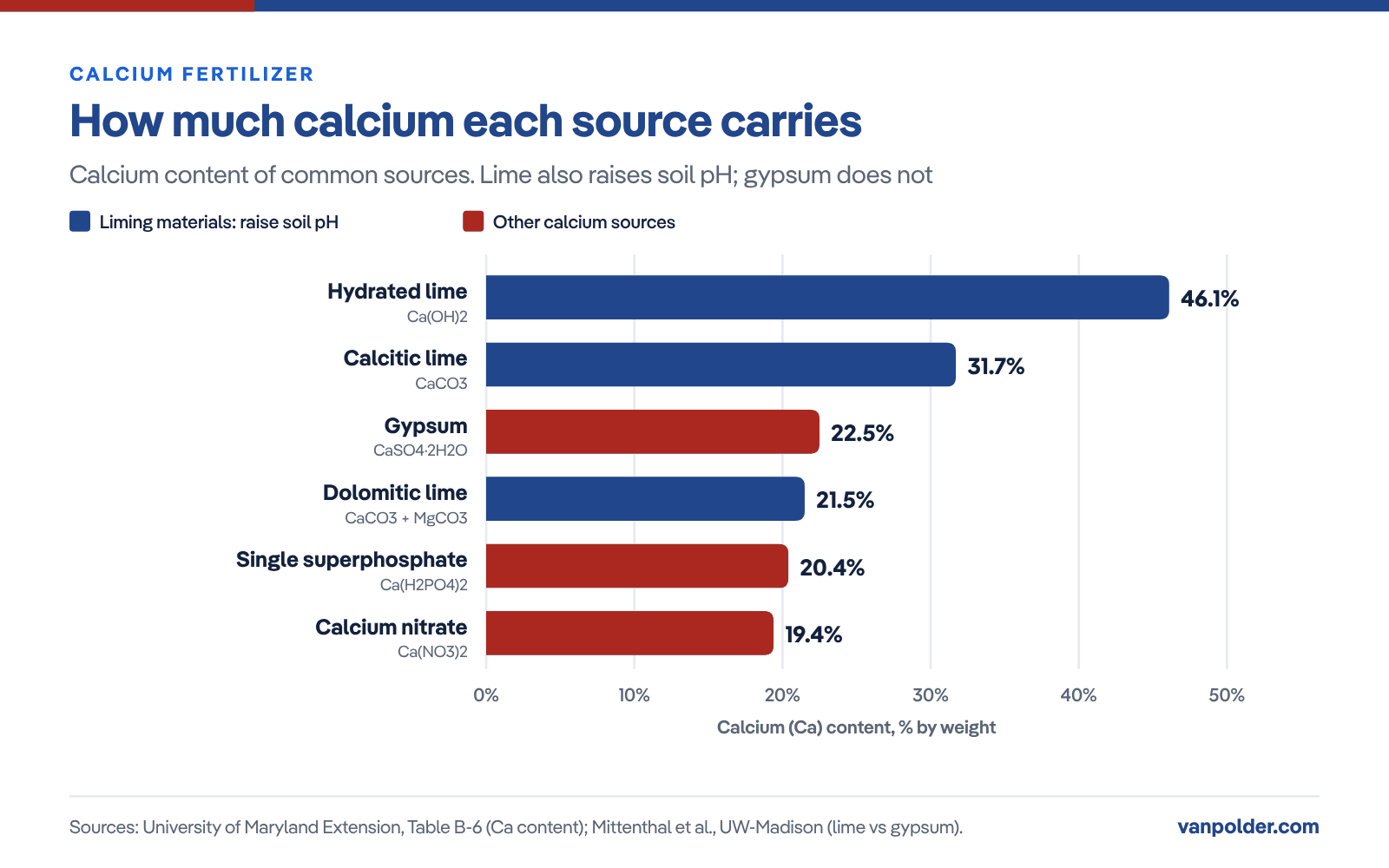
Among common sources, hydrated lime has the most calcium (46.1%), followed by calcitic lime (31.7%), gypsum (22.5%), dolomitic lime (21.5%) and calcium nitrate (19.4%) (University of Maryland Extension, n.d.). The highest figure is not always the best choice: lime and dolomite also raise soil pH and do not dissolve in water, so for feeding during the season a soluble source such as calcium nitrate is more useful.
What is the fastest way to add calcium to soil?
Use a soluble source. Calcium nitrate dissolves readily, about 102 kg per 100 L of water at 20 °C, and can be applied through the drip so it reaches the root zone with the irrigation water (Robinson & Galán Saúco, 2010). Gypsum dissolves slowly and lime does not dissolve in water; lime is for correcting soil acidity before planting, not a quick calcium fix (Mittenthal et al., n.d.).
Does homemade calcium for plants, like eggshells or seashells, work?
Yes, but slowly, and as a liming material rather than a calcium feed. Eggshells are about 94% calcium carbonate, roughly 38% calcium, the same compound as ground limestone (Waheed et al., 2019). Oyster and scallop shells are 95–99% calcium carbonate, so they too work as slow liming materials rather than quick calcium (Seesanong et al., 2023; Thongkam et al., 2021). Finely ground, they raised the pH of two acid soils as much as agricultural lime at the same rates (Sebonela et al., 2024). In groundnut, 300 kg/ha of eggshell powder gave a higher pod yield than 500 kg/ha of lime when it was worked in before sowing, but applied after flowering it gave lower yields (Vu et al., 2022). Soaking shells in vinegar turns the carbonate into soluble calcium acetate (Strelec et al., 2023), but the calcium content of a homemade brew is unknown, and like any calcium foliar spray it only helps the tissue it wets. Use eggshells as a slow soil amendment before planting; for calcium during the season, use a soluble calcium fertilizer.
Next step
Test the soil for pH and calcium before planting, then check leaf analysis for calcium together with potassium and magnesium. For calcium in banana, start with our guide to fertilizer for banana plants. For help choosing calcium products for your crop, contact your Van Polder distributor.
Sources
- Agriculture Victoria (2023, updated 2026). Fertigation. Department of Energy, Environment and Climate Action, Victoria. agriculture.vic.gov.au
- Ballew, J. (2020). Gardening Myths: Fix Blossom End Rot with Calcium Sprays. Home & Garden Information Center, Clemson Cooperative Extension. hgic.clemson.edu
- Brown, P.H., Bellaloui, N., Wimmer, M.A., Bassil, E.S., Ruiz, J., Hu, H., Pfeffer, H., Dannel, F. & Römheld, V. (2002). Boron in plant biology. Plant Biology 4(2): 205–223. https://doi.org/10.1055/s-2002-25740
- Constantin, D.C., Paraschiv, M. & Sbîrciog, G. (2024). The impact of foliar treatments on yield and quality of round pepper (Capsicum annuum L.) at Asteroid 204 cv. Romanian Journal of Horticulture 5: 35–42. https://doi.org/10.51258/RJH.2024.04
- Davarpanah, S., Tehranifar, A., Abadía, J., Val, J., Davarynejad, G., Aran, M. & Khorassani, R. (2018). Foliar calcium fertilization reduces fruit cracking in pomegranate (Punica granatum cv. Ardestani). Scientia Horticulturae 230: 86–91. https://doi.org/10.1016/j.scienta.2017.11.023
- de Freitas, S.T. & Mitcham, E.J. (2012). Factors involved in fruit calcium deficiency disorders. Horticultural Reviews 40: 107–142. Wiley-Blackwell. ucanr.edu
- Dong, Z., Shi, X., Liu, X., Srivastava, A.K., Shi, X., Zhang, Y., Hu, C. & Zhang, F. (2025). Calcium application regulates fruit cracking by cross-linking of fruit peel pectin during young fruit growth stage of citrus. Scientia Horticulturae 340: 113922. https://doi.org/10.1016/j.scienta.2024.113922
- Fernández, V., Sotiropoulos, T. & Brown, P. (2013). Foliar Fertilization: Scientific Principles and Field Practices. International Fertilizer Industry Association (IFA), Paris. fertilizer.org
- Franco, J.A., Bañón, S. & Madrid, R. (1994). Effects of a protein hydrolysate applied by fertigation on the effectiveness of calcium as a corrector of blossom-end rot in tomato cultivated under saline conditions. Scientia Horticulturae 57(4): 283–292. https://doi.org/10.1016/0304-4238(94)90111-2
- Gerbrandt, E.M., Mouritzen, C. & Sweeney, M. (2019). Foliar calcium corrects a deficiency causing green fruit drop in ‘Draper’ highbush blueberry (Vaccinium corymbosum L.). Agriculture 9(3): 63. https://doi.org/10.3390/agriculture9030063
- Hawkesford, M.J., Cakmak, I., Coskun, D., De Kok, L.J., Lambers, H., Schjoerring, J.K. & White, P.J. (2023). Functions of macronutrients. In: Rengel, Z., Cakmak, I. & White, P.J. (eds.), Marschner’s Mineral Nutrition of Plants, 4th edition. Academic Press, London. ISBN 978-0-12-819773-8.
- Kutman, U.B. (2023). Mineral nutrition and crop quality. In: Rengel, Z., Cakmak, I. & White, P.J. (eds.), Marschner’s Mineral Nutrition of Plants, 4th edition. Academic Press, London. ISBN 978-0-12-819773-8.
- Mittenthal, R., Barak, P. & Cullen, E. (n.d.). What happens in the soil when you apply aglime or gypsum? University of Wisconsin-Madison, SARE project fact sheet. projects.sare.org
- Peng, H.X., Sivasithamparam, K. & Turner, D.W. (1999). Chlamydospore germination and Fusarium wilt of banana plantlets in suppressive and conducive soils are affected by physical and chemical factors. Soil Biology & Biochemistry 31(10): 1363–1374. https://doi.org/10.1016/S0038-0717(99)00045-0
- Robinson, J.C. & Galán Saúco, V. (2010). Bananas and Plantains, 2nd edition. Crop Production Science in Horticulture 19. CABI, Wallingford. ISBN 978-1-84593-658-7.
- Santos, M., Ferreira, H., Sousa, J.R., Vilela, A., Ribeiro, C., Egea-Cortines, M., Matos, M. & Gonçalves, B. (2025). Enhancing sweet cherry quality through calcium and Ascophyllum nodosum foliar applications. Horticulturae 11: 1171. https://doi.org/10.3390/horticulturae11101171
- Sebonela, L.K., Elephant, D.E. & Sithole, N.J. (2024). Eggshells improve soil pH and P availability in sandy loam and sandy clay loamy soil. Agronomy 14: 2539. https://doi.org/10.3390/agronomy14112539
- Seesanong, S., Seangarun, C., Boonchom, B. et al. (2023). Bio-green synthesis of calcium acetate from oyster shell waste at low cost and reducing the emission of greenhouse gases. Sustainable Environment Research 33: 26. https://doi.org/10.1186/s42834-023-00187-6
- Strelec, I., Tomičić, K., Zajec, M., Ostojčić, M. & Budžaki, S. (2023). Eggshell-waste-derived calcium acetate, calcium hydrogen phosphate and corresponding eggshell membranes. Applied Sciences 13: 7372. https://doi.org/10.3390/app13137372
- Thongkam, M., Saelim, J., Boonchom, B., Seesanong, S. et al. (2021). Simple and rapid synthesis of calcium acetate from scallop shells to reduce environmental issues. Adsorption Science & Technology 2021: 6450289. https://doi.org/10.1155/2021/6450289
- Torres, E., Recasens, I., Lordan, J. & Alegre, S. (2017). Combination of strategies to supply calcium and reduce bitter pit in ‘Golden Delicious’ apples. Scientia Horticulturae 217: 179–188. https://doi.org/10.1016/j.scienta.2017.01.028
- UC Agriculture and Natural Resources (n.d.). Interactions which can cause precipitation. Maintenance of microirrigation systems. ucanr.edu
- University of Maryland Extension (n.d.). Table B-6. Chemical sources of secondary and micronutrients. extension.umd.edu
- Vu, N.-T., Dinh, T.-H., Le, T.-T.-C., Vu, T.-T.-H. et al. (2022). Eggshell powder as calcium source on growth and yield of groundnut (Arachis hypogaea L.). Plant Production Science. https://doi.org/10.1080/1343943X.2022.2120506
- Waheed, M., Butt, M.S., Shehzad, A., Adzahan, N.M. et al. (2019). Eggshell calcium: a cheap alternative to expensive supplements. Trends in Food Science & Technology 91: 219–230. https://doi.org/10.1016/j.tifs.2019.07.021
- Yamane, T. (2014). Foliar calcium applications for controlling fruit disorders and storage life in deciduous fruit trees. JARQ 48(1): 29–33. https://doi.org/10.6090/jarq.48.29
- Yu, X.M., Wang, J.Z., Nie, P.X., Xue, X.M., Wang, G.P. & An, M. (2018). Control efficacy of Ca-containing foliar fertilizers on bitter pit in bagged ‘Fuji’ apple and effects on the Ca and N contents of apple fruits and leaves. Journal of the Science of Food and Agriculture. https://doi.org/10.1002/jsfa.9087


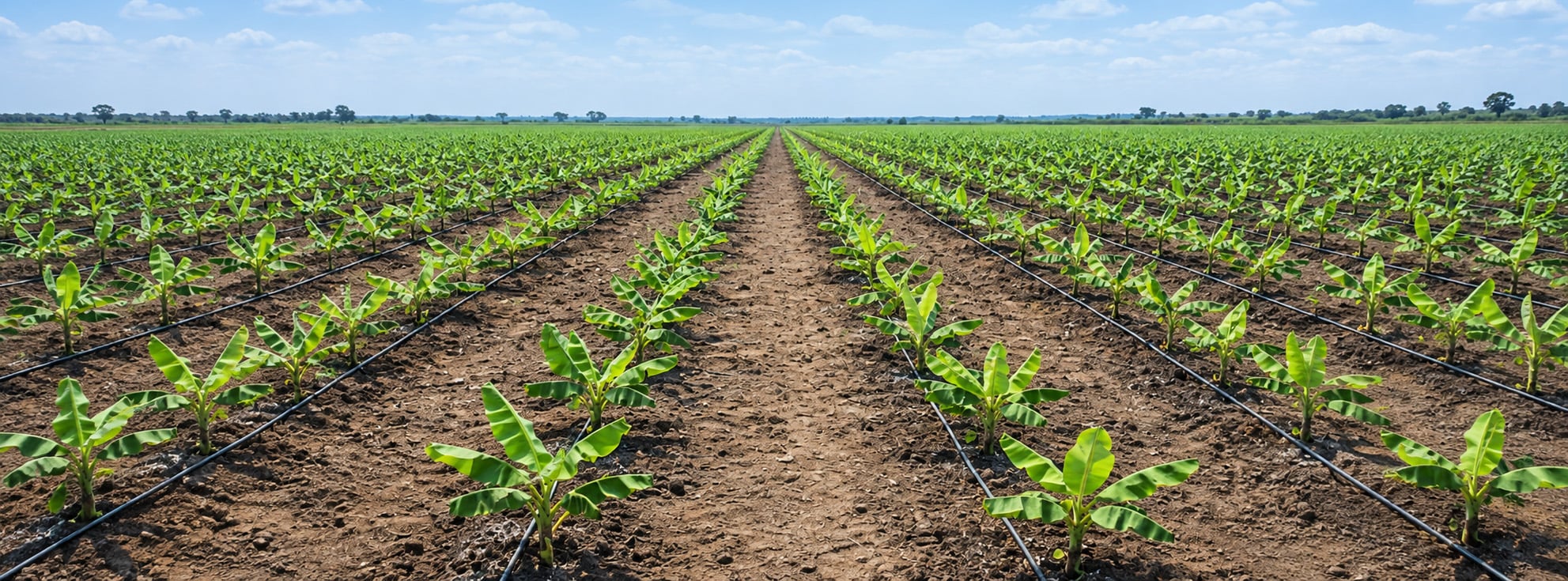
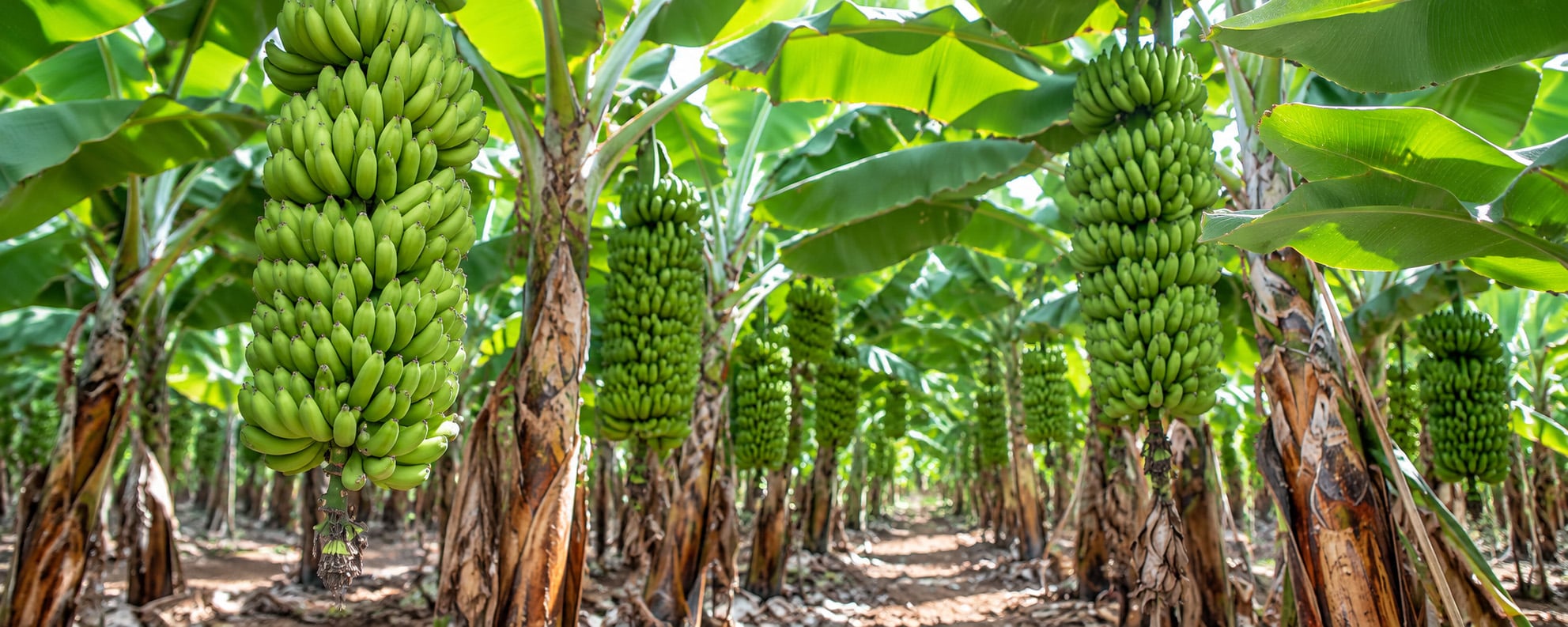
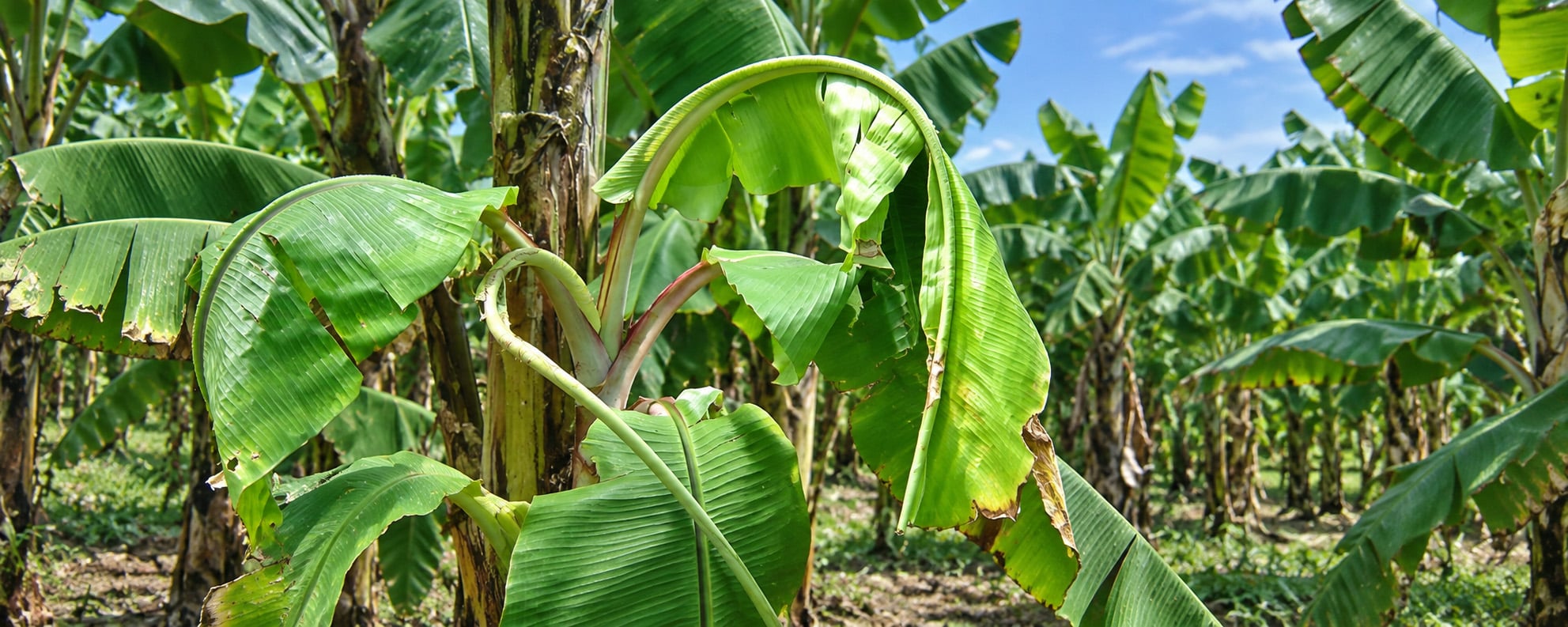
Calcium deficiency in banana shows first on the youngest leaves, as thickened veins and a saw-tooth pattern of yellow and dead tissue along the leaf margin, and in severe cases as “spike leaf”, new leaves with little or no blade, and poor-quality fruit (Turner, 1987; Martin-Prével, 1980). On most plantation soils it is not a […]
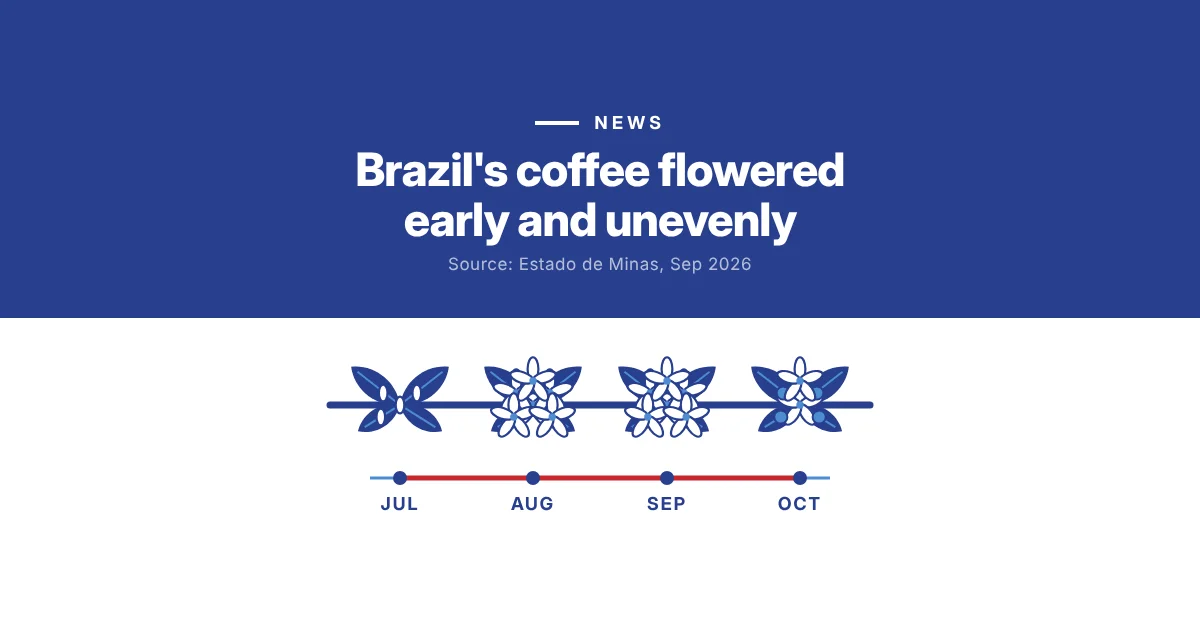
An unusually wet winter brought coffee flowering in Minas Gerais forward by about a month, in several separate waves. With October forecast to be hotter than normal and rain patchy, the question for 2027 is now how many of those flowers turn into fruit. At Van Polder, we believe a strong flowering is only the […]
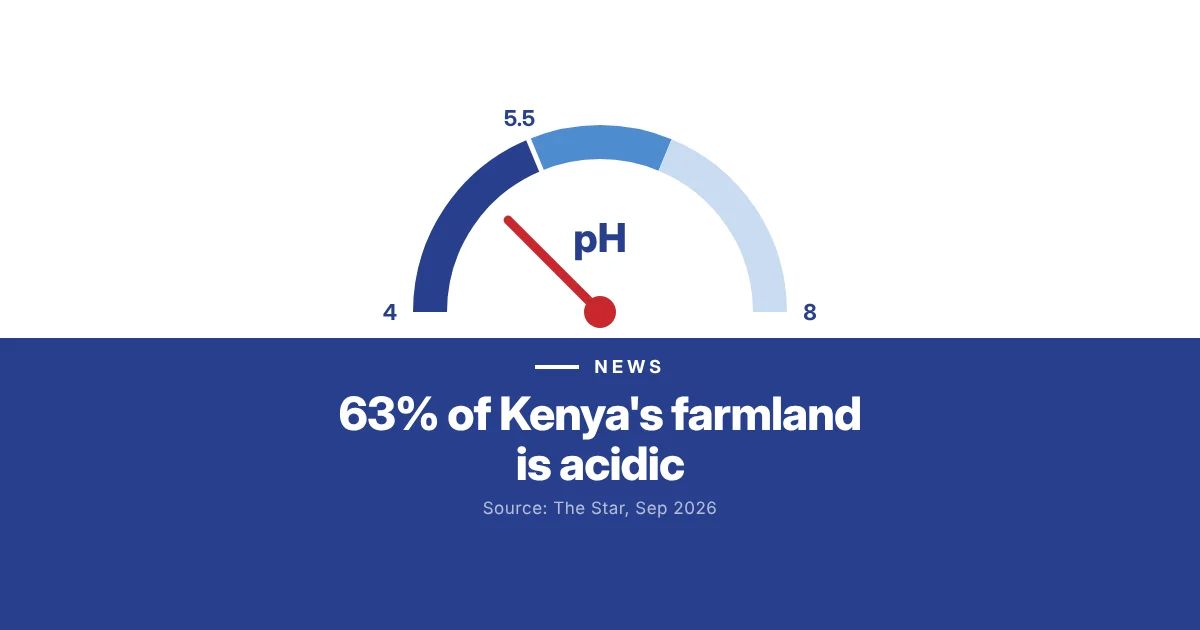
Kenya’s Ministry of Agriculture has launched a national soil health drive to move growers away from one-size-fits-all fertilizer recommendations. About 63% of the country’s arable land is acidic, and the government now wants fertilizer choices to start with a soil test. At Van Polder, we believe good crop nutrition starts with knowing what is already […]
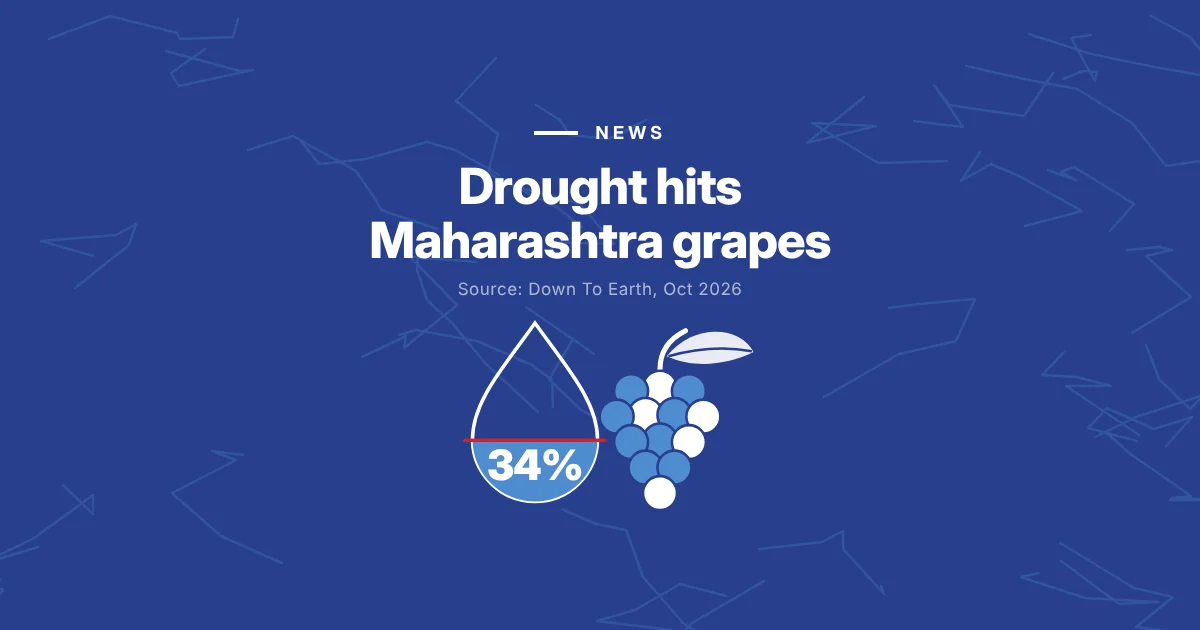
Maharashtra has declared drought in 265 talukas after a weak monsoon, and grape growers in Nashik fear losing at least 40% of this season’s harvest. For anyone supplying fruit growers in India, the next few months are about keeping crops and vines alive and productive with very little water. At Van Polder, we believe drought […]

Denmark’s new nitrogen regulation starts on 1 January 2027, but vegetable growers and several fruit, berry and nursery crops will stay on today’s nitrogen norms for one more year. For anyone supplying high-value horticulture, this is a short pause, not a change of direction. At Van Polder, we believe nitrogen efficiency will matter more every […]
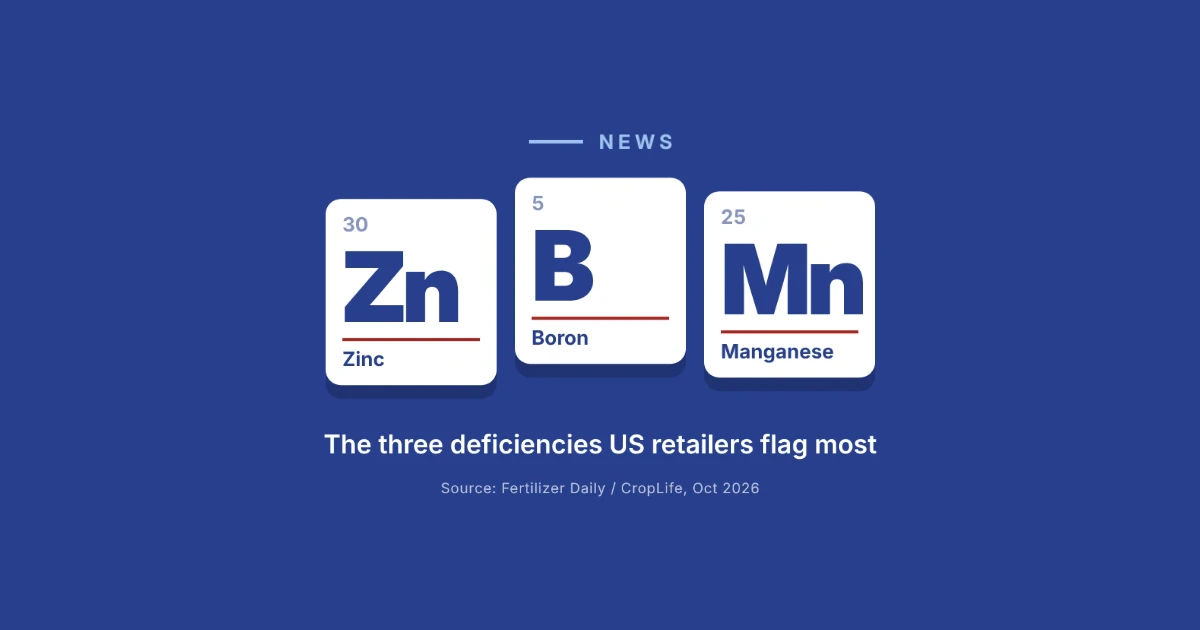
Retailers in the United States report that growers are trimming micronutrient spending this season, while tissue tests keep finding zinc, boron and manganese shortages. At Van Polder, we believe blanket cuts are the wrong place to save, and the same trade-off comes up wherever main-nutrient prices are high. When nitrogen, phosphate and potash bills rise, […]