







Potassium Fertilizer: Roles, Sources and Deficiency Signs
Potassium fertilizer replaces the potassium (K) your crop takes from the soil faster than the soil can release it. After nitrogen, potassium is the nutrient plants need in the largest amounts (Zörb et al., 2014), mainly to move water and sugars and to keep their cells working under stress. The common sources (muriate of potash, […]

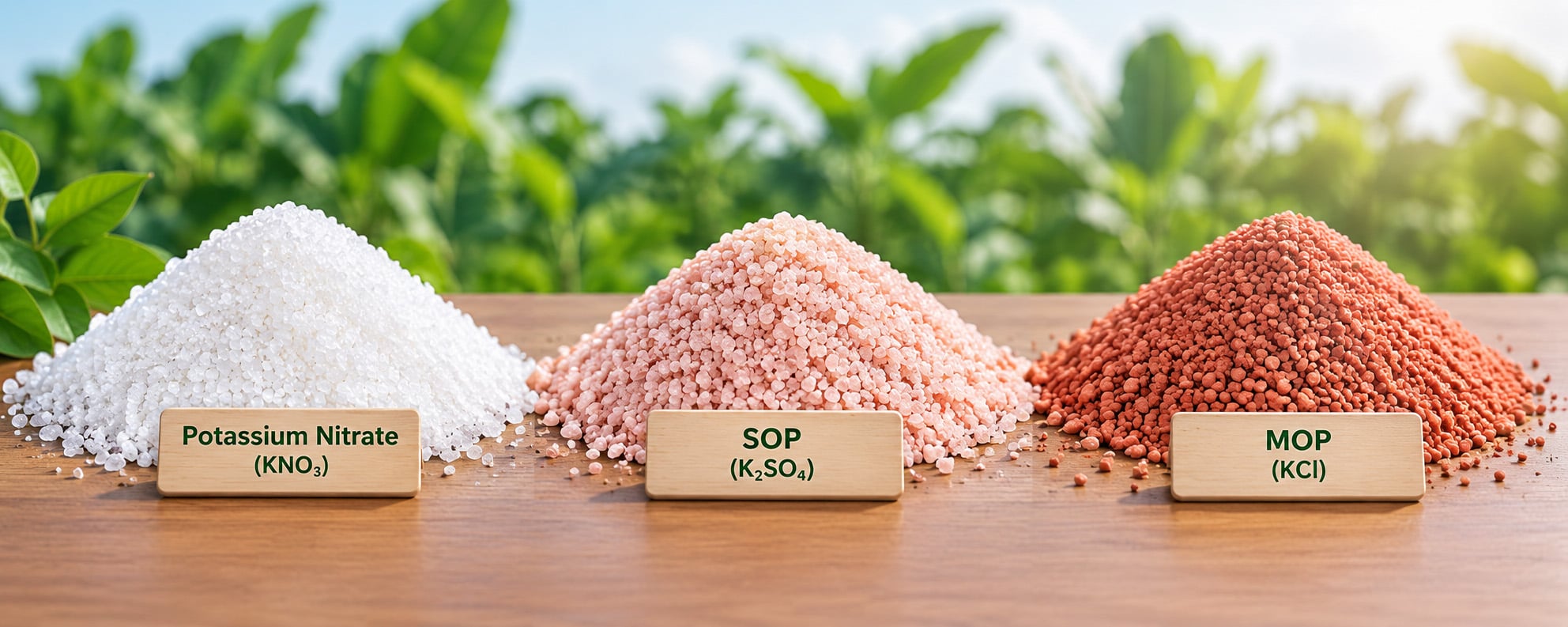

Potassium fertilizer replaces the potassium (K) your crop takes from the soil faster than the soil can release it. After nitrogen, potassium is the nutrient plants need in the largest amounts (Zörb et al., 2014), mainly to move water and sugars and to keep their cells working under stress. The common sources (muriate of potash, sulfate of potash, potassium nitrate and monopotassium phosphate) all supply the same potassium; they differ in what comes with it: chloride, sulfur, nitrogen or phosphorus. This guide explains what potassium does, how to recognize a shortage, and how to choose the right potassium fertilizer for your crop, soil and application method.
What potassium does in plants
Potassium is not built into plant structures the way nitrogen or phosphorus are. It stays dissolved as the K+ ion and works in four main ways:
- Water balance and turgor. Potassium is the most important dissolved salt (osmoticum) in plant cells and a main driver of cell turgor, the internal pressure that lets cells expand and keeps leaves firm (Zörb et al., 2014).
- Stomata. Guard cells take up potassium to open the leaf pores and release it to close them. Potassium-deficient plants are poor at both opening and closing their stomata, so they lose more water and take up less CO2 (Zörb et al., 2014).
- Sugar transport. Potassium is the most abundant inorganic cation in the phloem and drives the flow of sugars from leaves to fruit, tubers, grain and roots. This is why a shortage shows up as small fruit, low sugar content and poor filling (Zörb et al., 2014).
- Enzymes and stress tolerance. Potassium activates more than 50 enzymes, including those of photosynthesis, protein synthesis and nitrogen metabolism (Hafsi et al., 2014). Well-supplied plants tolerate drought, salinity and cold better (Wang et al., 2013; Hasanuzzaman et al., 2018).
To avoid yield loss, crops generally need to keep tissue potassium above 5 to 40 mg K per gram of dry matter, depending on the species (White, 2013).
Why soils run short of potassium
Most soils hold a lot of potassium, but very little of it is available at any moment. Between 90% and 98% of soil potassium is locked in the crystal structure of minerals such as feldspars and micas. Only 0.1–0.2% is dissolved in the soil water and 1–2% is held on clay and organic matter as exchangeable potassium, the pool plants draw on during the season (Zörb et al., 2014, citing Sparks, 1987).
Soils that are naturally low in available potassium are often sandy, waterlogged, saline or acidic. In intensive production, potassium has become limiting even on better soils because harvests remove more than is returned. Large areas are now reported as deficient, including about three-quarters of China’s paddy soils and two-thirds of the wheat belt of southern Australia (Zörb et al., 2014). A potassium fertilizer program fills that gap between what the crop removes and what the soil can supply.
Signs of potassium deficiency
Potassium moves easily inside the plant. When supply runs short, the plant shifts potassium from older leaves to young growth, so symptoms appear first on older, lower leaves (Hafsi et al., 2014). Typical signs are:
- Yellowing and then brown scorching along the leaf margins and tips, often with curling (Hafsi et al., 2014).
- Yellowing between the veins as chlorophyll breaks down (Hafsi et al., 2014).
- Crop-specific patterns: brown margins on the lower leaves of corn, yellow leaflet margins in soybean and scorched leaflet margins on older potato leaves (Kaiser & Rosen, 2018).
- Wilting in the heat of the day and small or poorly filled fruit, which follow from potassium’s roles in stomatal control and sugar transport described above.
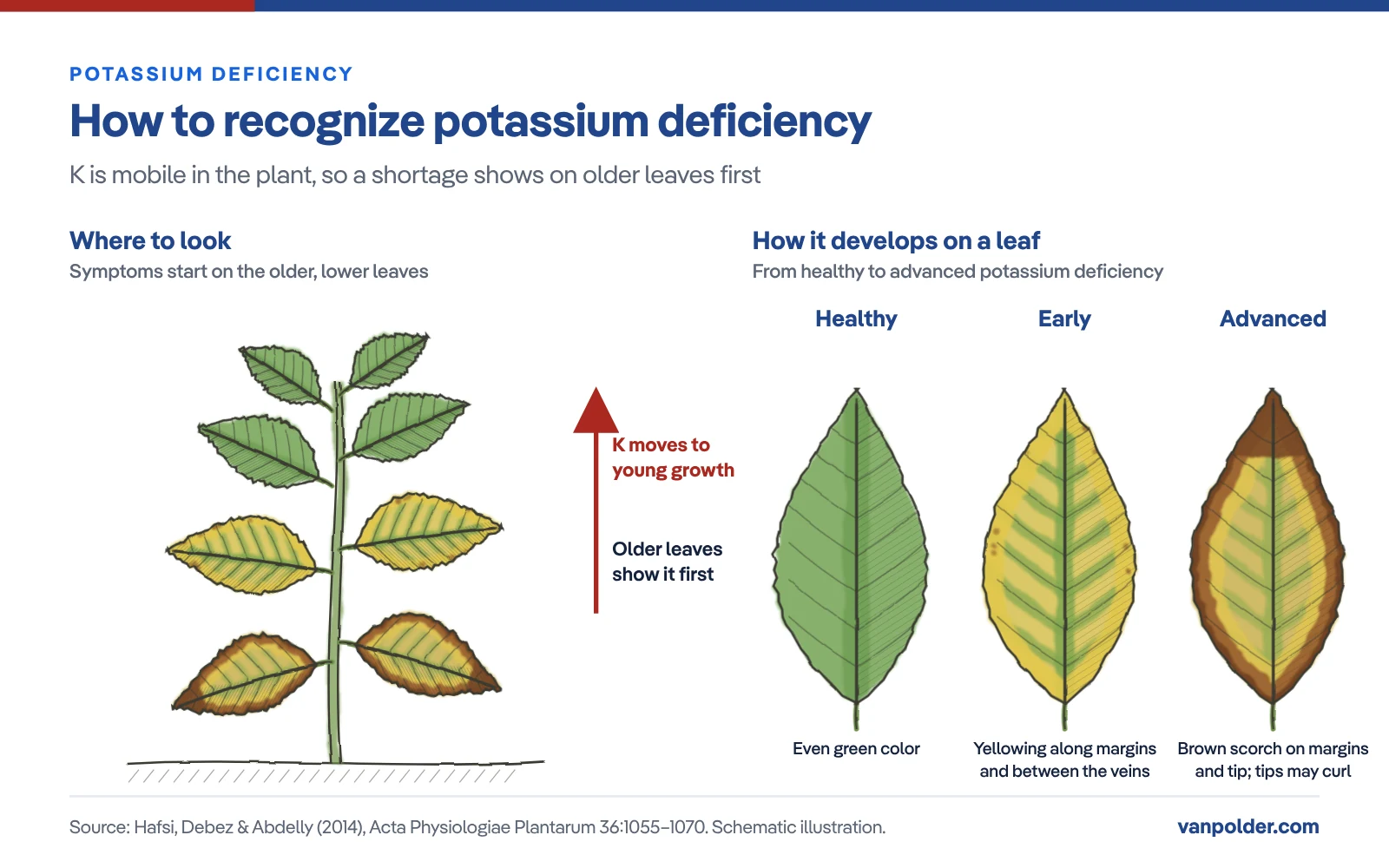
By the time you see leaf symptoms, yield is usually already affected. Confirm with a leaf analysis and a soil test before you correct, because magnesium shortage and some diseases can look similar on older leaves. For one crop in detail, see our guide to potassium deficiency in banana.
Potassium and plant health: disease and pest resistance
Many field studies show that crops with an ample potassium supply suffer less from fungal and bacterial diseases, though not in every case (Amtmann et al., 2008). The reasons are well understood:
- Better food for pathogens in deficient plants. When potassium is short, starch formation and sugar transport are impaired, so soluble sugars and organic acids build up in the leaves. These make the tissue a richer food source for pathogens (Zörb et al., 2014).
- A leaky first line of defense. Plants normally close their stomata when they detect bacteria. Potassium-deficient plants regulate their stomata poorly, so this barrier is less effective (Zörb et al., 2014).
- Weaker tissues. Physical and metabolic changes in deficient plants make it easier for pathogens and insects to enter and develop (Amtmann et al., 2008).
The picture is not one-sided. Potassium deficiency also switches on the jasmonate defense pathway, and some studies found deficient plants less attacked by certain insects and necrotrophic fungi (Amtmann et al., 2008; Zörb et al., 2014). In wheat, sprays of potassium chloride reduced septoria leaf blotch and powdery mildew in field trials, but at very high concentrations, so the effect was attributed to the osmotic stress on fungal spores rather than to nutrition (Zörb et al., 2014).
The practical message: correcting a potassium deficiency removes a factor that raises disease risk. Potassium is not a fungicide, it does not cure an established infection, and raising potassium above the level the crop needs gives no extra protection. It supports, rather than replaces, your crop protection program.
Types of potassium fertilizer compared
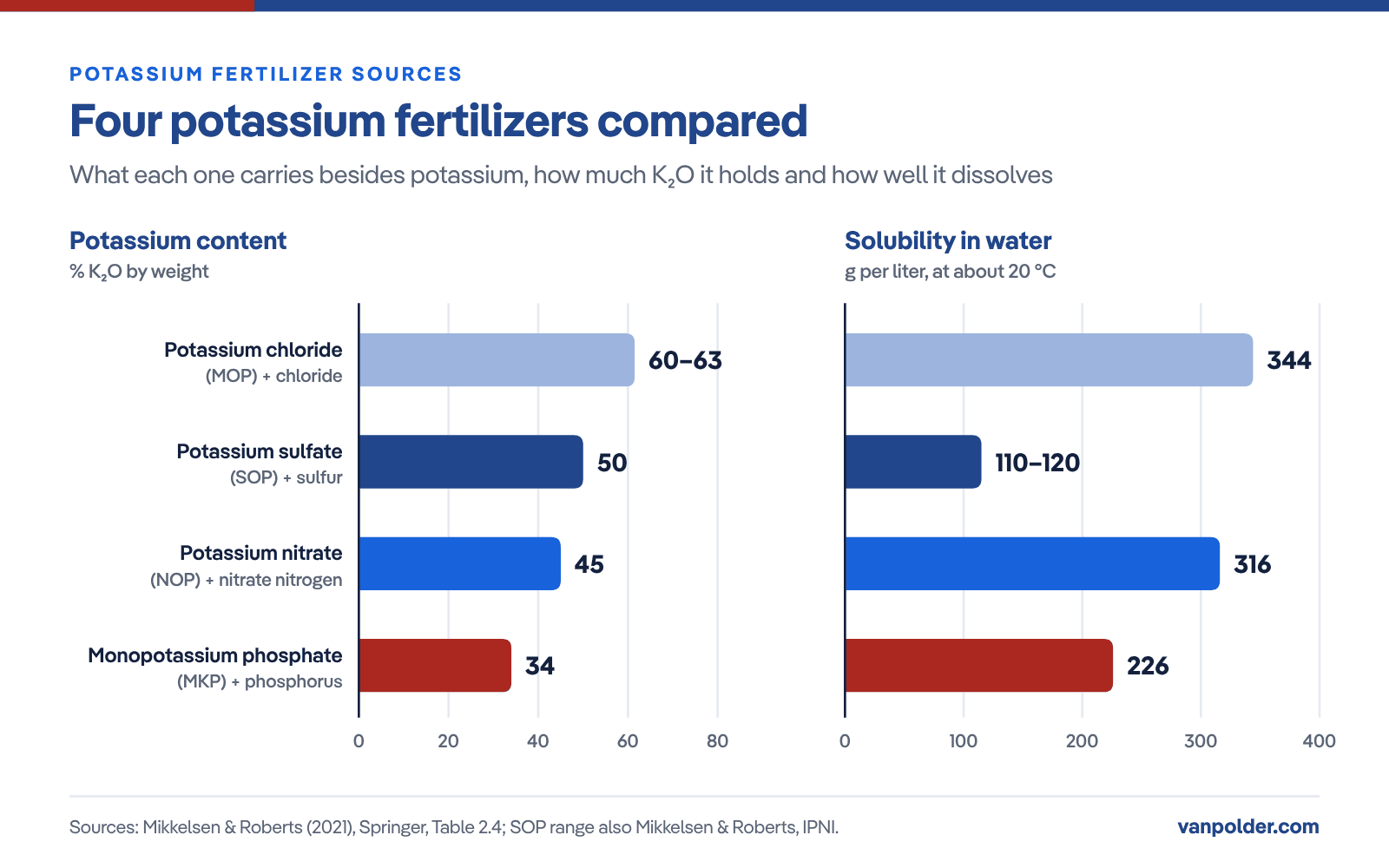
Once dissolved, every potassium fertilizer delivers the same K+ ion; what differs is the partner ion: chloride, sulfate, nitrate or phosphate. Potassium content is stated as K2O on the label; multiply by 0.83 to convert to elemental K.
| Fertilizer | Formula | K2O content | Also supplies | Chloride | Solubility in water (about 20 °C) | Typical use |
| Muriate of potash (MOP) | KCl | 60–63% | Chloride | Yes | 344 g/L | Soil application in most field crops; lowest cost per unit of K |
| Sulfate of potash (SOP) | K2SO4 | 50% | Sulfur (about 18%) | No | 110–120 g/L | Chloride-sensitive crops; soils short of sulfur; foliar sprays |
| Potassium nitrate (NOP) | KNO3 | 45% | Nitrate nitrogen (about 13%) | No | 316 g/L | Fertigation and foliar feeding of fruit, vegetables and other high-value crops |
| Monopotassium phosphate (MKP) | KH2PO4 | 34% | Phosphorus (52% P2O5) | No | 226 g/L | Fertigation and foliar feeding where P and K are needed together, without N |
Sources: Mikkelsen & Roberts (2021), Table 2.4, for K2O content and solubility (SOP range also Mikkelsen & Roberts, IPNI); sulfur, nitrogen and phosphorus contents from Van Polder product specifications.
Muriate of potash (MOP, potassium chloride)
Potassium chloride is by far the most widely used potassium fertilizer because it has the highest K2O content (60–63%) and the lowest cost per unit of potassium (Mikkelsen & Roberts, 2021). It makes up about 90% of world potash production (Marx et al., 2019). Chloride is itself an essential plant nutrient, and at normal application rates, or when blended with another potassium source, chloride damage is rarely seen in tolerant crops (Mikkelsen & Roberts, 2021). The limits are chloride-sensitive crops, saline conditions and high rates placed close to seedlings.
Sulfate of potash (SOP fertilizer)
SOP fertilizer (potassium sulfate) supplies about 50% K2O plus sulfur, with no chloride (Mikkelsen & Roberts, 2021). Unlike potassium chloride, it is not a naturally occurring mineral: it is made by reacting potassium chloride with sulfuric acid (the Mannheim process), by reacting potassium chloride with sulfate salts, or by processing sulfate-rich brines and salt deposits (Marx et al., 2019). It accounts for about 9% of global potassium fertilizer production and costs more per unit of potassium than KCl (Mikkelsen & Roberts, 2021).
SOP is the usual choice for chloride-sensitive crops such as potatoes, lettuce, tobacco, avocados, peaches and legumes (UC SAREP, 2007), and for high-value crops such as coffee and many fruits and vegetables (Marx et al., 2019). It also has a much lower salt index than potassium chloride: 46 against 116 (UC SAREP, 2007). Its weak point is solubility: it is only about one-third as soluble as KCl, so it is less used in fertigation unless the crop also needs sulfur (Mikkelsen & Roberts, 2021).
Potassium nitrate (NOP)
Potassium nitrate supplies about 45% K2O and 13% nitrogen, all as nitrate, in a ratio of roughly one part N to three parts K. It is chloride-free and highly soluble (316 g/L), which is why it is widely used in fertigation and foliar sprays on fruits, vegetables, tobacco and other high-value crops (Mikkelsen & Roberts, 2021). Most potassium nitrate is made by reacting potassium chloride with nitric acid or with nitrate salts; a small share comes from natural caliche deposits in Chile (Mikkelsen & Roberts, 2021). In some countries, potassium nitrate is a regulated product because of its use in explosives, so check local permit rules before you order.
Monopotassium phosphate (MKP)
MKP supplies potassium and phosphorus together (0-52-34) with no nitrogen and no chloride, and dissolves well (226 g/L) (Mikkelsen & Roberts, 2021). It suits fertigation and foliar feeding at flowering and fruit set, when the crop needs phosphorus and potassium but extra nitrogen would push leaf growth. See how to use NPK 0-52-34 for application details.
High-K water-soluble NPK
A high-K fertilizer is any blend where potassium is the largest of the three numbers, such as 15-5-40. These grades combine potassium nitrate with other soluble salts and trace elements so you can feed potassium, nitrogen and micronutrients in one fertigation tank during fruit fill.
How to choose the right potassium fertilizer
Four questions decide the choice:
- Is the crop sensitive to chloride? As a broad rule, many woody species, vegetables and beans are more sensitive to chloride, while many non-woody crops tolerate it well (Mikkelsen & Roberts, 2021). Sensitivity is highest in young seedlings and falls as the crop establishes.
- Does the crop or soil need sulfur? If yes, SOP covers both nutrients.
- How will you apply it? For drip fertigation and foliar sprays, solubility matters most: potassium nitrate, MKP and soluble high-K NPK grades dissolve readily. Fine-grade SOP works for foliar sprays but needs more water to dissolve (Mikkelsen & Roberts, 2021).
- Is salt a problem? Salt index ranks how much a fertilizer raises the salt concentration of the soil solution. It is useful for comparing sources placed near seed, but the ranking varies between methods and matters much less in fertigation and foliar feeding, where the fertilizer is heavily diluted (Mikkelsen & Roberts, 2021). On saline soils or with salty irrigation water, choose a source that adds no chloride.
| Your situation | Sources that fit | Why |
| Field crop, soil application, chloride-tolerant crop, fresh irrigation water or high rainfall | MOP | Highest K concentration and lowest cost per unit of K; at normal rates chloride rarely harms tolerant crops |
| Chloride-sensitive crop (many fruit trees, vegetables, beans, potatoes, tobacco) | SOP, potassium nitrate | No chloride |
| Soil or crop short of sulfur | SOP | Supplies sulfur in the sulfate form plants take up |
| Drip fertigation or hydroponics | Potassium nitrate, MKP, high-K water-soluble NPK | High solubility; SOP is only about one-third as soluble as KCl |
| Potassium needed without extra nitrogen (e.g. late fruit fill) | SOP, MKP, MOP | No nitrogen |
| Saline soil or salty irrigation water | SOP, potassium nitrate | Less or no chloride added to a root zone that already holds salt |
Based on Mikkelsen & Roberts (2021) and UC SAREP (2007). Confirm with soil, water and leaf analysis.
How much potassium fertilizer to apply
There is no single rate, because potassium need depends on the soil’s supply, the crop and the yield you target. Start with a soil test: it is the most reliable predictor of whether a crop will respond to potash. Where soil test potassium is low or very low, expect a yield increase from potassium fertilizer; in the medium range a response may or may not appear; in the high or very high range, do not expect one (Kaiser & Rosen, 2018).
Then look at what the crop removes. Demand differs widely between crops: potatoes, for example, take up more than 600 kg K per hectare per year (Mikkelsen & Roberts, 2021, citing Horneck & Rosen, 2008), and banana is another very high-potassium crop. Use calibrated local recommendations, check progress with leaf analysis and follow the product label for product rates.
Two practical points: recommendations may be given as K or as K2O (K = K2O × 0.83; K2O = K × 1.2), and applied potassium leaches little from silt loams and heavier soils but much more from sandy soils and highly weathered tropical soils, where lower single rates or split applications help keep it in the root zone (Brouder et al., 2021).
Keep potassium in balance with magnesium
Potassium and magnesium compete for uptake, and the effect of potassium on magnesium is stronger than the reverse. Heavy potassium fertilization can therefore induce magnesium deficiency, especially on soils that are low in magnesium or already high in available potassium (Xie et al., 2021). If you raise potassium rates, watch leaf magnesium and supply magnesium alongside.
Potassium fertilizer guides by crop
This page is the hub for our crop-specific potassium guides. For banana:
- Potash for banana plants: potassium nitrate vs SOP vs MOP
- Potassium deficiency in banana: symptoms and correction
- Banana fertilizer schedule by growth stage
- Fertilizer for banana plants: nutrient needs, rates and growth-stage guide.
- How to increase banana bunch weight
- Banana vegetative stage fertilizer
- Banana nutrient deficiency symptoms
- Banana drought stress
- Water soluble fertilizer for banana
Related nutrient guides: Magnesium fertilizers and Calcium fertilizers.
Van Polder potassium fertilizers
Van Polder supplies water-soluble potassium sources for fertigation, foliar feeding and soil application:
- Potassium nitrate PURE (13.6-0-46.2): 46.2% K2O and 13.6% nitrate nitrogen, chloride-free, for fertigation and foliar programs.
- Sulfate of potash (SOP) (0-0-51+18S): 51.5% K2O and 18.5% sulfur, for chloride-sensitive crops and sulfur-demanding programs.
- MKP 0-52-34: 34% K2O and 52% P2O5, for flowering and fruit set.
- WSF NPK 15-5-40+TE: a high-K soluble NPK with trace elements for fruit fill.
All are produced to Van Polder specifications. Check the product label for application rates and compatibility.
FAQ
Which fertilizers are highest in potassium?
Potassium chloride (MOP) has the highest content at 60–63% K2O, followed by potassium sulfate at about 50%, potassium nitrate at about 45% and monopotassium phosphate at 34% (Mikkelsen & Roberts, 2021). The highest number is not always the best choice: chloride, sulfur, nitrogen and solubility often matter more for the crop.
What is SOP fertilizer?
SOP stands for sulfate of potash, or potassium sulfate (K2SO4). It supplies about 50% K2O plus sulfur, contains no chloride and has a low salt index, which makes it the standard potassium source for chloride-sensitive crops (Mikkelsen & Roberts, 2021; UC SAREP, 2007).
How do I know if my plants need potassium?
Look for yellowing and scorching on the margins of older leaves and poorly filled fruit (Hafsi et al., 2014). Confirm with a leaf analysis and a soil test, because a low soil test is the best predictor of a response to potassium fertilizer (Kaiser & Rosen, 2018).
What is the fastest way to add potassium?
Dissolved potassium reaches the roots fastest through fertigation with a soluble source such as potassium nitrate. Foliar sprays are a convenient way to add potassium on top of what the roots take up from the soil (Mikkelsen & Roberts, 2021), but they cannot replace soil supply for a high-demand crop.
Is there a natural source of potassium?
Manure contains potassium in a soluble form: solid manures typically hold 5–25 kg K2O per tonne, so analyze the batch before you rely on it (Mikkelsen & Roberts, 2021). Ground rock is a weak source: potassium feldspar contains up to about 17% K2O but dissolves extremely slowly, and turning it into soluble potassium takes industrial processing with heat and alkali (Mikkelsen & Roberts, 2021; Ma et al., 2015).
Next step
Before you choose a potassium fertilizer, test your soil and, for perennial crops, your leaves. Those results tell you whether potassium is limiting, how much to apply and whether magnesium needs attention too. To match a Van Polder potassium source to your crop and application method, contact your Van Polder distributor.
Sources
- Amtmann, A., Troufflard, S. & Armengaud, P. (2008). The effect of potassium nutrition on pest and disease resistance in plants. Physiologia Plantarum, 133(4), 682–691. https://doi.org/10.1111/j.1399-3054.2008.01075.x
- Brouder, S.M., Volenec, J.J. & Murrell, T.S. (2021). The potassium cycle and its relationship to recommendation development. In Murrell, T.S. et al. (eds), Improving Potassium Recommendations for Agricultural Crops. Springer (open access). https://doi.org/10.1007/978-3-030-59197-7_1
- Hafsi, C., Debez, A. & Abdelly, C. (2014). Potassium deficiency in plants: effects and signaling cascades. Acta Physiologiae Plantarum, 36, 1055–1070. https://doi.org/10.1007/s11738-014-1491-2
- Hasanuzzaman, M. et al. (2018). Potassium: a vital regulator of plant responses and tolerance to abiotic stresses. Agronomy, 8(3), 31. https://doi.org/10.3390/agronomy8030031
- Kaiser, D.E. & Rosen, C.J. (2018). Potassium for crop production. University of Minnesota Extension. https://extension.umn.edu/phosphorus-and-potassium/potassium-crop-production
- Ma, H. et al. (2015). 20 years advances in preparation of potassium salts from potassic rocks: a review. Acta Geologica Sinica (English Edition), 89(6), 2058–2071. https://doi.org/10.1111/1755-6724.12617
- Marx, H., Kaps, S., Schultheis, B. & Pfänder, M. (2019). Potassium sulfate – a precious by-product for solar salt works. Bulletin of the Society of Sea Water Science, Japan, 73, 89–93.
- Mikkelsen, R.L. & Roberts, T.L. (2021). Inputs: potassium sources for agricultural systems. In Murrell, T.S. et al. (eds), Improving Potassium Recommendations for Agricultural Crops. Springer (open access). https://doi.org/10.1007/978-3-030-59197-7_2
- Mikkelsen, R.L. & Roberts, T.L. (n.d.). Selecting the right source of potassium fertilizer. International Plant Nutrition Institute. https://www.apni.net/wp-content/uploads/2020/05/Mikkelsen01.pdf
- UC SAREP (2007). Potassium sulfate: Technical Advisory Panel review for the USDA National Organic Program. https://www.ams.usda.gov/sites/default/files/media/PSC%20technical%20advisory%20panel%20report.pdf
- Wang, M., Zheng, Q., Shen, Q. & Guo, S. (2013). The critical role of potassium in plant stress response. International Journal of Molecular Sciences, 14(4), 7370–7390. https://doi.org/10.3390/ijms14047370
- White, P.J. (2013). Improving potassium acquisition and utilisation by crop plants. Journal of Plant Nutrition and Soil Science, 176, 305–316. https://doi.org/10.1002/jpln.201200121
- Xie, K., Cakmak, I., Wang, S., Zhang, F. & Guo, S. (2021). Synergistic and antagonistic interactions between potassium and magnesium in higher plants. The Crop Journal, 9(2), 249–256. https://doi.org/10.1016/j.cj.2020.10.005
- Zörb, C., Senbayram, M. & Peiter, E. (2014). Potassium in agriculture – status and perspectives. Journal of Plant Physiology, 171(9), 656–669. https://doi.org/10.1016/j.jplph.2013.08.008


Maharashtra has declared drought in 265 talukas after a weak monsoon, and grape growers in Nashik fear losing at least 40% of this season’s harvest. For anyone supplying fruit growers in India, the next few months are about keeping crops and vines alive and productive with very little water. At Van Polder, we believe drought […]

Denmark’s new nitrogen regulation starts on 1 January 2027, but vegetable growers and several fruit, berry and nursery crops will stay on today’s nitrogen norms for one more year. For anyone supplying high-value horticulture, this is a short pause, not a change of direction. At Van Polder, we believe nitrogen efficiency will matter more every […]
Retailers in the United States report that growers are trimming micronutrient spending this season, while tissue tests keep finding zinc, boron and manganese shortages. At Van Polder, we believe this is the wrong place to save, and the lesson applies to every market our partners serve. When nitrogen, phosphate and potash bills rise, micronutrient fertilizer […]
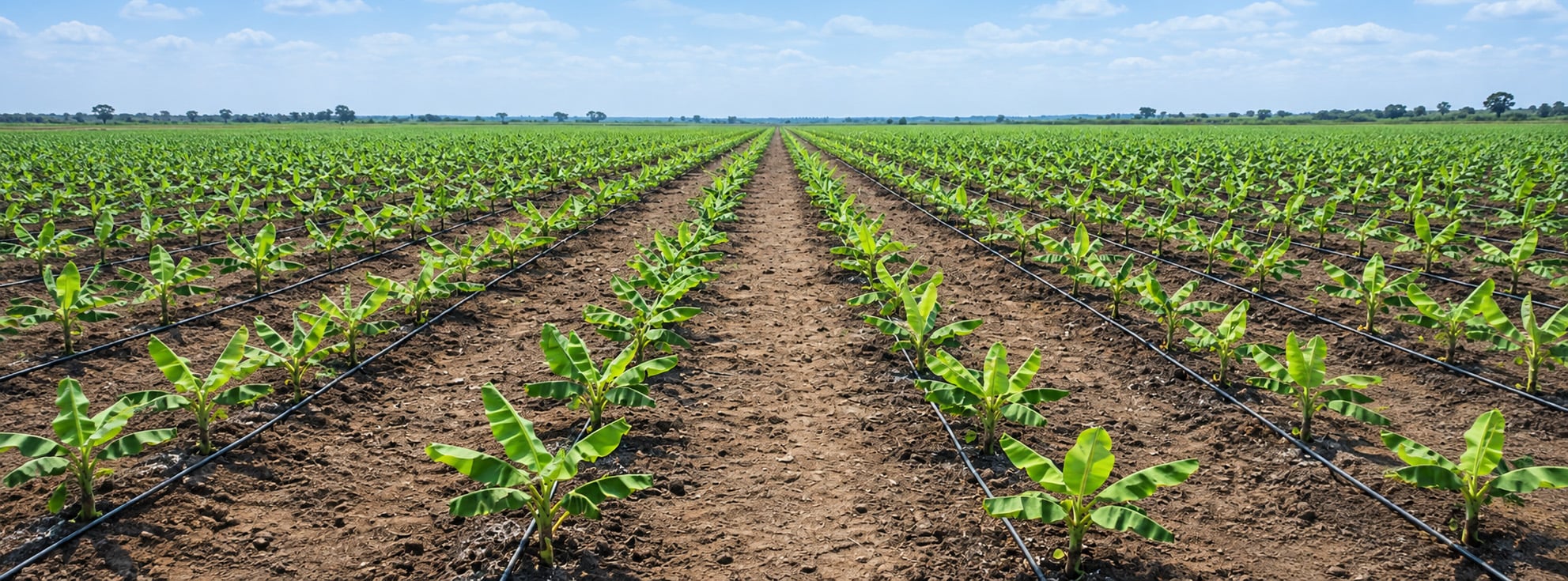
Water-soluble fertilizer for banana lets you feed the crop through drip in small doses that follow each growth stage, and in trials this gave more fruit from less fertilizer and water than soil-applied fertilizer. The best water-soluble fertilizer for banana is the one that dissolves cleanly in your water, matches the growth stage and costs […]
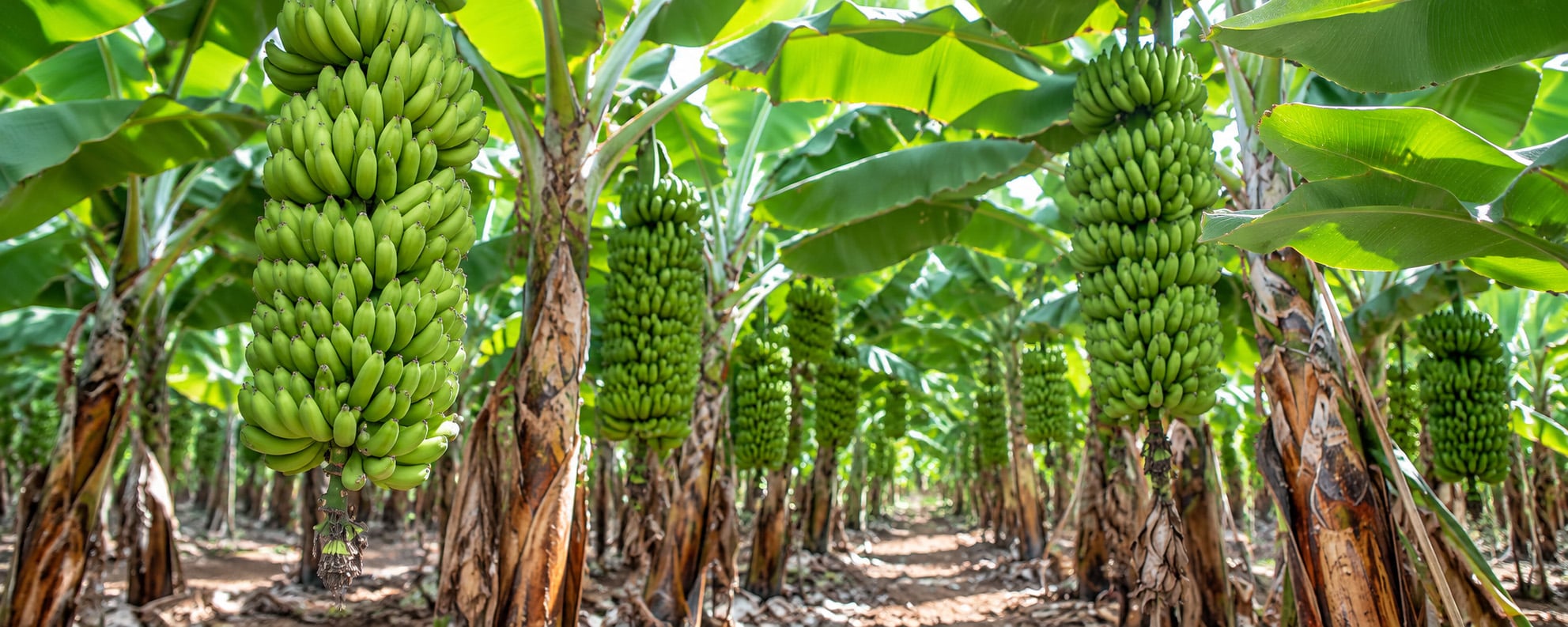
To increase banana bunch weight, build a large, healthy leaf canopy and good potassium reserves before the bunch emerges, keep water supply steady, and protect the leaves until harvest. Most of the bunch’s potential is set before shooting: the number of fruits depends on the leaf area the plant has when it initiates its flower […]
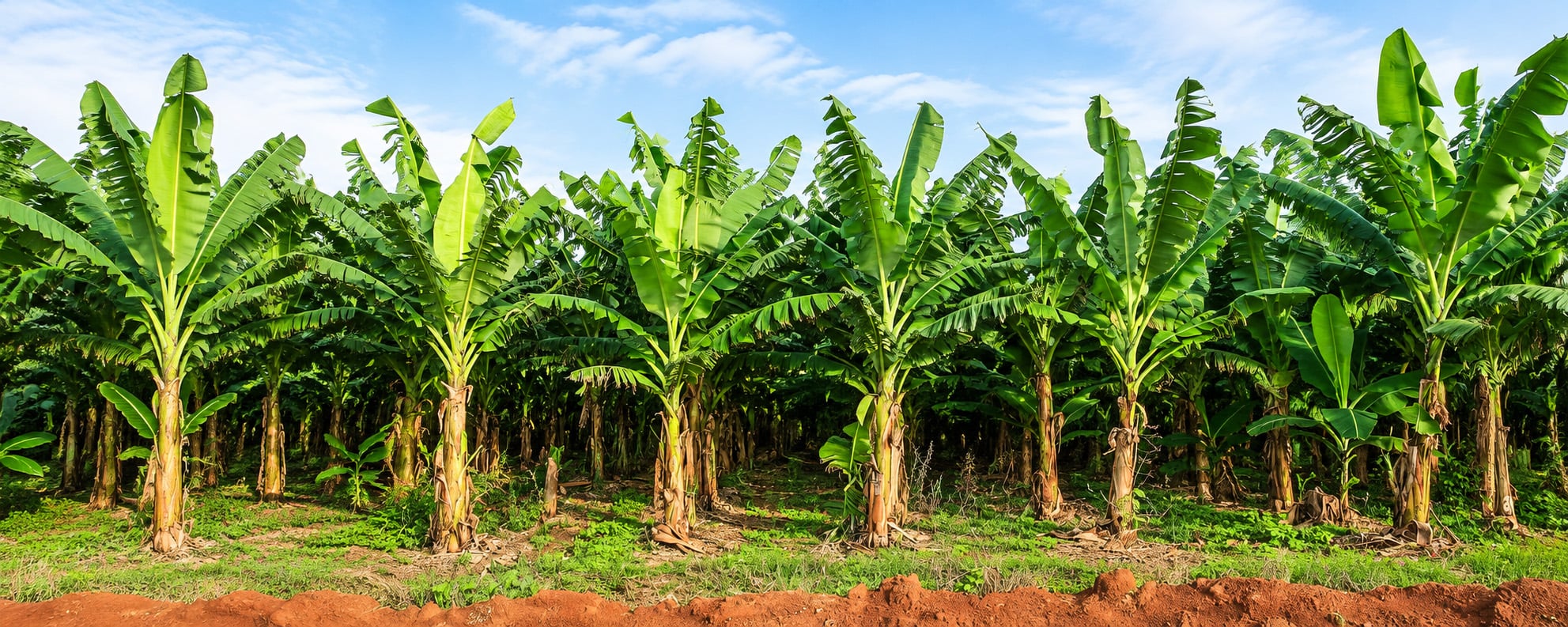
The right fertilizer for banana plants is the one that matches what the crop removes, what your soil already holds and the stage the plant is in. Banana takes up far more potassium than any other nutrient, followed by nitrogen and calcium, so K supply and timing decide much of the result. This guide covers […]