







The Essential Guide to Using Amino Acids for Faster, Healthier Plant Growth
Amino acids are essential organic compounds that support plant growth, metabolism, and stress resistance by providing ready-to-use building blocks for key physiological processes. Unlike conventional fertilizers that mainly supply mineral nutrients, amino acids help plants save metabolic energy and improve their ability to respond to environmental stresses and critical growth stages. This guide explores the […]


Amino acids are essential organic compounds that support plant growth, metabolism, and stress resistance by providing ready-to-use building blocks for key physiological processes. Unlike conventional fertilizers that mainly supply mineral nutrients, amino acids help plants save metabolic energy and improve their ability to respond to environmental stresses and critical growth stages. This guide explores the most effective application methods, optimal timing strategies, and essential safety considerations to help you maximize the benefits of amino acids for healthier and more productive crops.
1. Application Methods of Amino Acids for Plants
Below are four common application methods that help optimize nutrient uptake, support plant development, and improve crop performance.
1.1. Foliar Spray
Foliar spraying is the most common method and provides the fastest physiological results by delivering nutrients directly into plant metabolism.
- Mechanism: Amino acids and small peptides are absorbed directly through the leaf’s waxy cuticle via negatively charged, hydrophilic pores and through stomata. Once absorbed, they are typically transported to the meristematic parts of the plant within a few hours.
- Advantages: This method provides a rapid absorption rate, with research indicating that foliar-applied amino acids can achieve 80 – 90% absorption within 24 hours. This enables timely physiological responses, making it particularly effective in helping plants recover from abiotic stresses such as extreme temperatures and drought. It also significantly supports critical growth stages, including flowering, fruit set, and fruit development.
- Application Techniques:
- Timing: For maximum effectiveness, foliar sprays should be applied during the early morning ( 6 – 9 a. m.) or late afternoon ( 4 – 6 p. m.). These periods have higher stomatal activity and lower ambient temperatures, helping prevent rapid evaporation and leaf scorch caused by intense midday sunlight.
- Coverage: It is crucial to ensure uniform coverage across the entire leaf surface. Special attention should be given to the underside of leaves, where stomata are most concentrated. The use of a non-ionic surfactant can further improve adhesion and uptake efficiency.
- Concentration: Standard dilution ratios for foliar application typically range from 1:800 to 1:1000. Recommended concentrations are 0.1% – 0.2% for vegetables and 0.2% – 0.3% for fruit trees. More diluted solutions are often recommended for sensitive seedlings, while mature crops can generally tolerate higher concentrations.

1.2. Soil Application / Root Drench
Choosing soil application or root drenching focuses on delivering biostimulants directly to the plant’s foundation, providing sustained support throughout the growing season.
- Mechanism: Amino acids in the soil solution are absorbed through the root system via specific transporters in cell membranes and then transported systemically to meristematic tissues and other plant organs. This method is energetically efficient for plants because it provides ready-to-use organic nitrogen, bypassing the energy-intensive process of assimilating inorganic nitrogen into amino acids.
- Advantages:
- Robust Root Development: Application to the root zone stimulates root elongation, branching, and biomass accumulation, increasing the total root surface area for more efficient nutrient and water uptake.
- Natural Chelation: Amino acids act as natural chelating agents in the soil, improving the mobility and availability of essential micronutrients such as iron, zinc, and manganese.
- Improved Soil Health: These compounds are biodegradable and serve as a food source for beneficial soil microorganisms, enhancing microbial activity and nutrient cycling over time.
- Long-Lasting Support: Although uptake is slower than foliar absorption, soil application provides longer-lasting availability in the root zone, making it ideal for continuous nutritional support.
- Example: Studies have shown that glutamine is significantly more effective at increasing plant height and weight when applied through the soil to the roots compared with foliar application.
- Application Techniques:
- Recommended Rates: For general crops, typical application rates for soil drenching range from 1 – 2 kg/ha per application.
- Fertigation Integration: Amino acids are highly compatible with drip irrigation or fertigation systems, with recommended application rates of 3 – 5 L/ha per event during critical growth stages.
- Timing and Frequency: Soil applications should ideally be integrated into baseline fertilization schedules and repeated every 7 – 14 days during active growth periods or applied weekly during stress recovery.
- Specific Uses: This method is particularly valuable for reducing transplant shock and supporting early vegetative growth in high-value vegetable and ornamental crops.
–> See also: Humic Acid, Fulvic Acid & Amino Acid Fertilizer Uses and How to Apply Correctly
1.3. Seed Treatment
Treating seeds with amino acid solutions before sowing provides a vital head start for plants by activating their internal biological processes at an early stage.
- Mechanism: Amino acids and nutrients are absorbed through the seed coat, triggering early metabolic processes and potentially reprogramming energy metabolism networks within the seed.
- Advantages:
- This method significantly enhances germination rates and seedling vigor.
- It promotes the rapid and uniform establishment of the initial root system, helping plants utilize water and soil nutrients more efficiently from the beginning of growth.
- In soybean crops, seed treatment has been shown to be particularly effective in increasing productivity compared with other application methods. For example, treatment with individual amino acids such as cysteine or phenylalanine can increase yields by at least 22% under field conditions.
- Application Techniques: The standard practice is to soak seeds in an amino acid solution at a concentration of 0.5 – 1 g/L before sowing.
1.4. Fertigation / Irrigation Integration
Integrating amino acids into irrigation systems provides a highly efficient and systematic approach to plant nutrition by delivering biostimulants directly to the root environment.
- Mechanism: Amino acids are dissolved in the water supply and distributed through irrigation systems, such as drip irrigation or fertigation, where they are absorbed directly by the roots from the soil solution.
- Advantages:
- Controlled and Uniform Supply: This method ensures that nutrients are distributed evenly throughout the field, providing consistent nutrition for all plants.
- Efficiency During Critical Growth Phases: This method is particularly useful during high-demand growth stages or when helping plants recover from environmental stress conditions.
- Application Techniques:
- Methodological Efficiency: This method provides high labor efficiency by automating the delivery process across large areas. Standard fertigation rates typically range from 3 – 5 L/ha per application, with 3 – 6 applications throughout the growing season during critical growth phases.
- Frequency: For plants undergoing active growth, applications should be repeated every 7 – 14 days.
- Stress Recovery: During stress recovery periods, weekly applications are recommended to provide immediate and consistent metabolic support.
- Integration: For maximum efficiency, amino acid fertigation should be integrated with the plant’s baseline fertilization schedule and precision irrigation management.

2. Best Timing for Amino Acid Application
Applying amino acids at the right time is essential to maximize their effectiveness in improving plant growth and yield. Based on the provided sources, the optimal application timing can be divided into three key periods:
2.1. During Abiotic Stress Conditions
This is considered the most critical period for amino acid application because it helps plants save energy that would otherwise be used to synthesize amino acids internally, allowing them to recover more quickly from stress conditions.
- Drought and Water Scarcity: Foliar application helps reduce damage caused by water stress by maintaining chlorophyll levels and supporting yield stability under limited irrigation conditions. Cysteine has been specifically reported to alleviate drought stress by increasing root weight and root length.
- High Salinity: Amino acids support osmotic regulation and help maintain ion balance in saline soils. Proline, Methionine, and Aspartic acid have been shown to reduce salt stress by enhancing antioxidant defense mechanisms.
- Extreme Temperatures: Amino acid application during heat or cold stress helps protect cellular structures and maintain plant physiological functions. Proline contributes to cell membrane stabilization, protects chloroplast function, and supports photosynthesis under high-temperature stress.
- Heavy Metal Toxicity: Aspartic acid and Proline can help reduce oxidative stress caused by heavy metal toxicity, such as cadmium stress. GABA also contributes to heavy metal stress mitigation through chelation mechanisms.
- Recovery After Injury: Amino acid application can accelerate plant recovery after transplant shock, chemical injury, or disease-related damage.

2.2. Critical Growth Stages
Supplementing amino acids during important developmental stages helps plants achieve their maximum growth potential and yield performance.
- Seed Treatment and Seedling Stage: Amino acids improve seed germination, enhance seedling vigor, and support the development of a strong initial root system. Seed treatments with amino acids such as Cysteine, Phenylalanine, and Glutamate have demonstrated significant yield improvements in crops such as soybean.
- Vegetative Growth Stage: Amino acids support rapid cell division, plant growth, and biomass accumulation. For example, amino acid application at the V4 growth stage in soybean has been shown to improve nitrogen metabolism-related parameters.
- Pre-flowering Stage: Application before flowering promotes flower initiation and helps reduce flower drop by providing essential building blocks for reproductive development.
- Post-pollination and Fruit Set Stage: Amino acids improve fruit set percentage, support uniform fruit development, and reduce young fruit drop.
- Quality Accumulation Stage: Application during the final growth stages helps increase sugar content (Brix), improve Vitamin C levels, and enhance fruit flavor and color.
2.3. When Correcting Nutrient Deficiencies
Foliar spraying is one of the fastest methods to correct nutrient deficiencies and improve plant performance during specific physiological stages.
- Natural Chelation: Amino acids act as natural chelating agents, improving the availability and absorption of micronutrients such as iron (Fe), zinc (Zn), manganese (Mn), and copper (Cu) compared with traditional mineral salt fertilizers.
- Improved Nutrient Absorption Efficiency: When combined with NPK fertilizers, amino acids can enhance nutrient uptake by increasing cell membrane permeability and improving nutrient transport within plants. Choosing a high-quality fertilizer with amino acids that pairs well with your existing NPK program can help maximize this absorption-boosting effect across different deficiency-correction scenarios.
3. Important Notes When Using Amino Acids
To maximize the effectiveness of amino acid biostimulants and prevent potential crop damage, it is important to follow proper safety precautions and application guidelines.
- Avoid Over-application: Excessive amino acid concentrations can cause an “inverse effect,” where plant growth is inhibited instead of stimulated. This is exactly why checking the amino acid fertilizer dose recommended for each crop type is a necessary step before mixing a spray solution. For example, high concentrations of L-methionine may negatively affect the plant’s photosynthetic system. Similarly, Fish Amino Acid (FAA) concentrations exceeding 2% have been reported to reduce growth in leafy vegetables, potentially due to disruption of stomatal opening and gas exchange processes.
- Conduct a Compatibility Test Before Mixing: Always perform a small-scale jar test before combining amino acids with other fertilizers or pesticides. This helps evaluate chemical compatibility and prevents issues such as precipitation or unwanted reactions in the spray tank.
- Follow the Correct Mixing Order: When preparing a mixed solution, add ingredients in the following order:
- Water first.
- Soluble fertilizers.
- Amino acid products.
- Surfactants or wetting agents (if required).
- Avoid Incompatible Products: Do not mix amino acids with highly alkaline products or strong oxidizing agents, as these conditions can degrade the amino acid structure and reduce their effectiveness.
- Maintain Optimal pH: For better stability and nutrient uptake, the spray solution should maintain a pH range of 5.5 – 6.5.
- Adjust Concentration According to Plant Growth Stage: Use more diluted solutions (commonly around 1:1000) for seedlings and young plants to prevent osmotic stress. Mature crops can generally tolerate higher concentrations, such as approximately 1:500.

Amino acids are a valuable tool in modern agriculture, providing a sustainable approach to improving plant resilience and productivity. By integrating these biostimulants through appropriate application methods, such as foliar spraying, soil drenching, or fertigation, you can effectively support crops throughout different growth stages. Remember to monitor plant responses, begin with recommended dilution rates, and adjust applications based on crop requirements to achieve the best results.


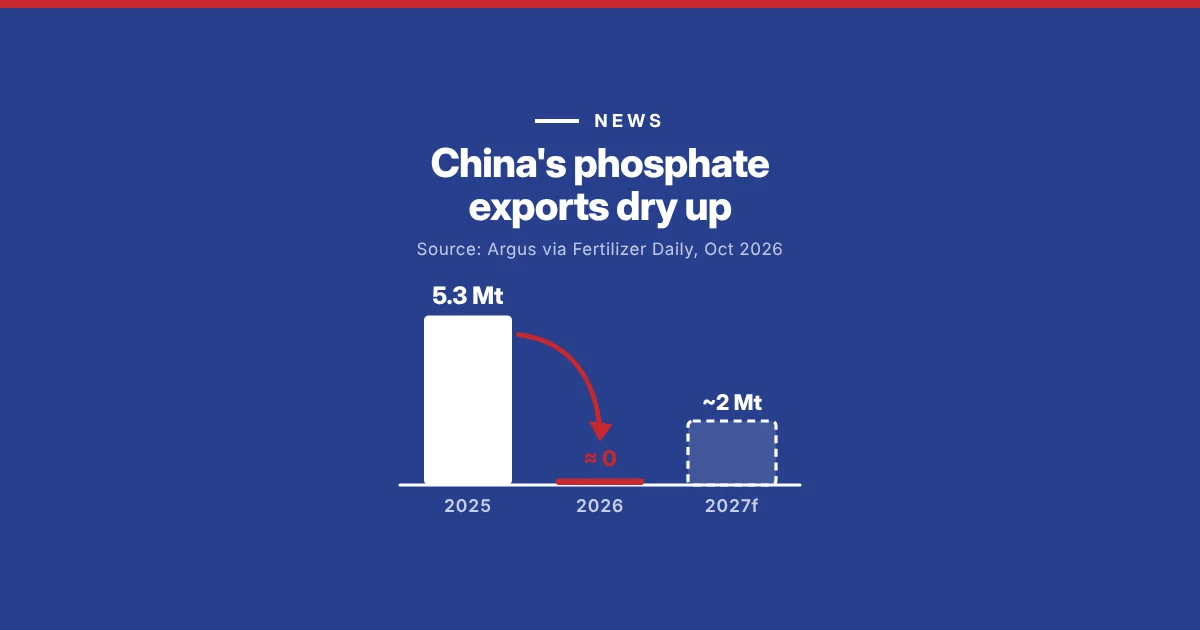
China, which exported about 5.3 million tonnes of phosphate fertilizer in 2025, has shipped almost none in 2026. With sulfur scarce and phosphate prices high, import-dependent markets face a tight season, and every kilo of phosphorus needs to work harder. At Van Polder, we believe a tight phosphate market is a reason to look again […]

If you are starting a banana farm, Panama disease (Fusarium wilt of banana) is the risk to plan for. How to prevent Panama disease in bananas comes down to keeping the fungus out, because no fertilizer prevents or cures it and once it is in the soil it stays for decades (Pegg et al., 2019; […]

A government project in Bangladesh’s Rajshahi Division has brought solar-powered pumps, including solar drip systems for orchards, to drought-prone land where groundwater has been falling for decades. The Prime Minister wants all diesel irrigation pumps converted to solar within five years. For growers who move to drip, the next step is to feed the crop […]

Calcium deficiency in banana shows first on the youngest leaves, as thickened veins and a saw-tooth pattern of yellow and dead tissue along the leaf margin, and in severe cases as “spike leaf”, new leaves with little or no blade, and poor-quality fruit (Turner, 1987; Martin-Prével, 1980). On most plantation soils it is not a […]
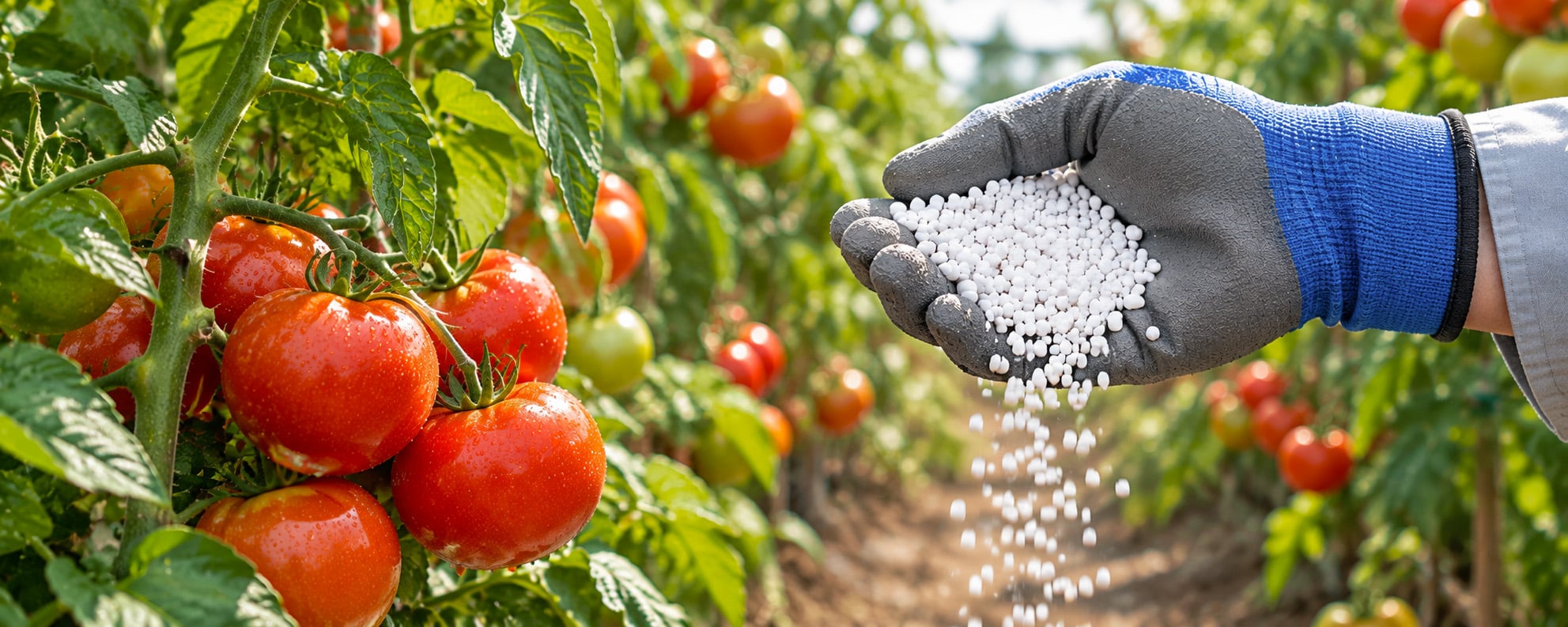
A calcium fertilizer supplies the calcium that holds plant cell walls and membranes together, but whether it reaches the fruit depends as much on water flow as on the fertilizer you choose. Calcium travels with water to the leaves and barely moves out of them again, so fruit and young leaves can run short even […]

An unusually wet winter brought coffee flowering in Minas Gerais forward by about a month, in several separate waves. With October forecast to be hotter than normal and rain patchy, the question for 2027 is now how many of those flowers turn into fruit. At Van Polder, we believe a strong flowering is only the […]