







The 5 Practical Combi Fertilizer Uses for Modern Agriculture
Combi fertilizers are essential for boosting plant vigor and maintaining long-term soil health. Understanding the various combi fertilizer uses is key to overcoming “hidden hunger” in crops and maximizing farm efficiency. To learn how these benefits work, how to apply them for the best results, and the critical precautions needed to avoid common mistakes, read […]


Combi fertilizers are essential for boosting plant vigor and maintaining long-term soil health. Understanding the various combi fertilizer uses is key to overcoming “hidden hunger” in crops and maximizing farm efficiency. To learn how these benefits work, how to apply them for the best results, and the critical precautions needed to avoid common mistakes, read this article below.
1. Correcting Multiple Micronutrient Deficiencies Simultaneously
Crops rarely suffer from a single nutrient deficiency. Instead, they frequently experience a “hidden hunger” where multiple symptoms overlap. To effectively address this, using a combi fertilizer is highly recommended when you observe:
- Iron (Fe) and Manganese (Mn) deficiency: Interveinal chlorosis, where young leaves turn yellow while their veins remain distinctly green
- Zinc (Zn) deficiency: Twisted young leaves, stunted growth with shortened internodes, or pale white/yellow bands forming across the foliage
- Boron (B) deficiency: Dying growing points (rosetting), excessive blossom drop, or deformed, hollow-hearted fruits
Applying single-element fertilizers can inadvertently trigger nutrient clashing – a condition where an excess of one element blocks the absorption of another. Combi fertilizers solve this by delivering trace elements, scientifically balanced amounts.
Furthermore, these micro-elements are typically protected by Chelation, preventing them from precipitating or becoming locked in the soil under unfavorable pH conditions.
To maximize the impact of your Combi fertilizer and avoid wasting inputs, make sure to follow these best practices:
- Application method: Foliar spraying is the best way to rescue a weakened crop. Apply during the early morning or late evening to maximize absorption through the leaf pores
- Optimal timing: Target critical growth phases such as post-harvest vegetative recovery, pre-flowering, and the fruit-set stage

By following these professional application steps at the right growth stages, the crop will respond rapidly to the nutrient boost.
- Foliage transitioning from pale yellow back to a vibrant, deep green
- Visible stem elongation and the emergence of active new growth
- Improved fruit retention and a significant drop in physiological fruit shedding.
2. Improving Nutrient Uptake Efficiency Through Chelation
On alkaline (pH > 6.5) or organic-deficient soils, conventional micronutrient salts (sulfates, oxides) rapidly fail. Under these conditions, iron, zinc, manganese, and copper quickly convert into insoluble forms – such as ferric oxides and hydroxides – which roots cannot absorb. Iron is typically the first element to show visible symptoms under these conditions, which is why many growers first look into iron micronutrient fertilizer uses before combining it with other trace elements. A combi fertilizer with chelation directly resolves this availability bottleneck.
- Wrapping into a protective shield: A chelating agent (such as EDTA or EDDHA) wraps around the micronutrient ion (including Iron, Zinc, Copper, and Manganese) like a protective shield
- Preventing unwanted reactions: This shield successfully prevents the nutrient from reacting with other ions present in the soil or irrigation water
- Releasing the nutrient directly into the plant: Once it reaches either the root surface or the leaf, the chelate “releases” the nutrient directly into the plant’s system.

To ensure combi fertilizers achieve the highest efficiency and avoid wasting inputs, growers should follow 2 core principles:
- Match chelate to soil pH: If your soil is highly alkaline (pH > 7.5), choose Combi products containing Iron EDDHA, as it remains stable where EDTA fails
- Foliar efficiency: Plant leaves have a natural waxy cuticle that repels water. Chelated nutrients are specially designed to slip right through this waterproof barrier, entering the plant much faster than ordinary mineral salts.
When the chelate combi fertilizer is applied properly, growers will witness clear improvements in both crop health and investment costs:
- Rapid green-up even under environmental stress (extreme heat or cold)
- Stronger root systems and improved soil microbial activity due to the stable delivery of nutrients
3. Supporting Biofortification of Food Crops
Modern agriculture strives for nutrient-dense, high quality yields. This process known as biofortification is a powerful competitive edge for premium markets. Integrating combi fertilizer helps directly elevate crop market value by enriching vital minerals (Iron, Zinc, Manganese) and protein levels.
Combi fertilizers utilize chelation to allow micronutrients to penetrate plant cell barriers more effectively. Instead of just accumulating in the leaves, these nutrients enrich the crop’s intrinsic nutritional value without the need for genetic modification.

4. Enhancing Plant Stress Tolerance and Disease Resistance
Throughout their lifecycle, crops face constant climate shocks (abiotic stress like drought, waterlogging, heat, or frost) and biological threats (biotic stress from fungi, bacteria, and pests). When trace minerals are deficient, the plant’s innate immune system degrades, leaving the entire field vulnerable.
Complete nutrition is the ultimate foundation of plant immunity, where Combi fertilizers resolve this vulnerability through two core mechanisms:
- Activating defense enzymes: Micronutrients like Zinc and Manganese act as vital cofactors that turn on antioxidant enzymes, which actively neutralize cell-damaging free radicals during stress periods and reviewing specific zinc fertilizer uses can help growers time this application to the exact stress-prone growth stages for maximum enzyme activation.
- Enforcing nutritional immunity: This balanced formula creates a natural shield that protects the plant’s food supply. It locks away vital nutrients so invading diseases and pests cannot steal them to grow and multiply.
By activating these internal biochemical defenses, the formulation translates complex cellular protection into tangible, visible success in the field.
- Sustained vigor and growth: Crops maintain their vibrant greenness and steady growth rates even when subjected to water deficit or mild salinity
- Minimized yield loss: A drastic reduction in blossom and fruit drop typically triggered by sudden weather shocks
- Accelerated disease recovery: Enhanced efficacy of standard disease control measures, paired with faster healing of cellular wounds caused by pathogens

Note: Always conduct compatibility tests when mixing combi fertilizers with pesticides to ensure no precipitation occurs and efficacy is maintained.
5. Ensuring Uniform Nutrient Distribution
A common mistake in manual fertilization is uneven mixing, which leads to some plants being overfed while others are starved. Combi fertilizers solve this issue at the manufacturing level.
Even growers who research how to make micronutrient fertilizer at home run into this same challenge on a smaller scale. Unlike manual or physical blends of individual micronutrients which are highly prone to settling, layering, or segregation in tanks and mechanical spreaders due to weight differences, combi fertilizers guarantee:
- Exact ratio per single granule: Every individual granule or concentrated droplet contains the identical, precise ratio of micronutrients advertised on the label.
- Elimination of segregation: Granules are engineered with uniform size and weight, completely preventing different elements from separating during long-distance transport or mechanical field application.
Deploying a truly uniform distribution solution upgrades farm operational efficiency to a professional standard, delivering clear and measurable financial outcomes:
- Flawless uniform growth: Highly synchronized growth and development across the entire acreage, facilitating streamlined harvest management and uniform flowering phases
- Substantial labor savings: Drastically reduces the severe risks, errors, and high labor costs associated with complex manual nutrient mixing at the farm level.

Maximizing combi fertilizer uses is essential for high-yield, sustainable farming. By fixing nutrient deficiencies and ensuring uniform distribution, it significantly boosts crop climate resilience while cutting labor costs. This is the ultimate strategic investment for modern, highly profitable agriculture.


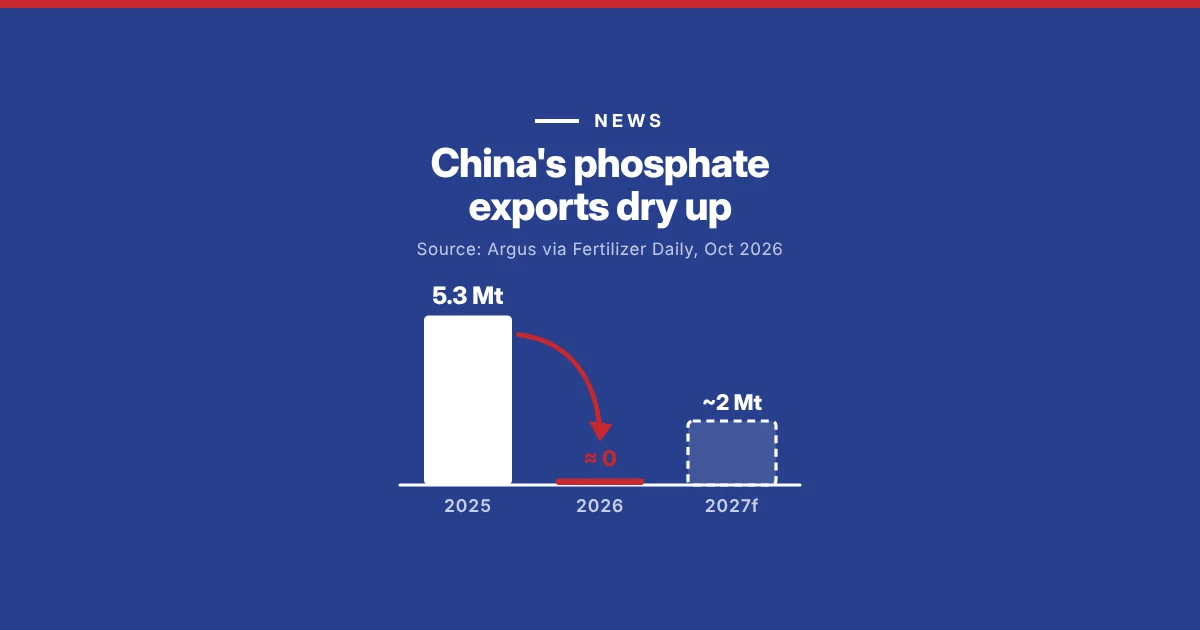
China, which exported about 5.3 million tonnes of phosphate fertilizer in 2025, has shipped almost none in 2026. With sulfur scarce and phosphate prices high, import-dependent markets face a tight season, and every kilo of phosphorus needs to work harder. At Van Polder, we believe a tight phosphate market is a reason to look again […]

If you are starting a banana farm, Panama disease (Fusarium wilt of banana) is the risk to plan for. How to prevent Panama disease in bananas comes down to keeping the fungus out, because no fertilizer prevents or cures it and once it is in the soil it stays for decades (Pegg et al., 2019; […]

A government project in Bangladesh’s Rajshahi Division has brought solar-powered pumps, including solar drip systems for orchards, to drought-prone land where groundwater has been falling for decades. The Prime Minister wants all diesel irrigation pumps converted to solar within five years. For growers who move to drip, the next step is to feed the crop […]

Calcium deficiency in banana shows first on the youngest leaves, as thickened veins and a saw-tooth pattern of yellow and dead tissue along the leaf margin, and in severe cases as “spike leaf”, new leaves with little or no blade, and poor-quality fruit (Turner, 1987; Martin-Prével, 1980). On most plantation soils it is not a […]
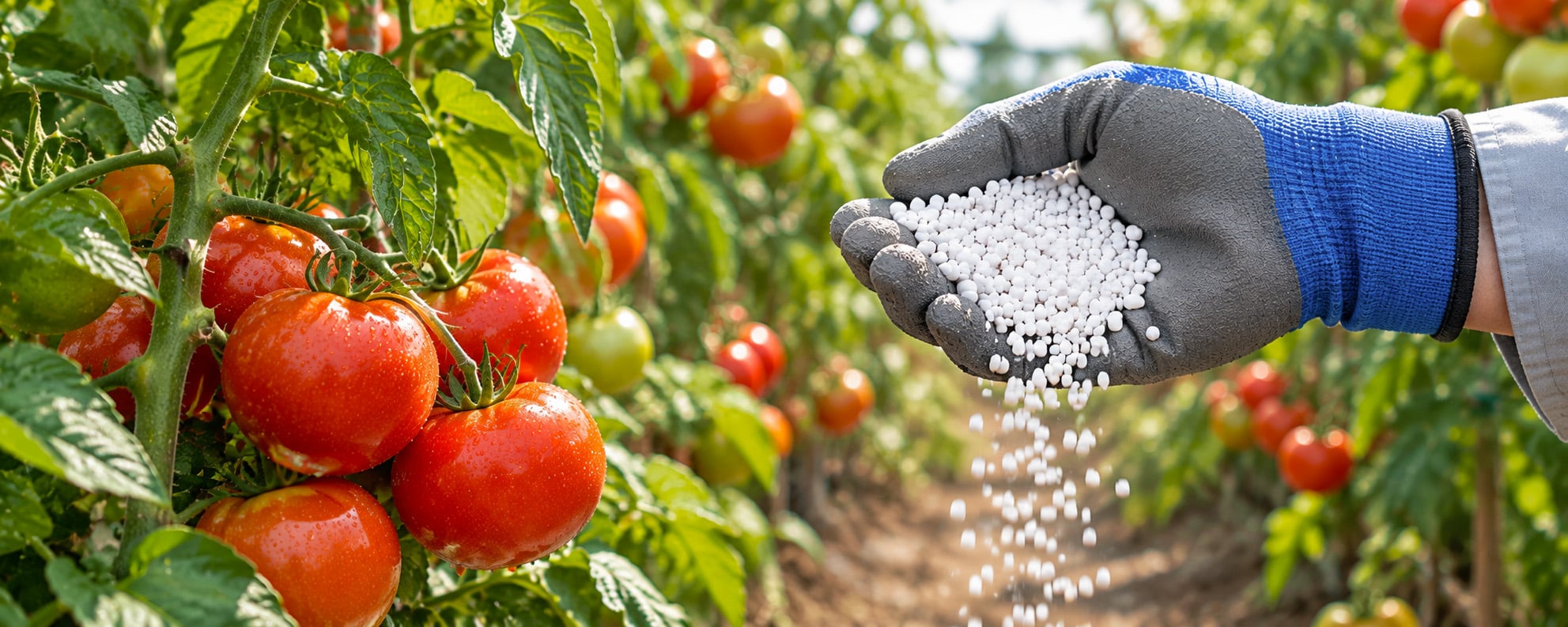
A calcium fertilizer supplies the calcium that holds plant cell walls and membranes together, but whether it reaches the fruit depends as much on water flow as on the fertilizer you choose. Calcium travels with water to the leaves and barely moves out of them again, so fruit and young leaves can run short even […]

An unusually wet winter brought coffee flowering in Minas Gerais forward by about a month, in several separate waves. With October forecast to be hotter than normal and rain patchy, the question for 2027 is now how many of those flowers turn into fruit. At Van Polder, we believe a strong flowering is only the […]