



What is EDTA Chelated Micronutrient? 6 Benefits & How to Use It
EDTA-chelated micronutrients are fertilizer forms that bind essential trace elements such as iron, zinc, manganese, and copper with EDTA to help maintain their availability under specific growing conditions. For growers, understanding how these chelates work is important because nutrient stability, soil pH, application method, and dosage can all influence their effectiveness. This guide explores the […]


EDTA-chelated micronutrients are fertilizer forms that bind essential trace elements such as iron, zinc, manganese, and copper with EDTA to help maintain their availability under specific growing conditions. For growers, understanding how these chelates work is important because nutrient stability, soil pH, application method, and dosage can all influence their effectiveness. This guide explores the definition and mechanism of EDTA-chelated micronutrients, the four common types, six key benefits, recommended application methods and dosages, and important precautions for safe and effective use.
1. What Is EDTA-Chelated Micronutrient & Its Mechanism?
Definition:
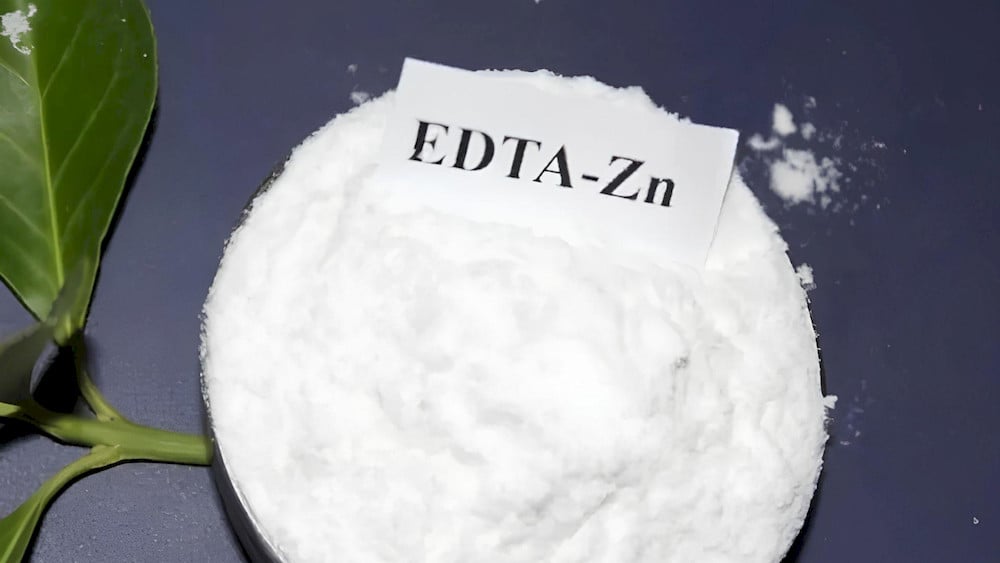
Micronutrients such as iron (Fe), zinc (Zn), manganese (Mn), and copper (Cu) are essential trace elements that crops need in small amounts for vital physiological processes, including photosynthesis, enzyme activity, and protein synthesis. EDTA-chelated micronutrients are fertilizer forms in which these metal ions are chemically bound to EDTA ( ethylenediaminetetraacetic acid), an organic chelating agent or ligand that binds and surrounds the metal ion.
The term “chelate” comes from the Greek word chelé, meaning “claw.” It describes the way the ligand binds the metal ion at multiple sites, forming a stable complex that helps protect the micronutrient from undesirable chemical reactions.
Mechanism of Action
In unchelated forms, micronutrient ions can react with other components in soil or nutrient solutions. Depending on the element and environmental conditions, these reactions can lead to oxidation, precipitation, or immobilization, reducing the amount of nutrient that remains available for plant uptake.
EDTA acts as a protective ligand that binds the micronutrient and changes its chemical behavior:
- Protecting the Micronutrient: EDTA forms a stable complex with the metal ion, reducing its tendency to react with other substances that could otherwise cause precipitation or immobilization.
- Maintaining Nutrient Availability: By keeping the micronutrient in a more stable soluble form, chelation can help maintain the nutrient in the soil or nutrient solution for uptake by plant roots.
- Supporting Foliar Uptake: When applied to leaves, the organic ligand can alter the behavior of the micronutrient at the leaf surface and facilitate its movement through the cuticle, potentially improving foliar nutrient uptake compared with some inorganic forms.
| What Happens When the EDTA-Chelated Micronutrients Reaches the Plant?
Chelation does not mean the plant absorbs the entire EDTA-metal complex unchanged and permanently. The chelated micronutrient can move through the soil or nutrient solution in a more stable form, while the metal may subsequently be released or transferred to other ligands at or near the plant surface for uptake and utilization. The effectiveness of a chelate therefore depends on the stability of the metal-ligand complex and the surrounding chemical conditions, including pH and the presence of competing ions. For example, Fe-EDTA becomes less stable as pH increases, particularly when calcium competes with iron for the EDTA ligand. |
2. 4 Common Types of EDTA Chelated Micronutrients
The main EDTA-chelated micronutrients differ in their physiological roles, stability under different soil conditions, and most suitable application methods. Understanding these differences helps growers select the appropriate chelated source for specific nutrient deficiencies and growing conditions.
Fe-EDTA (Iron Chelated with EDTA)
- Primary Role: Iron is essential for chlorophyll synthesis, energy transfer, and the activity of respiratory enzymes. It helps prevent and correct interveinal chlorosis, a common deficiency symptom in which young leaves turn yellow while the veins remain green.
- Soil Behavior & Limitations: Fe-EDTA performs well in acidic to slightly acidic soils, generally at pH below approximately 6.3. Under alkaline or calcareous conditions, particularly as pH increases above approximately 6.8, calcium ions (Ca²⁺) can compete with iron for the EDTA ligand, reducing the stability of the Fe-EDTA complex. The released iron may then react with hydroxides and other soil components to form less soluble compounds that are less available for plant uptake.
- Practical Grower Tip: For soils with a pH above approximately 7.0, growers may consider more pH-stable iron chelates such as Fe-EDDHA, which are better suited to alkaline and calcareous conditions.
Zn-EDTA (Zinc Chelated with EDTA)
- Primary Role: Zinc is an important activator of numerous plant enzymes and contributes to the production of auxins, plant hormones involved in growth and development. It supports processes such as leaf expansion, stem elongation, protein synthesis, and carbohydrate metabolism. Zinc deficiency can cause stunted growth, shortened internodes, and small or distorted leaves.
- Soil Behavior & Performance: Zn-EDTA generally provides greater stability and zinc availability than unchelated zinc sources under a wider range of soil conditions, particularly as soil pH increases. Its effectiveness can therefore be useful where zinc fixation limits the availability of conventional inorganic zinc fertilizers such as zinc sulfate (ZnSO₄).
- Practical Grower Tip: Zn-EDTA can be considered when soil conditions are likely to reduce the availability of zinc sulfate. The appropriate source should be selected based on soil pH, zinc status, and the required application method.
Mn-EDTA (Manganese Chelated with EDTA)
- Primary Role: Manganese acts as an essential cofacto r in Photosystem II, where it participates in the water-splitting reaction that releases oxygen during photosynthesis. It also contributes to nitrogen metabolism and other enzyme-mediated processes. Manganese deficiency commonly appears as pale green or yellow mottling between the veins of leaves.
- Soil Behavior & Limitations: Mn-EDTA can be relatively unstable in soil because other metal ions can compete with manganese for the EDTA ligand. Iron ions (Fe³⁺) may compete under acidic conditions, while calcium ions (Ca²⁺) can become more important under neutral to alkaline conditions. This can reduce the amount of manganese remaining in the original chelated form.
- Practical Grower Tip: The effectiveness of Mn-EDTA depends strongly on soil chemistry and application method. It may be more useful in foliar applications, hydroponic systems, or fertigation where direct delivery of the nutrient can reduce interactions with soil components.
Cu-EDTA (Copper Chelated with EDTA)
- Primary Role: Copper is required for lignin synthesis, which contributes to cell-wall structure and plant strength. It also participates in enzymatic reactions, carbohydrate metabolism, and other physiological processes. Copper deficiency can cause symptoms such as leaf curling, shoot dieback, and weak stems.
- Soil Behavior & Performance: Cu-EDTA can help maintain copper in a more available form by reducing its interaction with soil components such as carbonates and clay minerals. Its effectiveness, however, depends on soil pH, organic matter, and other factors that influence copper availability.
- Practical Grower Tip: Because plants require copper in very small amounts, application rates should be carefully controlled. Foliar application or fertigation can provide more targeted delivery and may help reduce the risk of localized copper accumulation in the soil.
3. 6 Benefits of Using EDTA Chelated Micronutrients
Modern growers face increasing pressure to maximize fertilizer efficiency while protecting soil health and farm profitability. Utilizing EDTA chelated micronutrients provides six major agronomic advantages over traditional inorganic mineral salts.
3.1. Enhanced Nutrient Absorption and Translocation
Chelating micronutrients with EDTA improves the efficiency with which plants absorb and transport trace minerals throughout their tissues.
- Bypassing Electrical Barriers at Roots and Leaves: Unchelated trace minerals carry strong positive charges, such as Fe²⁺, Zn²⁺, and Mn²⁺, which can interact with negatively charged surfaces around roots and leaves. EDTA chelation binds these metal ions into a more stable complex, reducing electrostatic interactions that can limit nutrient movement.
- Penetrating Hydrophobic Leaf Cuticles: Most crop leaves are covered by a protective, water-repellent wax layer that can restrict the penetration of free mineral ions. The organic structure of EDTA allows the nutrient complex to interact with this hydrophobic barrier during foliar application, supporting faster absorption into leaf tissues.
- Fast Vascular Translocation: EDTA-chelated micronutrients can exhibit partly systemic mobility within the plant’s vascular system, including the xylem and phloem. Once absorbed, nutrients can be transported to active metabolic zones such as growing shoot tips, new leaves, and developing reproductive organs.
3.2. Prevention of Nutrient Precipitation and Fixation in Soil
Applying EDTA chelates helps protect trace minerals from chemical reactions that can reduce their availability in the soil.
- Shielding Against Soil Lock-Up: In raw mineral fertilizers, free metal ions can react with soil carbonates, phosphates, hydroxides, and dissolved calcium to form insoluble compounds that are less available for plant uptake. Up to 85 – 90% of traditional inorganic zinc sulfate applied to soil can become fixed and unavailable.
- Maintaining Soluble Bioavailability: The EDTA ring binds the central metal ion and reduces its interaction with competing soil chemicals. This helps maintain the micronutrient in the soil solution and available for absorption by root hairs.
3.3. Reduced Application Dosage and High Cost-Efficiency
EDTA-chelated fertilizers can improve micronutrient-use efficiency, allowing growers to achieve effective nutritional responses with lower amounts of active mineral ingredients.
- Lower Required Application Rates: Because plants can assimilate EDTA-chelated micronutrients more efficiently than some raw inorganic salts, growers may achieve the same or better nutritional results using a fraction of the product volume.
- Proven Field Efficiency: Agricultural trials demonstrate that crops such as corn and beans can require only half the amount of zinc when supplied through Zn-EDTA compared with standard inorganic zinc sulfate (ZnSO₄).
- Minimizing Unusable Waste: By helping keep nutrients dissolved in the root zone rather than allowing them to convert into unavailable soil solids, EDTA chelates can improve nutrient-use efficiency and the return on fertilizer investment.
3.4. Significant Yield Increase and Improved Crop Quality
Applying EDTA-chelated micronutrients can produce measurable improvements in crop yield, plant development, and commercial harvest quality.
- Substantial Yield Enhancements Across Crops: Field application trials demonstrate that supplementing crops with EDTA-chelated formulations can increase yields by 14% to 25% in major crops such as rice, onions, and lemons.
- Crop-Specific Growth Improvements:
- Rice: Chelated micronutrient nutrition supports stronger, sturdier stems, improving resistance to lodging and storm damage.
- Onion: Improved photosynthetic activity supports greater carbohydrate production and storage in root tissues, contributing to larger and heavier onion bulbs.
- Lemon: Chelated micronutrient nutrition supports tree growth, maintains healthy green foliage, and helps prevent iron-deficiency chlorosis.
- Enhanced Flowering, Fruit Set, and Produce Quality: EDTA chelates support vigorous flower formation, pollination, and fruit set. Harvested produce may also show improved commercial characteristics, including color, flavor, texture, and nutritional content.
- Improved Seed Germination and Early Vigor: Pre-plant seed treatment with EDTA-Zn and EDTA-Co increases sugar accumulation at tillering nodes, which can improve field germination and grain yield in winter wheat.

3.5. Enhanced Resistance and Stress Tolerance
Adequate chelated micronutrient nutrition supports essential physiological processes and helps maintain plant vigor under challenging growing conditions.
- Optimizing Core Metabolic Functions: EDTA-chelated minerals support vital physiological processes, including enzyme activation, photosynthesis, and respiration, helping maintain normal plant metabolism.
- Strengthening Resilience Against Abiotic and Biotic Stresses: Balanced micronutrient nutrition helps maintain healthy and vigorous plant tissues, supporting crop resilience against environmental pressures such as drought, extreme temperature fluctuations, pests, and diseases.
3.6. Compatibility with Modern Farming Practices
The formulation of EDTA-chelated micronutrients can support efficient fertilizer application and integration into modern agricultural workflows.
- High Tank-Mix Compatibility: Because EDTA binds metal ions into a stable complex, chelated micronutrients are less likely to form insoluble precipitates when mixed with liquid fertilizers or crop protection products. Compatibility should still be confirmed for specific tank-mix combinations.
- Gentle Leaf Safety: The organic chelate structure can reduce osmotic stress on foliage compared with concentrated inorganic salt solutions, helping lower the risk of leaf scorching or tissue damage during foliar applications.
4. How to Use EDTA Chelated Micronutrients Correctly
Using EDTA-chelated fertilizers effectively requires selecting the appropriate application method and following dosage guidelines suited to the crop, micronutrient, and growing conditions.
4.1. Application Methods
Growers can deliver EDTA-chelated micronutrients through four primary application methods, depending on crop stage, available equipment, and soil conditions.
- Foliar Spraying: Foliar application is the fastest and most efficient way to correct acute micronutrient deficiencies during active vegetative and reproductive growth stages. Because EDTA neutralizes the positive charge of metal ions, the chelated complex easily penetrates the leaf’s water-repellent wax cuticle without getting stuck on leaf surfaces.
- Soil Application: Applying chelates directly to the soil is typically carried out at the beginning of the cropping cycle to provide early-season nutrition. When applying to soil, growers must provide adequate irrigation water to dissolve and wash the chelate down into the active root zone.(Note: Soil drenching with Fe-EDTA is effective only in acidic to neutral soils with pH below 6.5, as high soil calcium in alkaline soils will displace the iron).
- Fertigation and Hydroponics: Due to their complete water solubility and high chemical stability in solution, EDTA chelates are ideal for liquid injection into drip fertigation systems and closed-loop hydroponic nutrient reservoirs. They distribute uniformly through irrigation lines without forming precipitates that clog emitters.
- Seed Treatment (Seed Priming): Soaking or dressing seeds prior to planting with EDTA-Zn or EDTA-Co formulations boosts seed vigor and early crop establishment. This pre-sowing treatment increases sugar accumulation at tillering nodes, improves field germination rates, and enhances overall crop yields in winter grain crops like wheat.

4.2. Recommended Dosage for Various Crops
Applying the correct concentration of chelated micronutrients prevents both under-nutrition and potential crop toxicity. Growers should follow these verified field rates for specific crop categories and micronutrient types:
Iron Chelates (Fe-EDTA):
- Vegetable Crops: Apply as a foliar spray at a rate of 0.5 to 1.0 lb of Fe-EDTA in 100 gallons of water per acre (equivalent to 225 to 450 g in 380 liters of water per hectare).
- Deciduous Fruit Trees: Apply 0.1 to 0.2 lb of Fe-EDTA in 25 gallons of water per acre (equivalent to 45 to 90 g in 95 liters of water per hectare).
- Citrus Crops: Apply as a foliar spray using 0.03 to 0.05 lb (14 to 23 g) of chelate in 2 to 5 gallons (7.5 to 19 L) of water per tree, or perform a soil drench delivering 10 to 20 g of actual Fe per tree in chelated form.
Copper Chelates (Cu-EDTA):
- Corn (Maize): Apply 0.8 lb of Cu-EDTA in 100 gallons of water per acre (equivalent to 360 g in 380 liters of water per hectare) as a targeted foliar spray.
Manganese Chelates (Mn-EDTA):
- Vegetable Crops: Apply 0.2 to 0.5 lb of Mn-EDTA in 200 gallons of water per acre (equivalent to 90 to 225 g in 760 liters of water per hectare) to resolve interveinal chlorosis. (Because Mn-EDTA is unstable in soil, apply strictly via foliar spray or hydroponics).
Zinc Chelates (Zn-EDTA):
- Pecan Trees: Apply 0.3 to 0.5 lb of actual Zn (as Zn-EDTA) in 100 gallons of water per acre (equivalent to 135 to 225 g Zn in 380 liters of water per hectare).
- General Foliar Spray: Spray 0.10 to 0.14 lb of zinc chelate in 100 gallons of water per acre (equivalent to 45 to 63 g in 380 liters of water per hectare) across field crops.
4.3. Important Notes and Precautions
To use EDTA-chelated micronutrients safely and effectively, growers should pay attention to the following key considerations:
- Soil and Water Testing Prior to Application: Conduct soil and water analyses before applying chelated fertilizers to evaluate soil pH and micronutrient bioavailability, identify specific micronutrient deficiencies, and select the appropriate chelated form. In soils with a pH above 6.5 to 7.0, high calcium concentrations can displace iron from Fe-EDTA, indicating the need for foliar applications or stronger chelates such as EDDHA.
- Avoiding Over-Application and Phytotoxicity: Strictly follow manufacturer application rates to prevent nutrient uptake imbalances, soil mineral imbalances, and crop tissue injury. Excessive amounts of a single chelated micronutrient can inhibit the uptake of other essential minerals, while high-concentration foliar sprays may cause foliage burn or leaf chlorosis in sensitive crops such as greenhouse cucumbers. Excessive application can also leave uncomplexed EDTA residues in plant tissues, which may become toxic after releasing their bound micronutrient ions.
- Avoiding Soil Application of Mn-EDTA: Mn-EDTA is chemically unstable when applied directly to soil. In acidic soils, naturally occurring iron ions (Fe3+) can displace manganese from the EDTA molecule, while calcium ions (Ca2+) can cause displacement in neutral to alkaline soils. Once displaced, free manganese can rapidly convert into insoluble soil oxides that plant roots cannot absorb. Therefore, Mn-EDTA should be applied exclusively as a foliar spray or through hydroponic nutrient solutions to avoid nutrient loss.
- Proper Storage and Solution Handling: Protect chelated products from environmental degradation to preserve their chemical stability. Iron chelates dissolved in liquid fertilizer stock solutions can degrade rapidly when exposed to direct sunlight and UV radiation. Liquid chelate solutions should therefore be stored in dark, light-proof containers to prevent photo-reduction and maintain nutrient availability.

EDTA-chelated micronutrients provide growers with a practical option for delivering essential trace elements in a more controlled and targeted way. Understanding how different chelates behave and when to use them is key to getting the most from these fertilizer forms. When integrated appropriately into a crop nutrition program, EDTA-chelated micronutrients can help address specific nutrient needs while supporting healthy plant growth, yield, and crop quality.


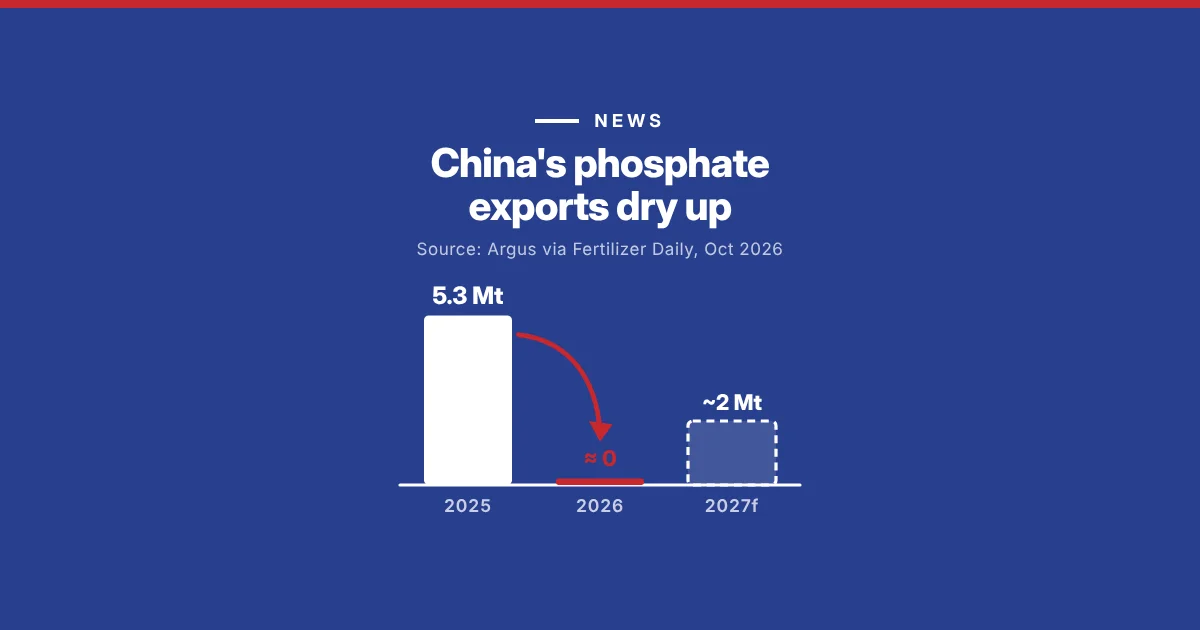
China, which exported about 5.3 million tonnes of phosphate fertilizer in 2025, has shipped almost none in 2026. With sulfur scarce and phosphate prices high, import-dependent markets face a tight season, and every kilo of phosphorus needs to work harder. At Van Polder, we believe a tight phosphate market is a reason to look again […]

If you are starting a banana farm, Panama disease (Fusarium wilt of banana) is the risk to plan for. How to prevent Panama disease in bananas comes down to keeping the fungus out, because no fertilizer prevents or cures it and once it is in the soil it stays for decades (Pegg et al., 2019; […]

A government project in Bangladesh’s Rajshahi Division has brought solar-powered pumps, including solar drip systems for orchards, to drought-prone land where groundwater has been falling for decades. The Prime Minister wants all diesel irrigation pumps converted to solar within five years. For growers who move to drip, the next step is to feed the crop […]

Calcium deficiency in banana shows first on the youngest leaves, as thickened veins and a saw-tooth pattern of yellow and dead tissue along the leaf margin, and in severe cases as “spike leaf”, new leaves with little or no blade, and poor-quality fruit (Turner, 1987; Martin-Prével, 1980). On most plantation soils it is not a […]

A calcium fertilizer supplies the calcium that holds plant cell walls and membranes together, but whether it reaches the fruit depends as much on water flow as on the fertilizer you choose. Calcium travels with water to the leaves and barely moves out of them again, so fruit and young leaves can run short even […]

An unusually wet winter brought coffee flowering in Minas Gerais forward by about a month, in several separate waves. With October forecast to be hotter than normal and rain patchy, the question for 2027 is now how many of those flowers turn into fruit. At Van Polder, we believe a strong flowering is only the […]