



Kenya launches soil testing drive as 63% of farmland is acidic
Kenya’s Ministry of Agriculture has launched a national soil health drive to move growers away from one-size-fits-all fertilizer recommendations. About 63% of the country’s arable land is acidic, and the government now wants fertilizer choices to start with a soil test. At Van Polder, we believe good crop nutrition starts with knowing what is already […]

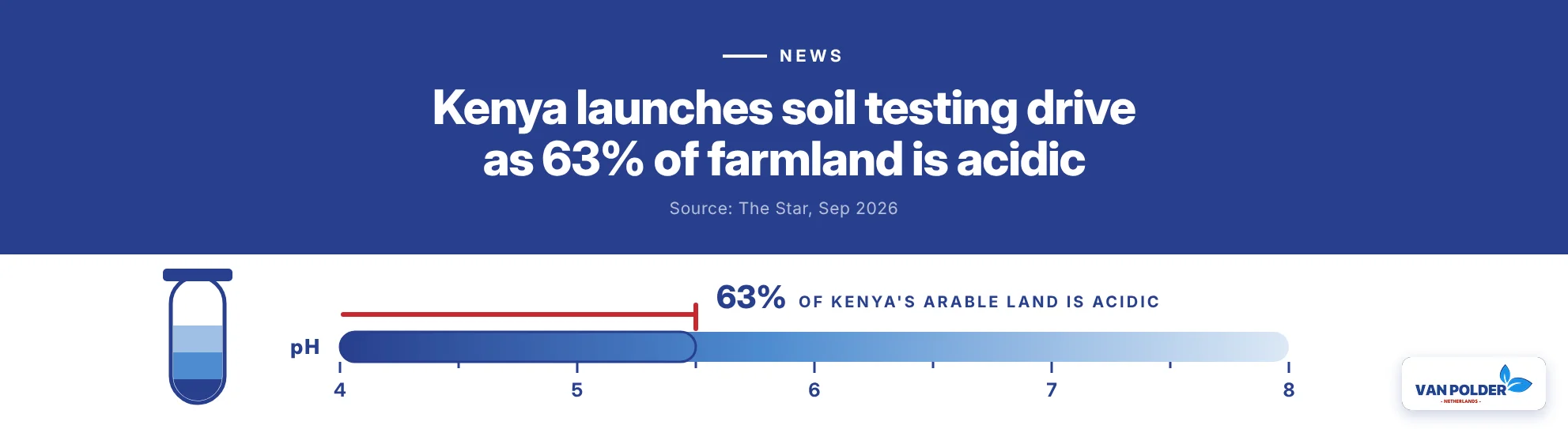

Kenya’s Ministry of Agriculture has launched a national soil health drive to move growers away from one-size-fits-all fertilizer recommendations. About 63% of the country’s arable land is acidic, and the government now wants fertilizer choices to start with a soil test.
At Van Polder, we believe good crop nutrition starts with knowing what is already in the soil. Kenya’s new approach puts that idea at the center of national policy, and it will change what growers ask their suppliers for.
What happened
On 29 September, Agriculture Cabinet Secretary Mutahi Kagwe launched the drive, called Soilfer, at the Kenya Agricultural and Livestock Research Organization (KALRO) in Kabete, The Star reports. He said about 63% of Kenya’s arable land is acidic, and nearly seven million acres are strongly acidic.
The launch included three programs. A National Soil Partnership will bring together national and county governments, KALRO, universities and the private sector. A National Soil Laboratory Network will set common testing standards. The Global Soil Doctors Programme will be rolled out nationally to train farmers to understand their soils and share that knowledge locally.
KALRO’s refurbished soil chemistry laboratories, worth KSh 220 million, were handed over at the event. KALRO is analyzing about 77,000 soil samples from 45 counties and will publish county-level soil fertility maps, according to The Star and Farmers Review Africa. Soil results are to be linked to the government’s farmer database, KIAMIS, which has more than eight million registered farmers.
Kagwe asked counties to co-finance soil testing, called for more use of lime on acidic soils and for restoring organic matter, and said the crackdown on counterfeit and substandard inputs will continue. “A bag of the wrong fertiliser, delivered on time, at half the price, to the wrong soil, is still the wrong fertiliser,” he said.
Why acidic soils matter for crop nutrition
Soil pH controls how much of the nutrients in the soil a crop can actually use. On strongly acidic soils, phosphorus binds to aluminum and iron, so part of the phosphate a grower applies is locked up. Dissolved aluminum can also damage roots, and calcium, magnesium and molybdenum are often in short supply.
Liming is the main fix, but it shifts the balance again. As pH rises toward neutral, zinc, manganese, iron and boron become less available, especially where more lime is applied than the soil test called for. A field that has just been limed can therefore need closer attention to trace elements, not less.
Our advice
- Ask for a lime requirement, not just pH. Two fields at the same pH can need very different amounts of lime, depending on texture, organic matter and exchangeable aluminum. A test that reports exchangeable acidity or a lime requirement gives a rate; pH alone does not.
- Lime to remove aluminum, not to reach neutral. For most crops, raising pH to around 5.5 to 6 is enough to take most aluminum out of solution. Liming further adds cost and makes trace element shortages more likely. Apply lime well before planting, because it reacts slowly.
- Watch trace elements after liming. Check zinc, boron and manganese on limed fields. Where soil or leaf tests show a shortfall, foliar trace elements can correct it quickly while soil conditions settle.
- Mind the nitrogen source. Per kilo of nitrogen, ammonium sulfate and DAP acidify soil more than urea, while CAN is close to neutral. On acidic fields, the nitrogen source changes how often lime is needed.
- Recheck phosphorus rates after liming. Raising pH on an acidic soil can release part of the phosphorus that was bound to aluminum and iron. Phosphate rates set for an unlimed field may be more than the crop needs once pH is corrected, so re-test before carrying them forward.
Getting your range ready for soil-tested growers
As county fertility maps appear, growers and extension officers in Kenya will ask more specific questions: which nutrients, for which soil, at which stage. Distributors who can match products to soil test results, including trace elements for limed and acidic fields, will be best placed to answer them.
If you supply growers in Kenya and are reviewing your range for soil-specific recommendations, we are happy to look at the options with you. Contact the Van Polder team, and our agronomists will help you build nutrition programs that start from the soil test.


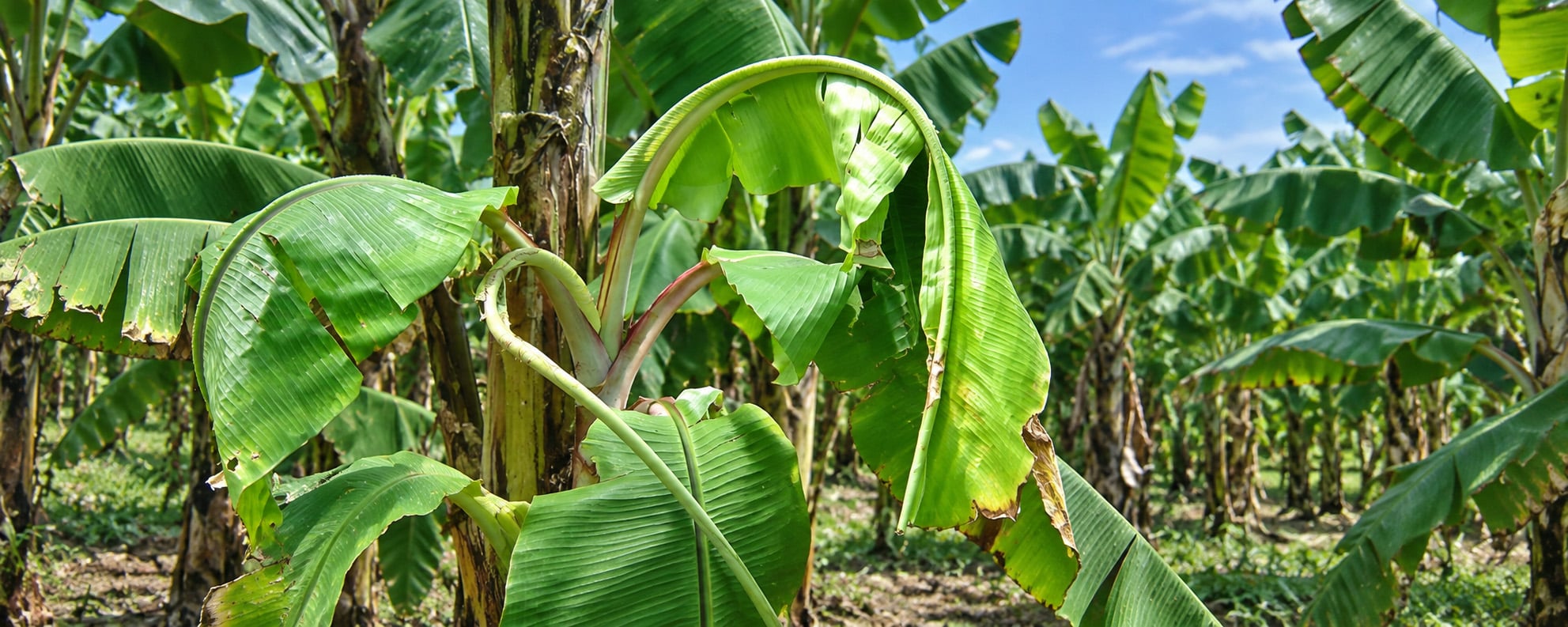
Calcium deficiency in banana shows first on the youngest leaves, as thickened veins and a saw-tooth pattern of yellow and dead tissue along the leaf margin, and in severe cases as “spike leaf”, new leaves with little or no blade, and poor-quality fruit (Turner, 1987; Martin-Prével, 1980). On most plantation soils it is not a […]
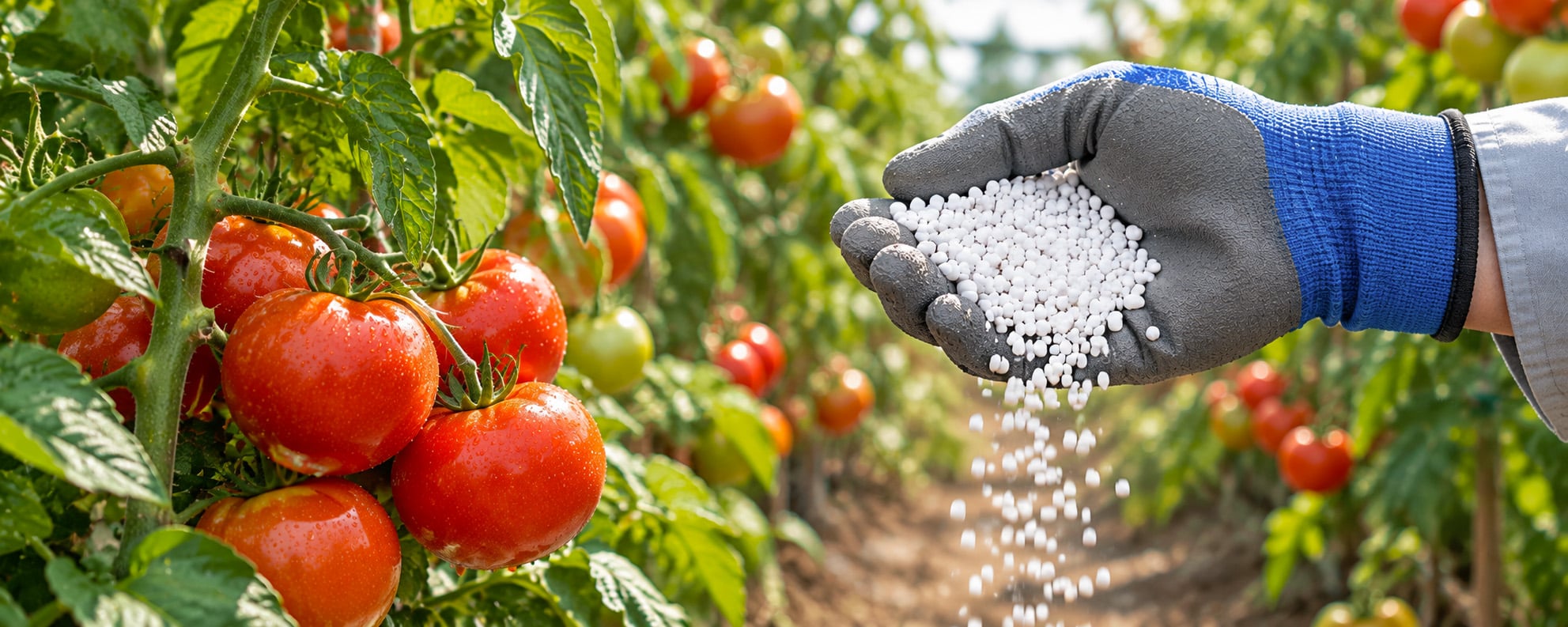
A calcium fertilizer supplies the calcium that holds plant cell walls and membranes together, but whether it reaches the fruit depends as much on water flow as on the fertilizer you choose. Calcium travels with water to the leaves and barely moves out of them again, so fruit and young leaves can run short even […]
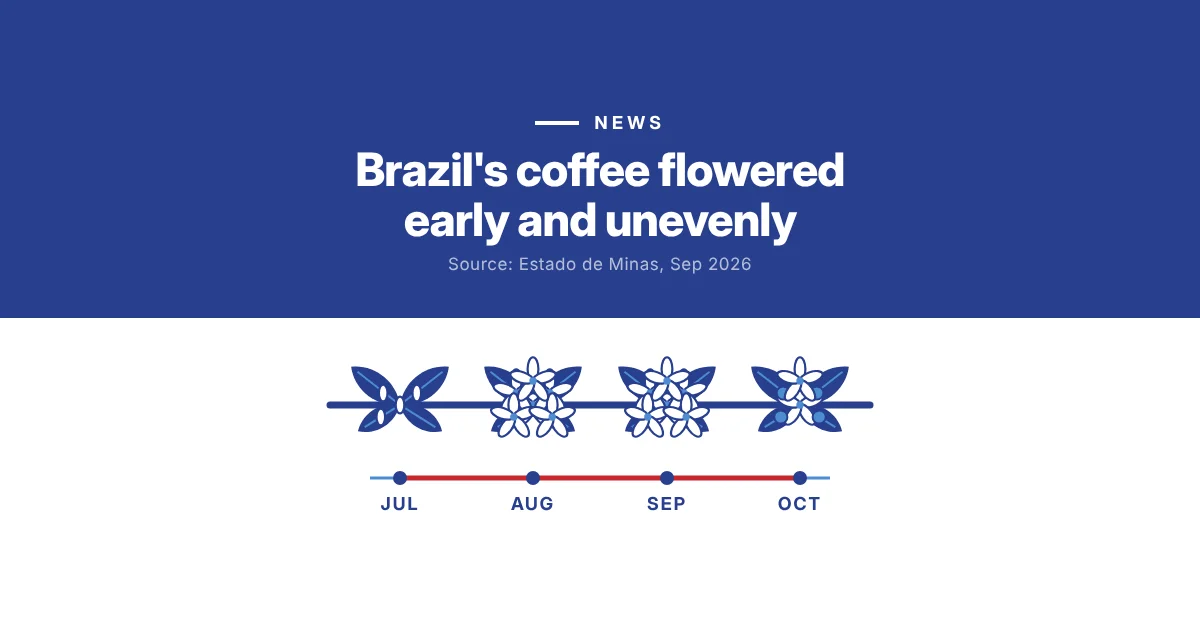
An unusually wet winter brought coffee flowering in Minas Gerais forward by about a month, in several separate waves. With October forecast to be hotter than normal and rain patchy, the question for 2027 is now how many of those flowers turn into fruit. At Van Polder, we believe a strong flowering is only the […]
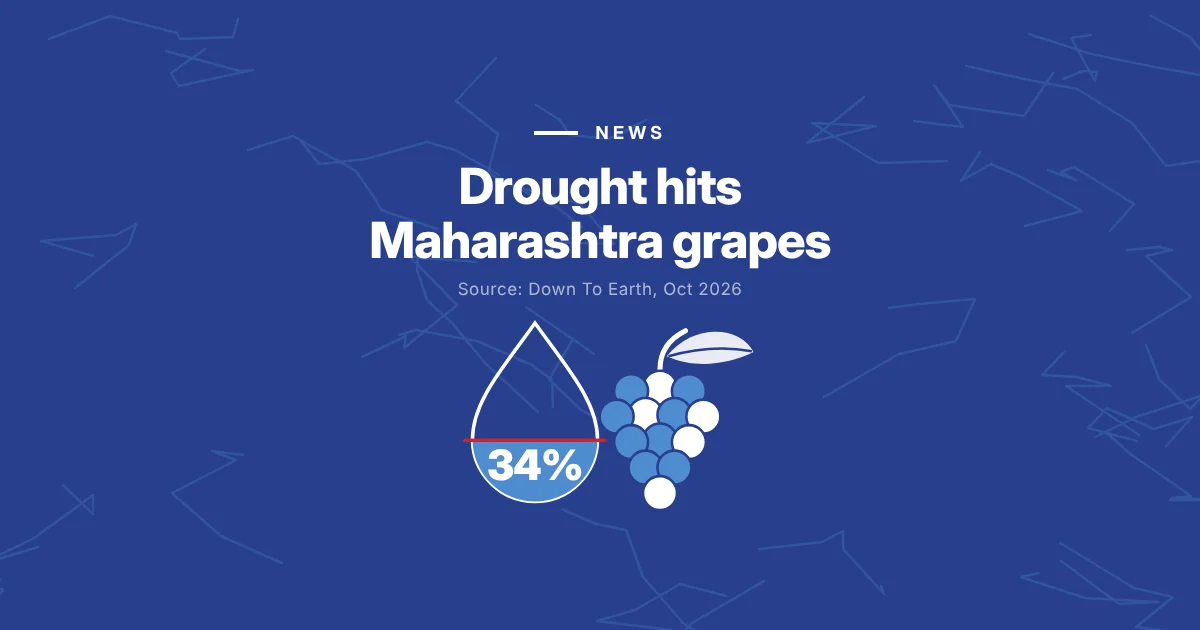
Maharashtra has declared drought in 265 talukas after a weak monsoon, and grape growers in Nashik fear losing at least 40% of this season’s harvest. For anyone supplying fruit growers in India, the next few months are about keeping crops and vines alive and productive with very little water. At Van Polder, we believe drought […]

Denmark’s new nitrogen regulation starts on 1 January 2027, but vegetable growers and several fruit, berry and nursery crops will stay on today’s nitrogen norms for one more year. For anyone supplying high-value horticulture, this is a short pause, not a change of direction. At Van Polder, we believe nitrogen efficiency will matter more every […]
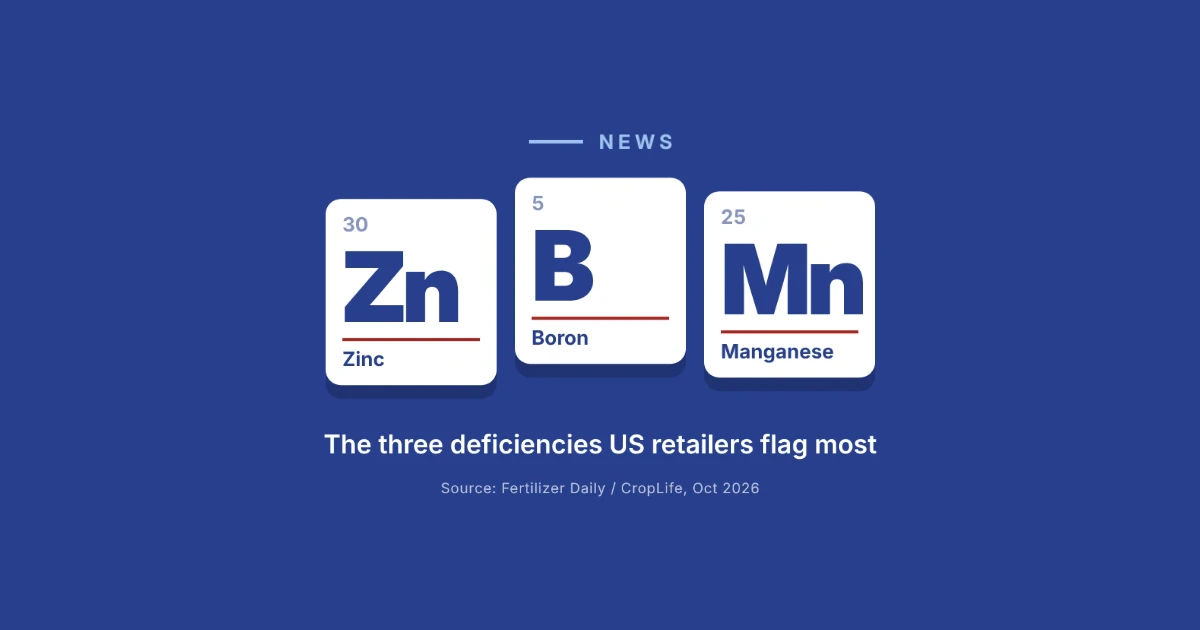
Retailers in the United States report that growers are trimming micronutrient spending this season, while tissue tests keep finding zinc, boron and manganese shortages. At Van Polder, we believe blanket cuts are the wrong place to save, and the same trade-off comes up wherever main-nutrient prices are high. When nitrogen, phosphate and potash bills rise, […]