







Maharashtra drought: grape growers fear 40% harvest losses
Maharashtra has declared drought in 265 talukas after a weak monsoon, and grape growers in Nashik fear losing at least 40% of this season’s harvest. For anyone supplying fruit growers in India, the next few months are about keeping crops and vines alive and productive with very little water. At Van Polder, we believe drought […]



Maharashtra has declared drought in 265 talukas after a weak monsoon, and grape growers in Nashik fear losing at least 40% of this season’s harvest. For anyone supplying fruit growers in India, the next few months are about keeping crops and vines alive and productive with very little water.
At Van Polder, we believe drought years are when good crop nutrition matters most. When water is short, every input has to be well timed and easy for the plant to use. A vine lost this season takes around four years to replace.
What happened
On 25 September, Maharashtra’s Relief and Rehabilitation Department declared drought in 265 of the state’s 358 talukas, Down To Earth reports. According to India Meteorological Department data cited in that report, rainfall from 1 June to 25 September was about 18% below normal across the state. Solapur was 57% short and Beed 49%.
The grape belt was hit hard. Nashik district received only 34.3% of its normal southwest monsoon rainfall, Down To Earth reported on 12 October. Grape growers there expect to lose at least 40% of their harvest. Kailas Bhosale, president of the Maharashtra State Grape Growers’ Association, said Solapur and Sangli are the worst-hit grape districts, and warned that vines could be lost in 2027 if water stays scarce.
Many growers are using water stored in farm ponds to carry their vines to harvest. “This water will help us manage the vines until the harvest in December and January,” Nashik grower Vasantrao Dhikale told Down To Earth. Replacing a vineyard is costly: a new one costs at least Rs 5 lakh per acre and takes around four years to give its first harvest.
The situation is still developing. A central government team led by Joint Secretary Muktanand Agarwal visited the affected districts in October and has sent in a preliminary report, ANI reported on 14 October. The state says aid will follow the team’s final recommendations. Reports also name oranges and pomegranates among the orchard crops at risk, and an unusually hot October is drying out reservoirs further.
Maharashtra is not alone. Karnataka had declared 177 of its 240 taluks drought-affected by 22 September, according to Down To Earth, and India Meteorological Department figures show the 2026 monsoon ended 12.6% below normal nationwide.
What it means for grape and fruit growers
Drought hurts crops in two ways. The plant has less water, and it also takes up fewer nutrients, because nutrients move to the roots in soil water. In dry soil, a vine can be short of potassium, calcium or micronutrients even when the soil contains enough of them.
For grapes, the timing is difficult. Many vineyards are now between pruning and harvest, when bunch development and berry quality are decided. Stress at this stage can reduce berry size and quality, and a vine that goes into the dry summer of 2027 weakened will be harder to keep alive.
Our advice
- Feed little and often through the drip. Where drip irrigation is in place, small, frequent fertigation doses make better use of limited water and nutrients than large, occasional ones.
- Use foliar feeding to bridge gaps. When dry soil limits uptake, foliar sprays of potassium, calcium and trace elements such as boron and zinc can top up supply at key stages. They support soil feeding but cannot replace it for the major nutrients. Spray in the cool of the early morning or evening, and avoid spraying vines that are wilting in the heat.
- Don’t push salts into stressed roots. With little water, high fertilizer doses raise salt levels in the root zone. Keep rates in line with the crop’s needs and the water available.
- Consider biostimulants for abiotic stress. Biostimulants with an abiotic stress tolerance claim under EU Regulation 2019/1009, such as seaweed extract and amino acid products, can help crops cope with heat and drought stress. In India, a biostimulant must also be listed under the Fertiliser Control Order before it can be sold, so check a product’s status there first.
- Plan for the vine, not just this crop. Keep leaves healthy after harvest, so the vine can store reserves for next season.
Supporting your growers through a dry season
The growers who come through this drought best will be those who get water and nutrients to the vine in small, well-timed amounts. For distributors, that means having drip-ready water-soluble nutrition, foliar potassium, calcium and trace elements, and stress-focused biostimulants available while growers are still making their decisions for the season.
If you supply grape, pomegranate or other fruit growers in Maharashtra or Karnataka and are planning your range for this dry season, we are happy to look at the options with you. Contact the Van Polder team, and our agronomists will help you put together drought-season nutrition programs that fit your growers’ crops and water supply.



Denmark’s new nitrogen regulation starts on 1 January 2027, but vegetable growers and several fruit, berry and nursery crops will stay on today’s nitrogen norms for one more year. For anyone supplying high-value horticulture, this is a short pause, not a change of direction. At Van Polder, we believe nitrogen efficiency will matter more every […]

Retailers in the United States report that growers are trimming micronutrient spending this season, while tissue tests keep finding zinc, boron and manganese shortages. At Van Polder, we believe this is the wrong place to save, and the lesson applies to every market our partners serve. When nitrogen, phosphate and potash bills rise, micronutrient fertilizer […]
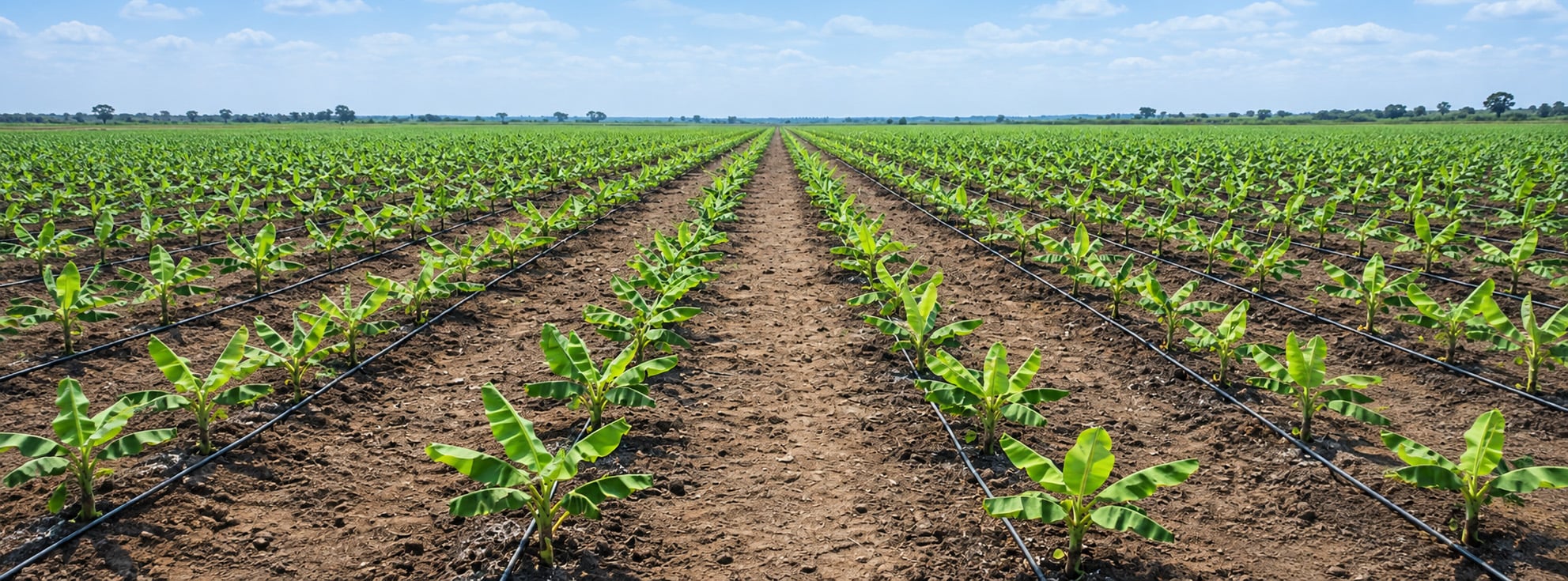
Water-soluble fertilizer for banana lets you feed the crop through drip in small doses that follow each growth stage, and in trials this gave more fruit from less fertilizer and water than soil-applied fertilizer. The best water-soluble fertilizer for banana is the one that dissolves cleanly in your water, matches the growth stage and costs […]
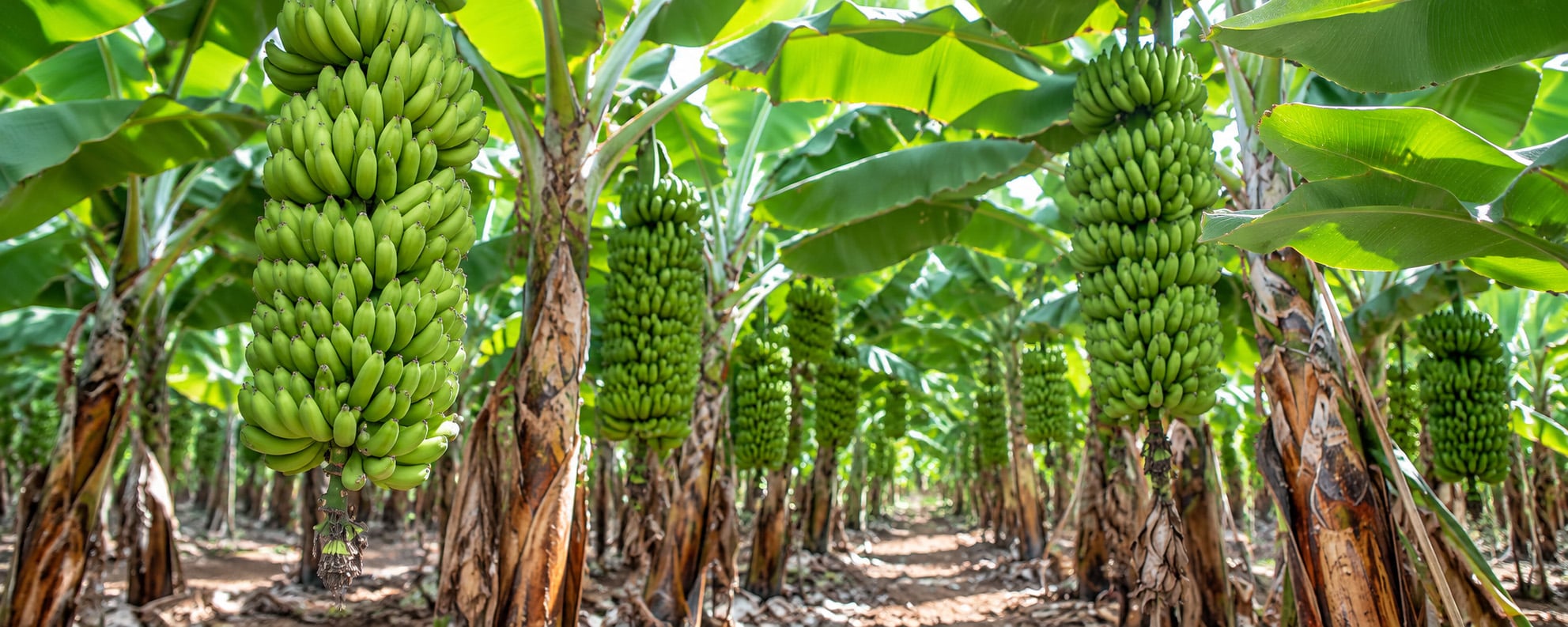
To increase banana bunch weight, build a large, healthy leaf canopy and good potassium reserves before the bunch emerges, keep water supply steady, and protect the leaves until harvest. Most of the bunch’s potential is set before shooting: the number of fruits depends on the leaf area the plant has when it initiates its flower […]
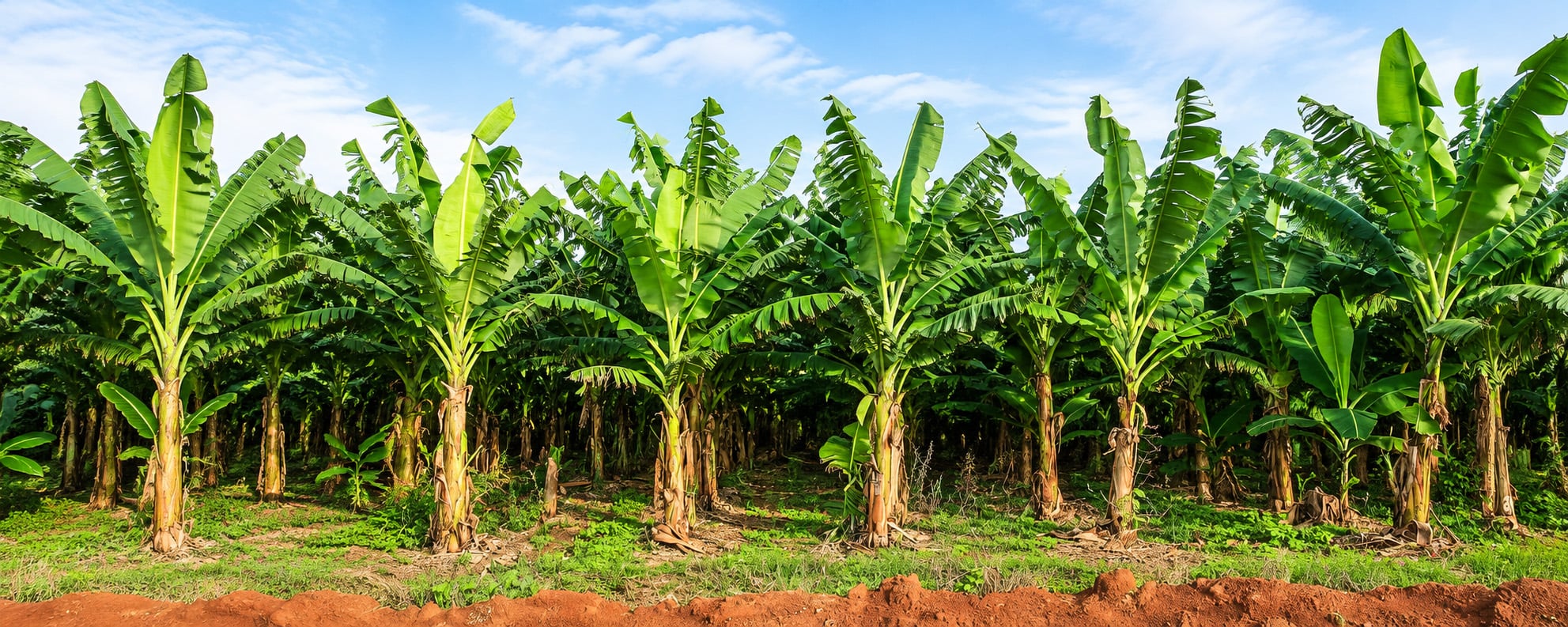
The right fertilizer for banana plants is the one that matches what the crop removes, what your soil already holds and the stage the plant is in. Banana takes up far more potassium than any other nutrient, followed by nitrogen and calcium, so K supply and timing decide much of the result. This guide covers […]
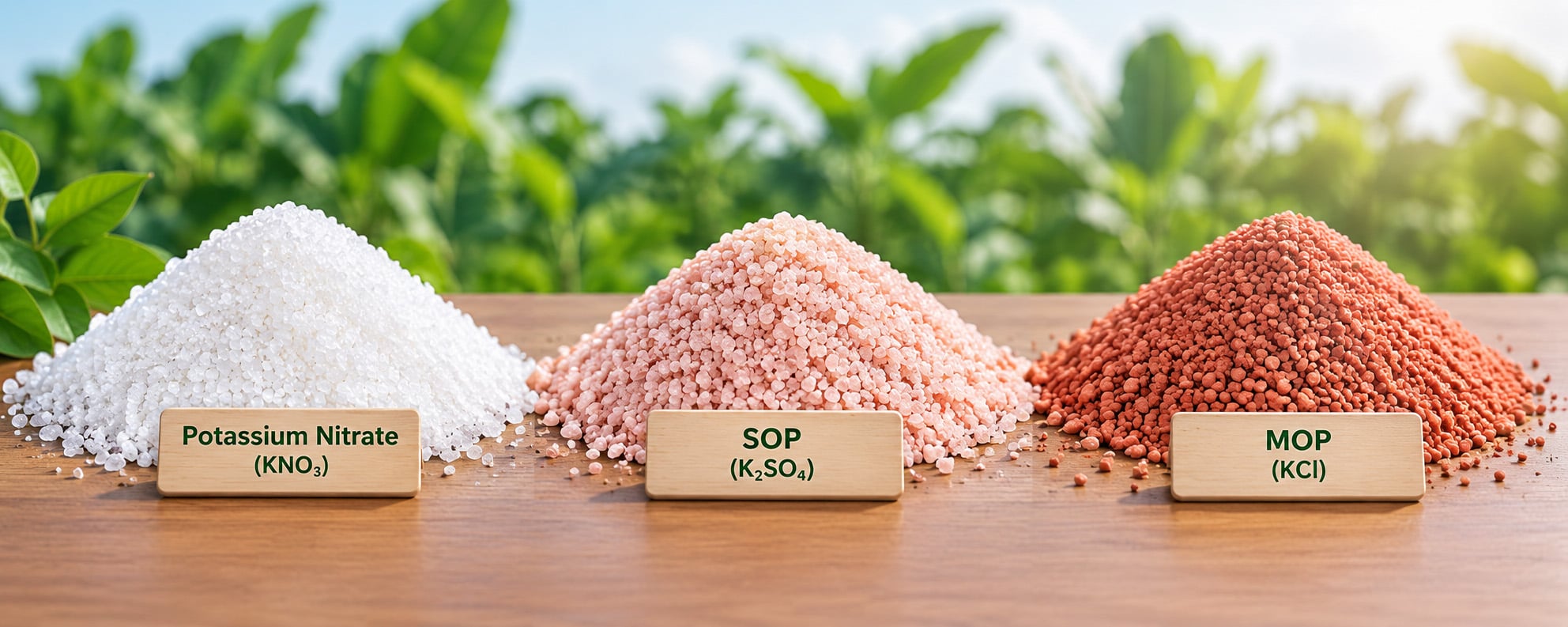
Potassium fertilizer replaces the potassium (K) your crop takes from the soil faster than the soil can release it. After nitrogen, potassium is the nutrient plants need in the largest amounts (Zörb et al., 2014), mainly to move water and sugars and to keep their cells working under stress. The common sources (muriate of potash, […]