



China’s phosphate exports dry up as sulfur runs short
China, which exported about 5.3 million tonnes of phosphate fertilizer in 2025, has shipped almost none in 2026. With sulfur scarce and phosphate prices high, import-dependent markets face a tight season, and every kilo of phosphorus needs to work harder. At Van Polder, we believe a tight phosphate market is a reason to look again […]

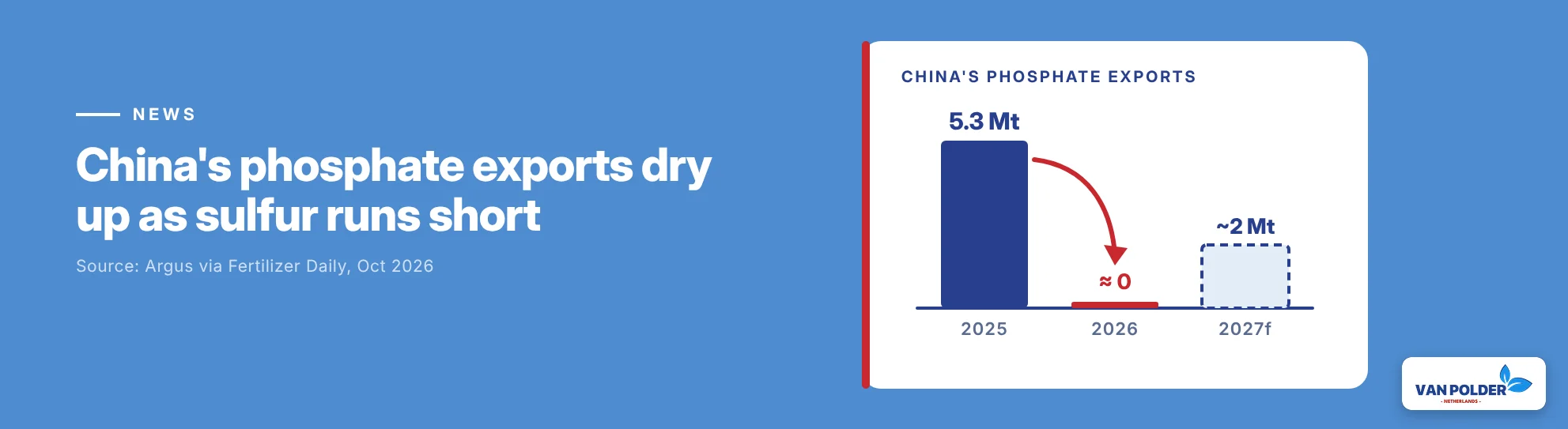

China, which exported about 5.3 million tonnes of phosphate fertilizer in 2025, has shipped almost none in 2026. With sulfur scarce and phosphate prices high, import-dependent markets face a tight season, and every kilo of phosphorus needs to work harder.
At Van Polder, we believe a tight phosphate market is a reason to look again at how phosphorus is applied, not only at how much can be bought.
What happened
Fertilizer Daily reported on 15 October, citing Argus Media analysis first published by the Western Producer, that China’s phosphate exports have fallen from 5.3 million tonnes in 2025 to almost nothing this year. Global Agriculture added on 19 October that the drop covers DAP, MAP and single superphosphate.
The main cause is sulfur, which is needed to make the sulfuric acid used in phosphate production. “Chinese phosphate fertilizer production is currently focused solely on meeting domestic demand,” said Lynn Wang, senior consultant for China at Argus. According to Global Agriculture, Beijing’s latest curbs cover both phosphate fertilizer and sulfuric acid shipments.
Argus expects only a slight rebound, to about 2 million tonnes of Chinese phosphate exports in 2027, with further recovery once sulfur supply is more secure. Nitrogen looks different: China is exporting 6 to 7 million tonnes of urea this year, which Argus says has helped pull urea prices down.
Why it matters outside China
South Asia, Africa and Latin America normally receive several million tonnes of Chinese phosphate each year, Global Agriculture reports. These buyers now compete for the same cargoes from Morocco, Saudi Arabia and the United States. In Brazil, sulfur shortages have also cut domestic output of MAP, SSP and TSP.
Prices show the gap between the nutrients. In the World Bank’s monthly price data, DAP averaged 800.6 US dollars per tonne in September 2026, about 29 percent higher than in January. Urea fell back to 407.5 dollars per tonne in September, from 856.9 dollars in April. Argus’s affordability index now ranks phosphate as the least affordable of the three major nutrients.
Our advice for growers and agronomists
- Use the soil test to decide where P goes. Fields that test well above the critical level for phosphorus (for example on an Olsen or Bray test) can often carry a reduced maintenance dose for a season, drawing on residual soil P. Send the scarce, expensive phosphate to fields that test low and to crops with high early P demand.
- Place phosphorus near the roots instead of broadcasting it. Drill it with the seed or band it about 5 cm below and to the side of the seed row. Phosphate moves very little in soil, and in calcareous or strongly acidic soils broadcast P is quickly bound. Placement keeps more of it where young roots can reach it, especially in cool soils at sowing.
- In drip-irrigated crops, move part of the P into fertigation. Instead of one large pre-plant application, supply water-soluble phosphate (such as MAP or monopotassium phosphate) in small, regular doses through the drip during the growth stages with the highest demand. Keep phosphate and calcium products in separate stock tanks to avoid precipitation.
Making scarce phosphorus go further
When phosphate is short, products that improve how crops use it become more valuable. Biostimulants that support root growth, and phosphorus-solubilizing microorganisms, can help crops take up more of the phosphorus already in the soil. Foliar sprays of water-soluble phosphate can top up supply at critical stages such as flowering, but they supplement soil P and do not replace it.
If you are planning your phosphate and specialty nutrition range for the coming season, we are happy to look at the numbers with you. Contact the Van Polder team, and our agronomists will help you build a program that gets the most from every tonne of P.


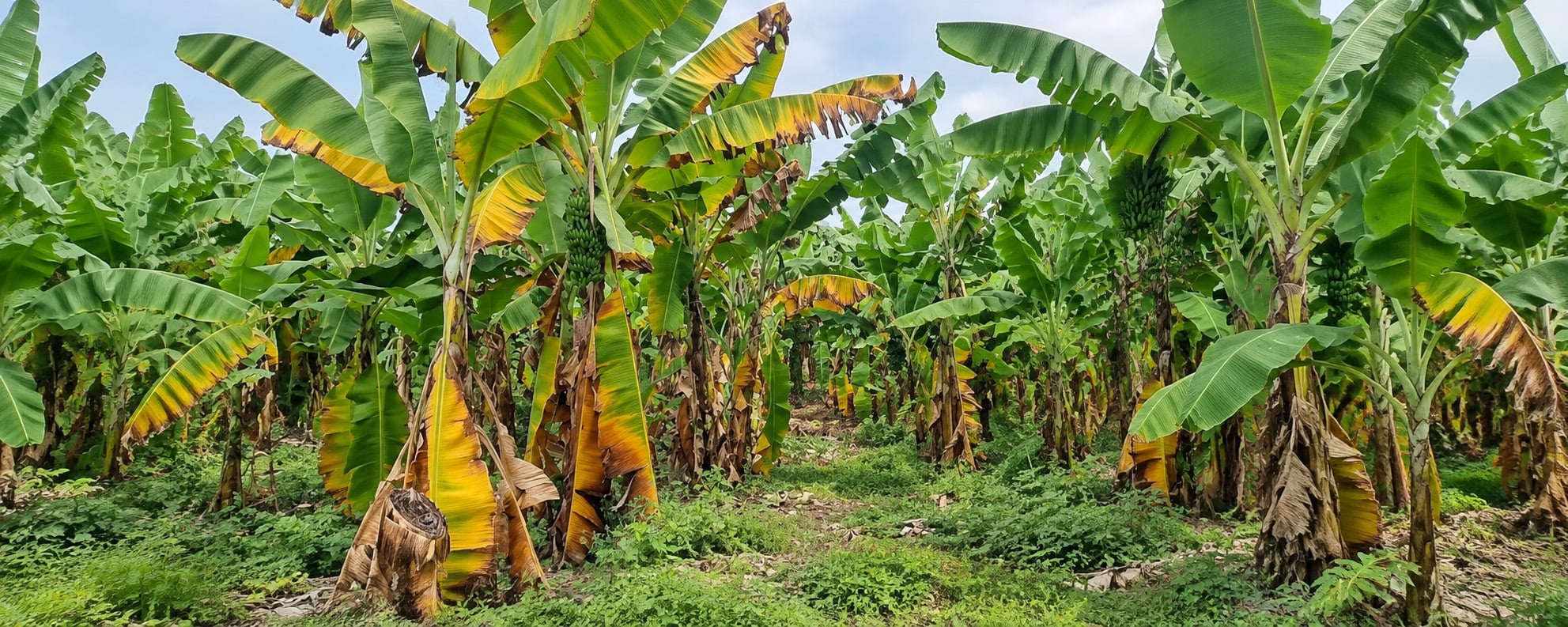
If you are starting a banana farm, Panama disease (Fusarium wilt of banana) is the risk to plan for. How to prevent Panama disease in bananas comes down to keeping the fungus out, because no fertilizer prevents or cures it and once it is in the soil it stays for decades (Pegg et al., 2019; […]
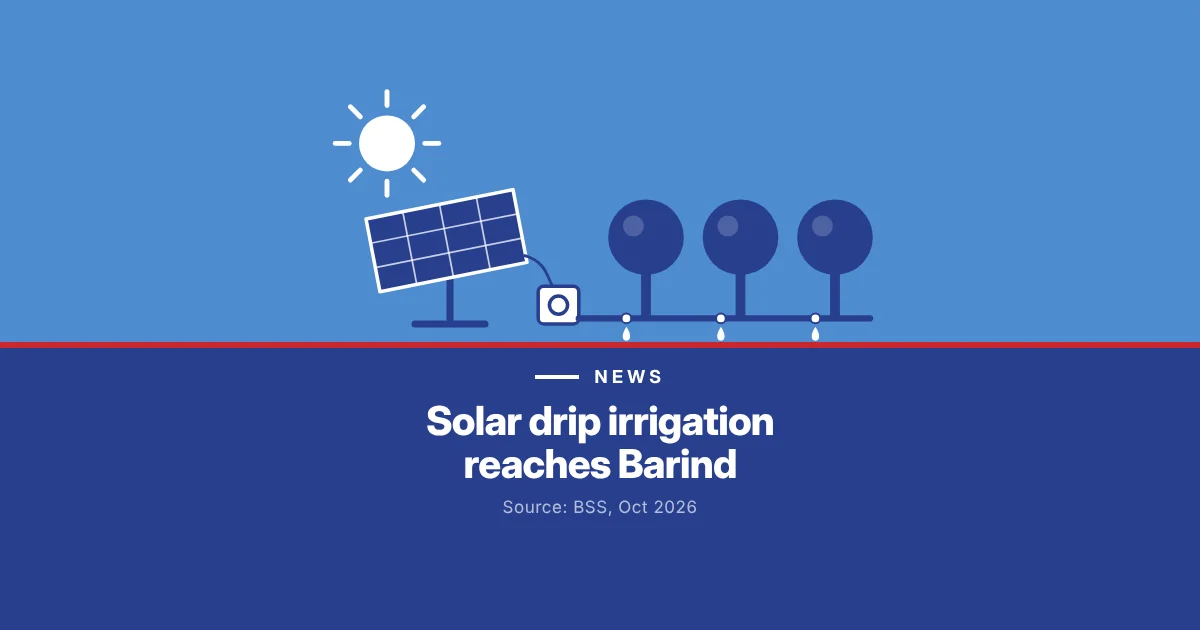
A government project in Bangladesh’s Rajshahi Division has brought solar-powered pumps, including solar drip systems for orchards, to drought-prone land where groundwater has been falling for decades. The Prime Minister wants all diesel irrigation pumps converted to solar within five years. For growers who move to drip, the next step is to feed the crop […]
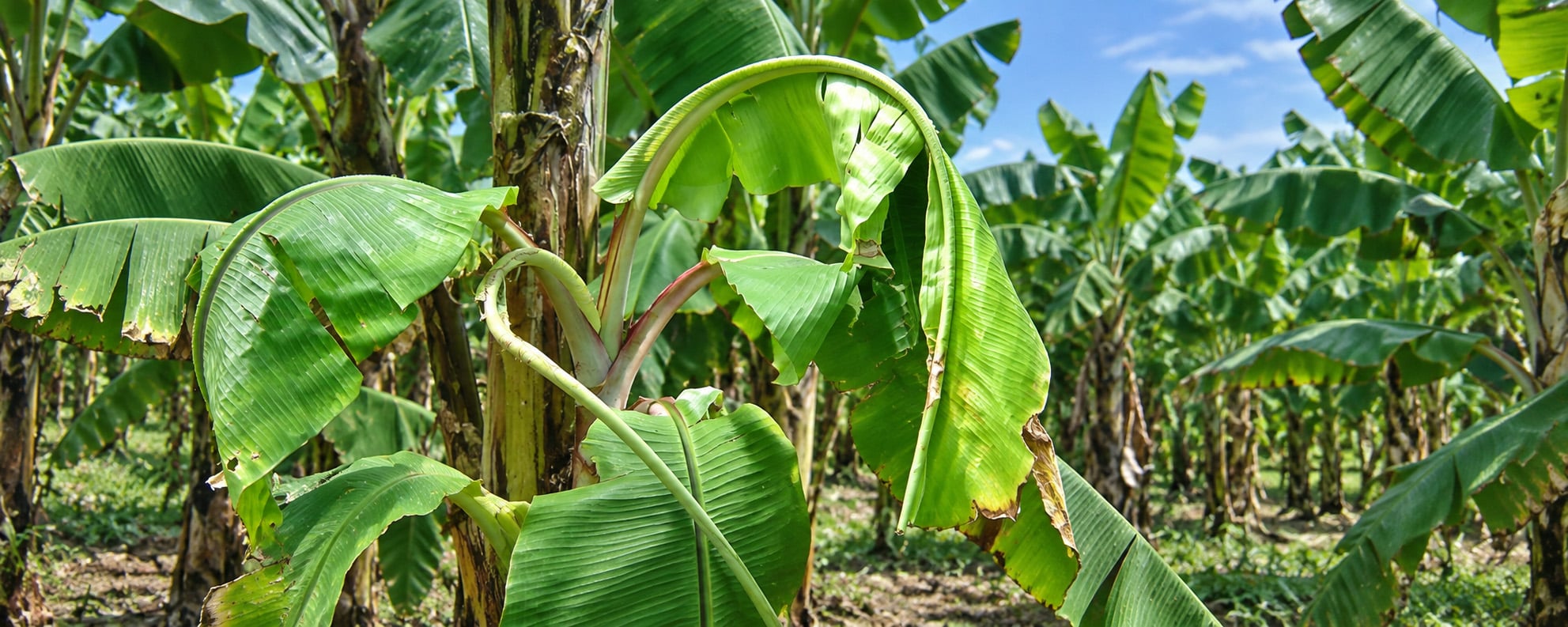
Calcium deficiency in banana shows first on the youngest leaves, as thickened veins and a saw-tooth pattern of yellow and dead tissue along the leaf margin, and in severe cases as “spike leaf”, new leaves with little or no blade, and poor-quality fruit (Turner, 1987; Martin-Prével, 1980). On most plantation soils it is not a […]
A calcium fertilizer supplies the calcium that holds plant cell walls and membranes together, but whether it reaches the fruit depends as much on water flow as on the fertilizer you choose. Calcium travels with water to the leaves and barely moves out of them again, so fruit and young leaves can run short even […]
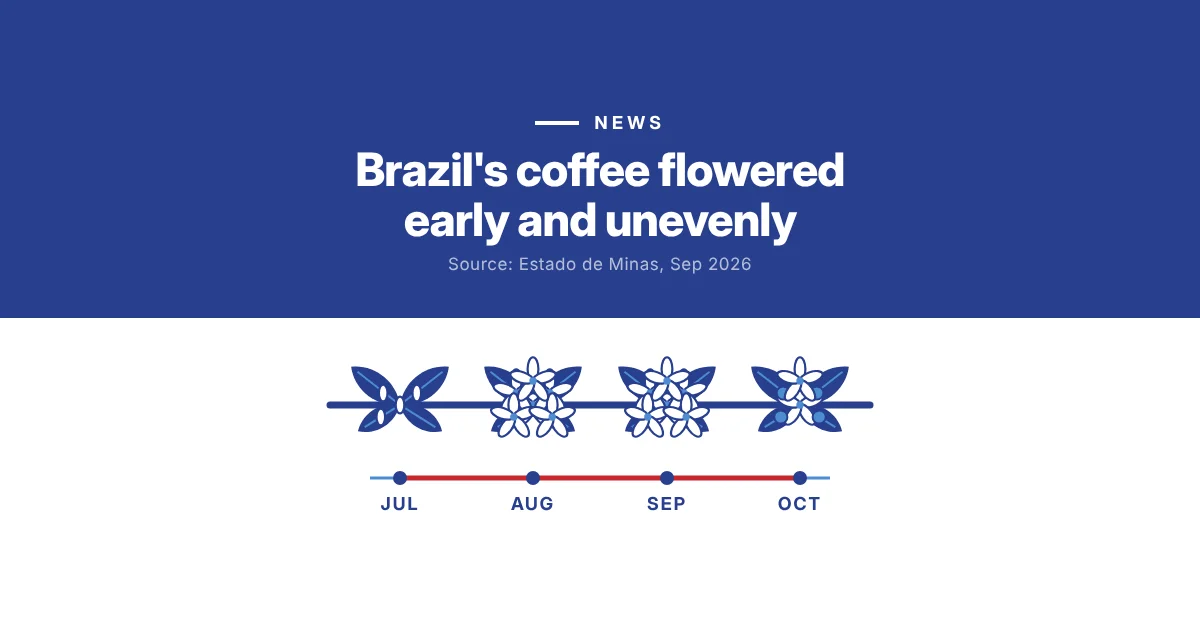
An unusually wet winter brought coffee flowering in Minas Gerais forward by about a month, in several separate waves. With October forecast to be hotter than normal and rain patchy, the question for 2027 is now how many of those flowers turn into fruit. At Van Polder, we believe a strong flowering is only the […]
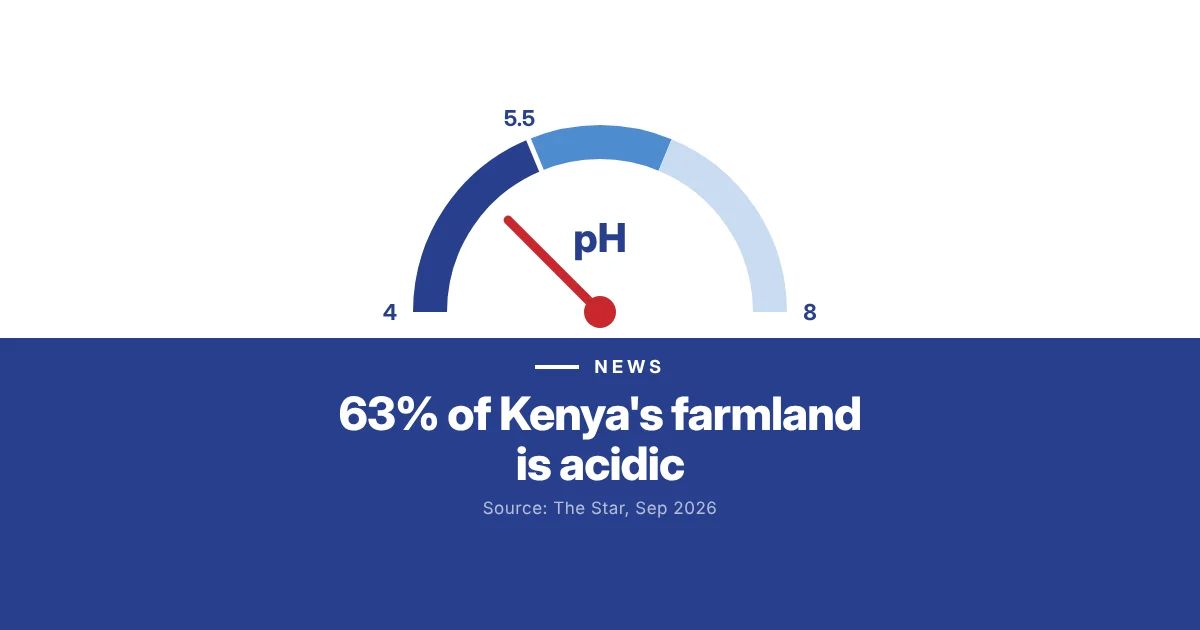
Kenya’s Ministry of Agriculture has launched a national soil health drive to move growers away from one-size-fits-all fertilizer recommendations. About 63% of the country’s arable land is acidic, and the government now wants fertilizer choices to start with a soil test. At Van Polder, we believe good crop nutrition starts with knowing what is already […]