



Bangladesh’s Barind region turns to solar pumps and drip irrigation
A government project in Bangladesh’s Rajshahi Division has brought solar-powered pumps, including solar drip systems for orchards, to drought-prone land where groundwater has been falling for decades. The Prime Minister wants all diesel irrigation pumps converted to solar within five years. For growers who move to drip, the next step is to feed the crop […]



A government project in Bangladesh’s Rajshahi Division has brought solar-powered pumps, including solar drip systems for orchards, to drought-prone land where groundwater has been falling for decades. The Prime Minister wants all diesel irrigation pumps converted to solar within five years. For growers who move to drip, the next step is to feed the crop through the same line.
At Van Polder, we believe the biggest gain from drip irrigation is not only the water it saves. Once water reaches the root zone through a pipe, nutrition can follow the same route, in smaller doses and at the right time.
What happened
Bangladesh’s state news agency BSS reported on 19 October that the Rajshahi Division Agricultural Development Project has installed solar irrigation in off-grid, drought-prone areas of eight districts over the past two years. The equipment includes 24 fixed pumps, 8 portable pumps and 10 “precision” units that combine a solar pump with drip irrigation, each serving a one-acre orchard. The project directly benefits 3,200 farmers in 67 upazilas and runs until June 2027. Marginal and low-income farmers receive the technology free of charge.
According to project director S. M. Hasanuzzaman, farmers’ irrigation costs have fallen to nearly zero. BSS reports that previously fallow land is now being farmed, that cropping intensity has risen by about 50 percent and that some farmers now grow three rice crops a year. The Barind Multipurpose Development Authority (BMDA) and the Department of Agricultural Extension (DAE) are working together to expand the technology across the region, where falling groundwater has made deep tube wells less effective.
The national picture explains the interest. About 1.22 million of Bangladesh’s 1.65 million major irrigation pumps run on diesel, The Daily Star reported on 4 October, citing the Asian Development Bank. Diesel rose to Tk 135 a liter from 21 September, roughly 35 percent above its level before the war with Iran. On 9 September, Prime Minister Tarique Rahman told parliament the government plans to convert all diesel irrigation pumps to solar within the next five years, BSS reported. No figures on the number of pumps or on funding have been published.
What it means in practice
The Barind project is small, but it points in a clear direction: cheaper water, and in orchards, water delivered by drip.
Drip changes how a crop should be fed. It wets only part of the soil, and roots concentrate in that wetted zone. Fertilizer spread across the whole orchard floor, outside the wetted zone, is used less efficiently. The drip line itself becomes the most direct way to deliver nitrogen, potassium and micronutrients.
Solar pumps add one more factor. Without batteries, they run only when the sun shines, so irrigation, and any fertigation, is tied to daylight hours.
Our advice
- Test the irrigation water before the first fertigation. Check pH, EC, bicarbonate and iron. Where bicarbonate or iron is high, emitters can clog and phosphate and micronutrients can drop out of solution. Use an acidifying fertilizer or acid injection, and chelated forms of iron, zinc and manganese.
- Inject in the middle of the irrigation run, around midday. Start with clean water, inject while the system is fully pressurized, and finish with clean water to flush the lines. On solar systems, flow is usually strongest and steadiest in the middle of the day.
- Split the dose by crop stage. In fruit trees, replace one or two broadcast applications with small weekly or fortnightly doses through the drip, and give more potassium during fruit growth. Keep calcium products in a separate stock tank from phosphate and sulfate products.
Building a fertigation range for solar drip growers
If solar drip spreads beyond pilot projects, demand will grow for fully water-soluble NPK grades, chelated micronutrients and products that are simple to use from a small stock tank. Distributors and agronomists who can advise on water quality and injection timing will be in the best position to help growers get the full value from their new systems.
If you supply growers in Bangladesh and are planning a fertigation range for drip and solar irrigation, we are happy to look at the options with you. Contact the Van Polder team, and our agronomists will help you match products to local water and crops.


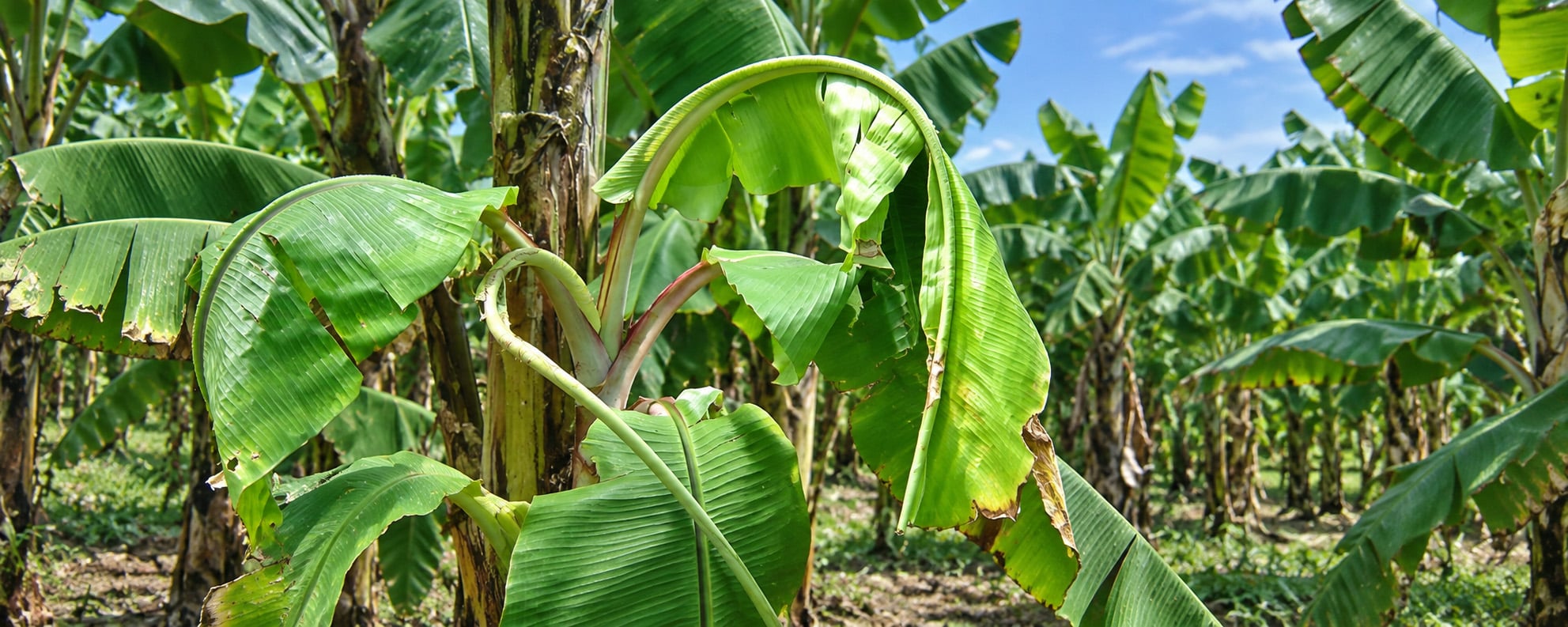
Calcium deficiency in banana shows first on the youngest leaves, as thickened veins and a saw-tooth pattern of yellow and dead tissue along the leaf margin, and in severe cases as “spike leaf”, new leaves with little or no blade, and poor-quality fruit (Turner, 1987; Martin-Prével, 1980). On most plantation soils it is not a […]
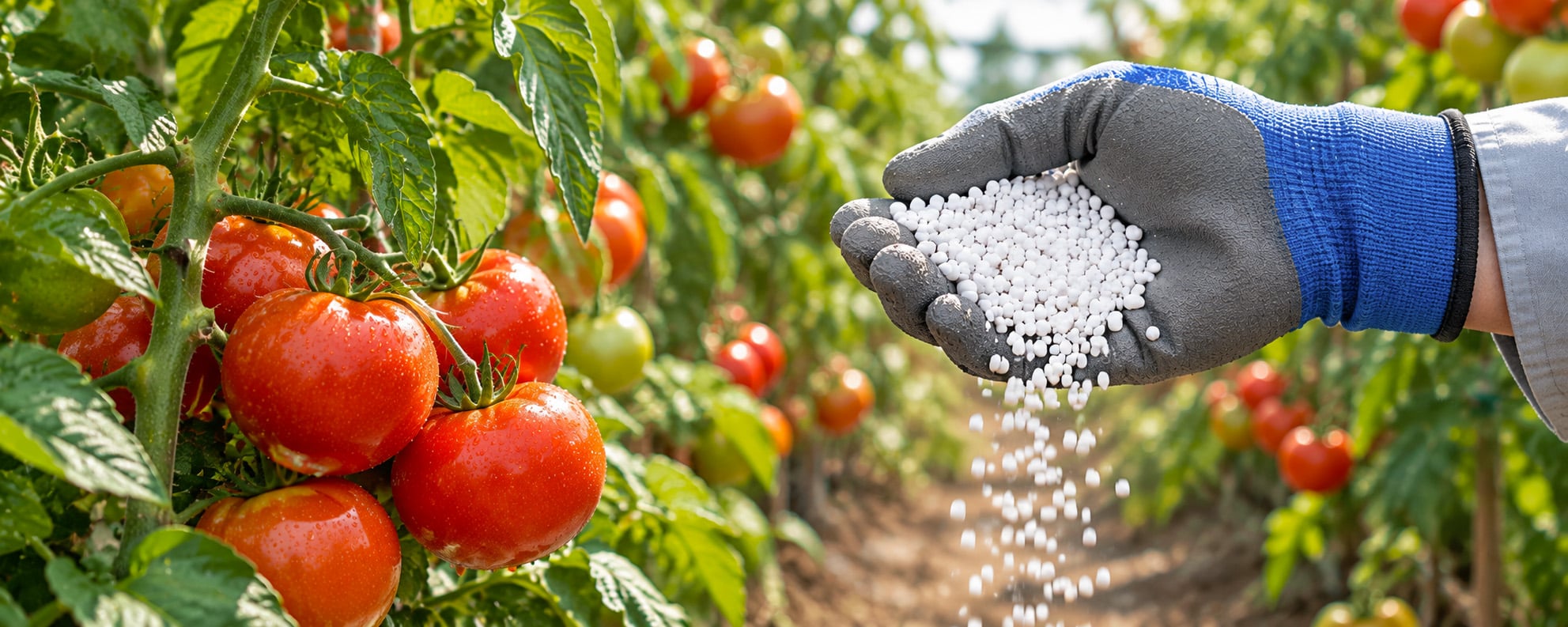
A calcium fertilizer supplies the calcium that holds plant cell walls and membranes together, but whether it reaches the fruit depends as much on water flow as on the fertilizer you choose. Calcium travels with water to the leaves and barely moves out of them again, so fruit and young leaves can run short even […]

An unusually wet winter brought coffee flowering in Minas Gerais forward by about a month, in several separate waves. With October forecast to be hotter than normal and rain patchy, the question for 2027 is now how many of those flowers turn into fruit. At Van Polder, we believe a strong flowering is only the […]
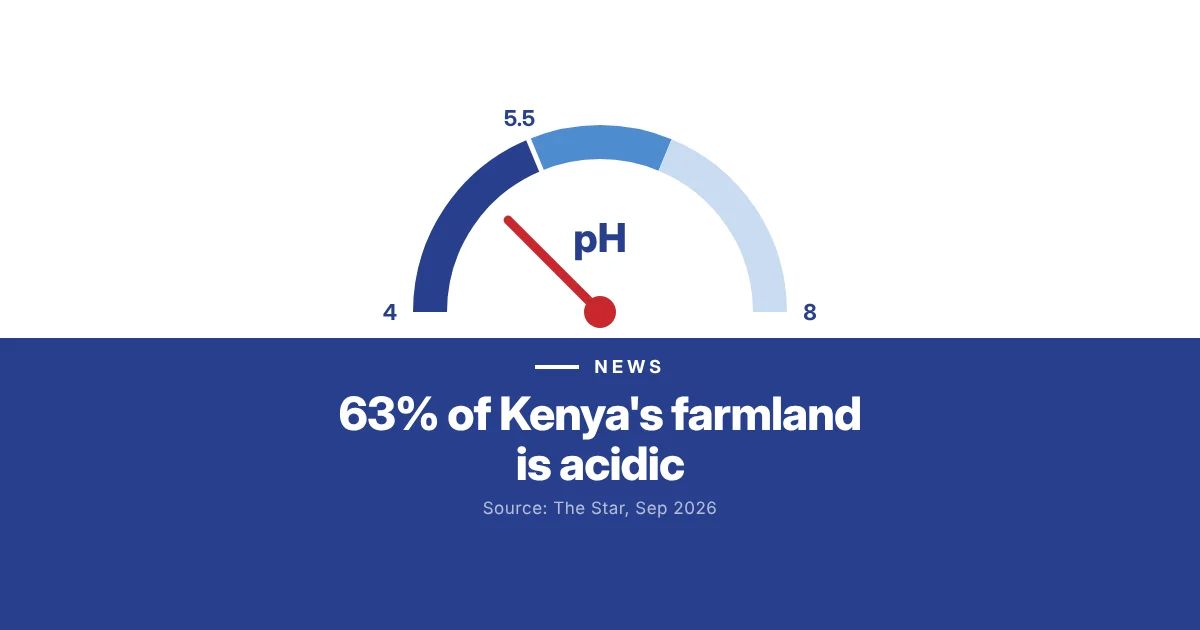
Kenya’s Ministry of Agriculture has launched a national soil health drive to move growers away from one-size-fits-all fertilizer recommendations. About 63% of the country’s arable land is acidic, and the government now wants fertilizer choices to start with a soil test. At Van Polder, we believe good crop nutrition starts with knowing what is already […]
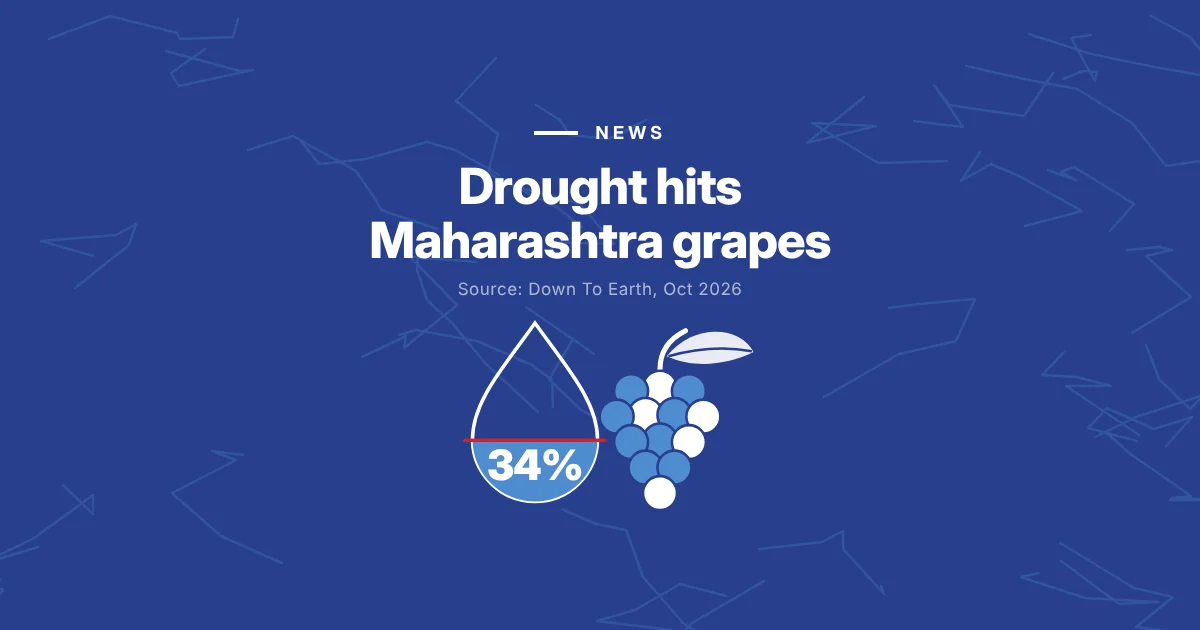
Maharashtra has declared drought in 265 talukas after a weak monsoon, and grape growers in Nashik fear losing at least 40% of this season’s harvest. For anyone supplying fruit growers in India, the next few months are about keeping crops and vines alive and productive with very little water. At Van Polder, we believe drought […]

Denmark’s new nitrogen regulation starts on 1 January 2027, but vegetable growers and several fruit, berry and nursery crops will stay on today’s nitrogen norms for one more year. For anyone supplying high-value horticulture, this is a short pause, not a change of direction. At Van Polder, we believe nitrogen efficiency will matter more every […]